
GTA 6 and Older Gamers: Why the Conversation Changed After Launch (Nov. 29, 2026)
GTA 6 has brought older players back to Vice City. Here is why nostalgia, family schedules, and changing reactions to violence shape the conversation.
Last checked: November 28, 2026, 4:31 p.m. UTC.

The 2027 outlook is for continued, moderate global growth under pressure from geopolitical shocks, uneven energy costs, and uncertainty about the artificial intelligence investment boom. The major forecasts available as of November 28 do not agree on the pace: the International Monetary Fund (IMF) projects 3.4% growth, while the Organisation for Economic Co-operation and Development (OECD) projects 3.0% and the United Nations (UN) 2.9%. These are conditional economic baselines, not guarantees. The Chinese lunar calendar names the coming year the Ding-wei, or Fire Goat, beginning February 6, 2027; that cultural association does not provide an evidence-based way to predict markets, wars, or diplomacy.
The IMF’s October 2026 World Economic Outlook puts global growth at 3.4% in 2027 and global headline inflation at 4.1%, after 3.1% growth and 4.7% inflation in 2026. The IMF says its projections use information available through October 1, 2026, so they do not include every later data release.
The OECD’s September interim outlook expects 3.0% global growth in 2027, following 2.9% in 2026. It sees persistent price pressure and weaker real income growth moderating activity, with AI-related activity and an assumed easing of energy prices providing support. The UN’s September 2026 update is more cautious, projecting 2.9% growth in 2027 after 2.6% in 2026 and warning that conflict-related energy costs have added to geopolitical and trade tensions.
The gap matters: a forecast is built on assumptions about conflict duration, energy prices, policy, and investment. The IMF’s stronger estimate should not be read as a consensus, and the lower UN estimate is not proof of a downturn. Together, the three point to an expansion that could continue while remaining vulnerable to shocks.
The main geopolitical risk is not a calendar prediction of a specific conflict. It is the possibility that existing or new disruptions affect energy production, shipping routes, insurance, or access to critical inputs for longer than businesses and governments can absorb. The IMF identifies further conflict escalation and renewed trade tensions among its downside risks. The OECD likewise warns that more persistent disruption to Middle East energy exports could lift oil and gas prices, squeeze household purchasing power, and weigh on growth.
Trade may keep growing even as governments treat supply chains as security assets. The World Trade Organization’s October outlook expects goods trade volumes to expand 4.1% in 2027, conditional on a timely resolution of the Middle East conflict. It also reports that trade between geopolitical blocs has not continued to diverge as sharply through 2025 and 2026, even as U.S.–China trade decoupling has accelerated. A reasonable inference is that selective controls, subsidies, and supplier diversification may remain more visible than a clean split of the world economy into sealed blocs. That path is not assured: fresh restrictions or retaliation could change it quickly.
Energy importers may be particularly exposed if supply disruption coincides with weak currencies or high borrowing costs. The IMF describes a divided outlook: economies that are exposed to the energy shock and have little connection to the technology value chain face the hardest mix of higher import bills, weaker real incomes, and limited policy room. Exporters outside conflict zones may benefit from higher commodity prices, but those gains can be offset by volatility, domestic inflation, or fiscal pressure.
AI-related spending is already supporting demand for data-center equipment, semiconductors, power systems, and some business services. The WTO says AI-enabling goods made up a large share of merchandise-trade growth in the first half of 2026. If investment continues and productivity gains spread beyond a small number of firms and countries, it could support trade and output through 2027.
The risk is concentration. The IMF and OECD both warn that a reassessment of expected AI returns could slow investment and reprice financial assets. The IMF also flags fiscal vulnerabilities: when governments carry heavy debt and borrowing costs rise, they have less room to cushion households or respond to another shock. This does not mean a correction is certain. It means the growth outlook depends partly on whether current spending produces durable productivity rather than expectations alone.
Baseline: Global activity expands at a moderate pace, inflation eases in some forecasts, trade adapts, and AI investment remains supportive. This is the broad direction in the IMF, OECD, and UN central projections, although the growth numbers differ.
Upside: Energy disruption recedes, trade rules become more predictable, and AI investment delivers wider productivity gains. The IMF identifies stronger AI momentum and an easing of geopolitical and trade tensions as possible upside factors.
Downside: A prolonged conflict, renewed trade barriers, weather-related supply shocks, or an AI investment reversal could lift costs and weaken demand. If high commodity prices combine with rising sovereign yields, governments and emerging markets could face tighter financial conditions. These are conditional risks identified by the institutions, not predictions that any one event will occur.
The Fire Goat lunar year runs from February 6, 2027, through January 25, 2028, according to the Hong Kong Observatory’s 2027 Gregorian-lunar calendar and its 2028 conversion table. The Gregorian year begins earlier, so January 1–February 5, 2027, falls before the lunar zodiac year starts.
For practical monitoring, compare new IMF, OECD, and UN forecasts rather than treating one number as certain. Track energy prices and shipping reliability, inflation expectations and central-bank decisions, sovereign borrowing costs, trade restrictions, and whether AI spending is translating into measurable productivity. These indicators will show whether the baseline is holding or whether risks are becoming more important. The most defensible prediction is therefore conditional: 2027 can bring further growth, but its pace and distribution will depend heavily on geopolitical stability, energy supply, policy choices, and returns on technology investment.
It begins on February 6, 2027, the first day of the lunar year in the Hong Kong Observatory calendar. The Gregorian year starts on January 1.
Yes. The IMF, OECD, and UN all forecast growth, ranging from 2.9% to 3.4%, but the forecasts depend on different assumptions and are subject to revision.
No. The Fire Goat is a traditional calendar designation. Economic projections come from data and stated assumptions; the zodiac label does not establish what markets, governments, or conflicts will do.
GTA 6 has brought older players back to Vice City. Here is why nostalgia, family schedules, and changing reactions to violence shape the conversation.
Learn what passengers must check when flight turnarounds happen, following the Qantas Boeing 787 Melbourne-to-Dallas return flight disruption.
Learn how to receive official California earthquake alerts via USGS ShakeAlert, MyShake, and built-in smartphone settings, plus where to track real-time maps.
Received a California earthquake alert? Learn immediate safety steps, how to inspect your home for utility leaks, and where to verify official USGS seismic data.

Discover how Canadians can track real-time earthquake locations via Natural Resources Canada (Earthquakes Canada) and follow verified safety guidance.
Learn what permanent Daylight Saving Time proposals mean for Canada, how provinces like B.C. and Ontario are adapting, and what changes for daily routines.
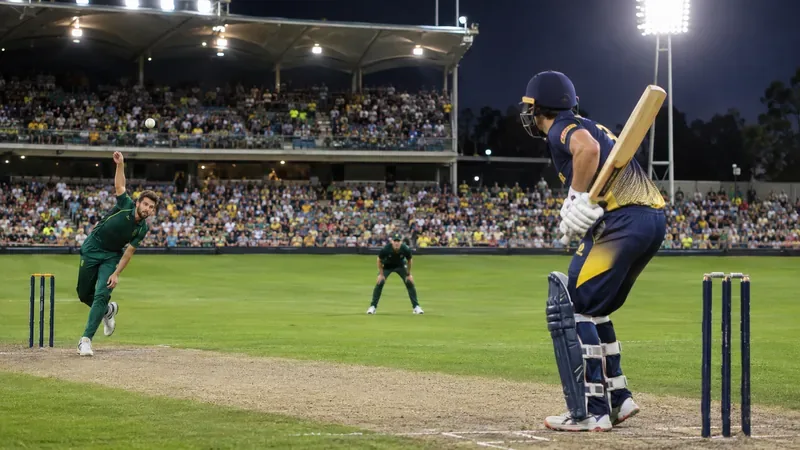
England defeated Australia by 7 runs in the fourth T20I at the SCG to seal a 3-1 series victory, surviving a 119-run masterclass by Mitchell Marsh.
Learn how to photograph satellite trails in the night sky with recommended camera settings, manual focusing techniques, interval shooting, and image stacking.
A practical checklist for comparing Cyber Monday tech deals, evaluating genuine discounts, checking total checkout costs, and verifying consumer protections.

See how to check California earthquakes today using the USGS map or catalog, set a calendar-day time window, and understand magnitude and location filters.