Home
» Today
»
Canada–U.S. Trade Deal: Greer Sees Progress, but Key Issues Remain | Nov. 23
Canada–U.S. Trade Deal: Greer Sees Progress, but Key Issues Remain | Nov. 23
Updated and verified Nov. 23, 2026, at 7:02 a.m. EST (Toronto; UTC−05:00). Canada and the United States may be moving towards a trade agreement, but no pact has been announced. On Sunday, U.S. Trade Representative Jamieson Greer said the countries were “fairly close” to finding a landing zone. At the same time, reporting based on briefings to a Canadian federal advisory committee says multiple issues remain unresolved, with U.S. auto tariffs a central sticking point.
For Canadian businesses and workers, the practical takeaway is cautious: renewed talks and positive public language suggest a route to tariff relief may be under discussion, but they do not change the tariffs or trade rules currently in effect. The next meaningful signal will be specific terms from Ottawa and Washington, particularly on autos and other affected sectors.
Destaques
Greer described the two sides as “fairly close” to a landing zone on Nov. 22.
Canadian negotiators reportedly still face multiple outstanding issues; auto tariffs are identified as the largest obstacle.
Officials have not announced a signed agreement or published draft terms.
Until governments announce changes, businesses should plan around existing measures.
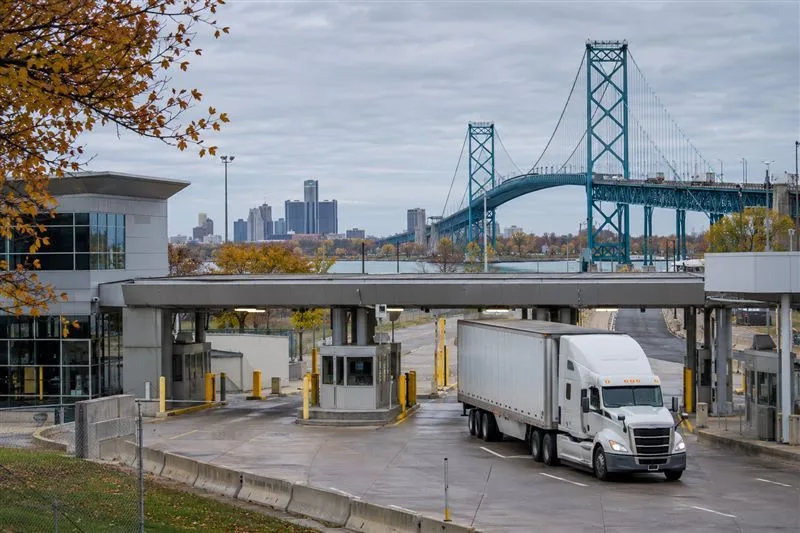
Illustrative image of cross-border freight infrastructure; it does not depict the current negotiations or a specific event.
What changed in the Canada–U.S. trade talks?
The latest change is a more hopeful public assessment from Washington. In a Nov. 22 interview, Greer said the countries had made progress and were having constructive conversations. He also said the U.S. wants an agreement that protects the North American economy and benefits both countries. Canadian Prime Minister Mark Carney and U.S. President Donald Trump had discussed trade during a meeting in Shenzhen the previous week, according to a statement from Carney’s office reported by Global News.
Those comments are an indication of the negotiating climate, not proof that the governments have reached a deal. The distinction matters because earlier negotiations broke down in August after disagreements over proposed terms. A September statement from the Office of the U.S. Trade Representative described the sides’ positions differently and outlined U.S. actions involving Canadian products. The latest optimism has not, by itself, withdrawn those measures.
What is still blocking an agreement?
Canadian negotiator Janice Charette told a federal advisory committee that multiple issues remain outstanding, according to sources briefed on the meeting and cited by Global News. The report identifies the U.S. tariff on Canadian automobiles as the biggest unresolved issue. It also describes Ottawa’s effort to secure an interim arrangement addressing tariffs and other trade irritants before the broader Canada–U.S.–Mexico Agreement (CUSMA) review continues.
Different public statements show why the talks remain delicate. Greer has raised concerns about Canada’s trade relationship with China, including its treatment of Chinese electric vehicles and some steel and aluminium products. Ottawa has said an agreement must respect Canadian sovereignty, culture and languages. Those concerns may be part of the wider bargaining context, but neither side has published a definitive list of terms for a final pact.
The existing framework is also more complicated than a single across-the-board tariff. A September 2026 Congressional Research Service briefing explains that many CUSMA-compliant goods have continued to enter the U.S. largely duty-free, while separate measures affect particular sectors and products. Its overview is useful background, but companies should confirm the current treatment of their specific goods with official guidance or a customs adviser.
What should Canadian businesses watch next?
Look for an official announcement that names the parties, spells out the products and tariff rates covered, and explains when any change would take effect. A statement that talks are “close” does not tell importers whether a shipment qualifies for relief, whether Canadian counter-tariffs would change, or how long an interim arrangement would last.
For firms with cross-border supply chains, the near-term approach is to track official notices from both governments and keep contingency plans current. Automakers and parts suppliers have the most immediate reason to watch for details because auto duties are identified as a key negotiating obstacle. Other affected sectors should avoid assuming that a general deal would automatically remove every separate tariff or import restriction.
Consumers could eventually see indirect effects if lower trade costs reduce pressure on some supply chains. That outcome is conditional: the talks have not produced published terms, and any savings would depend on what products are covered, when relief begins and how businesses pass through cost changes. No consumer price reduction can yet be attributed to a deal.
What is confirmed as of this update: Greer publicly said the countries were fairly close to a landing zone; Canadian reporting says important issues remain; and neither government has announced a completed agreement. The gap between those points is where the next developments will matter.
Frequently asked questions
Have Canada and the U.S. signed a trade deal?
No. As of Nov. 23, 2026, neither government has announced a signed agreement.
What is the main reported obstacle?
Reporting based on a Canadian advisory committee briefing identifies U.S. tariffs on Canadian automobiles as the biggest outstanding issue.
Are tariffs changing now?
No change is confirmed in the latest reporting. Businesses should rely on official tariff notices until governments publish specific changes.