01. Historical Context
AI matters for oil, but not in the obvious way
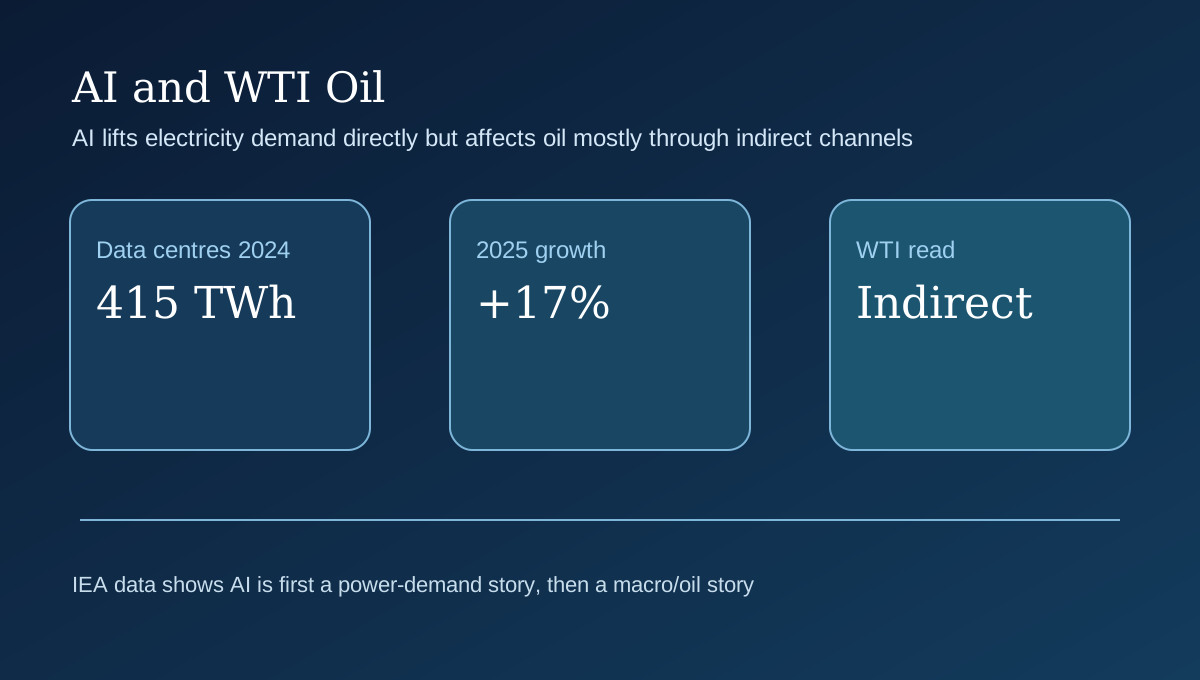
IEA estimates global data-centre electricity consumption at about 415 terawatt-hours in 2024, or around 1.5% of world electricity use, and says it grew 12% per year over the last five years. On April 16, 2026, IEA added that data-centre electricity use surged another 17% in 2025.
That matters for WTI because AI is clearly increasing energy demand. But the first beneficiary is the power system, especially natural gas, renewables, grids, and backup generation. Crude oil benefits only if AI-driven growth spills into transport, construction, petrochemicals, and broad industrial throughput.
| Channel | Short-run impact | Medium-run impact | Current assessment |
|---|---|---|---|
| Electricity demand | Direct and measurable | Large | Bullish for power, not directly for oil |
| Industrial capex | Limited near term | Can lift liquids demand indirectly | Neutral |
| Logistics efficiency | Small | Can reduce diesel intensity | Bearish for oil intensity |
| Upstream optimization | Small today | Can improve drilling and field management | Bearish for marginal-cost floor |
That is why AI should not be treated as a generic 'energy bullish' label for crude. The transmission mechanism matters.
02. Key Forces
Five ways AI can actually affect WTI
First, AI can lift aggregate electricity demand, and stronger economic throughput can indirectly support oil demand. IEA's Electricity 2026 report says global electricity demand is forecast to grow at an average 3.6% annual rate over 2026-2030 and identifies AI and data centres as part of that demand wave.
Second, AI can increase construction and industrial activity through data-centre buildouts. That can marginally support diesel, petrochemical, and transport demand even if the data centres themselves run on electricity rather than crude.
Third, AI can lower oil intensity. Better route optimization, predictive maintenance, traffic management, and process control can reduce fuel consumed per unit of output. That is a real bearish offset to the growth story.
Fourth, AI can improve upstream productivity. Better subsurface modeling, predictive maintenance, and asset optimization can reduce the cost and time needed to keep production flowing. If that happens at scale, AI can cap part of the long-term oil price upside by improving supply responsiveness.
Fifth, AI can alter the macro mix more than the oil mix. IEA says data centres account for around one-tenth of global electricity demand growth to 2030, and the Global Energy Review 2026 says data centres are set to account for half of U.S. electricity demand growth to 2030. Those are large numbers, but they still point first to electricity markets.
| Factor | Latest datapoint | Current assessment | Bias for WTI |
|---|---|---|---|
| Data-centre load | 415 TWh in 2024; +17% in 2025 | Strong | Indirectly bullish |
| Direct crude use | Minimal | Low relevance | Neutral |
| Industrial spillover | Possible | Needs time | Mildly bullish |
| Efficiency gains | Growing use case | Can lower fuel intensity | Bearish |
| Upstream productivity | Improving toolkit | Can aid supply response | Bearish |
The net effect is mixed: AI can raise overall economic energy use while simultaneously making oil demand and oil supply more efficient.
03. Countercase
Why AI may matter less for WTI than the narrative suggests
The strongest counterargument is that AI's demand pulse is electric, not liquid. Data centres do not consume crude oil directly in any material way, so the link to WTI is mediated and slower.
A second counterargument is that AI can reduce oil intensity faster than it raises oil demand. If fleets, logistics networks, and industrial processes become more efficient, the same GDP can require less fuel.
A third counterargument is that the current oil market is still dominated by geopolitics, inventories, and spare capacity. In May 2026, IEA was discussing a deficit created by more than 14 million barrels per day of Gulf supply shut in, which is far more important to current WTI than AI adoption trends.
| Limiting factor | Data point | Current assessment | Bias |
|---|---|---|---|
| Direct fuel use | AI runs mostly on electricity | Major limitation | Bearish |
| Efficiency offset | AI can cut fuel per unit of activity | Real | Bearish |
| Dominant current drivers | WTI still driven by outages and inventories | Overwhelming today | Bearish for AI relevance |
| Broader growth spillover | Possible through capex and industrial demand | Secondary | Bullish but indirect |
The burden of proof is therefore on anyone claiming AI alone should structurally re-rate WTI.
04. Institutional Lens
What the official sources actually say about AI and energy
IEA's Energy and AI material is the key source here. It says data centres consumed about 415 TWh in 2024 and account for around one-tenth of global electricity demand growth to 2030. It also says U.S. data centres are set to account for half of electricity demand growth to 2030.
IEA's April 16, 2026 update adds that data-centre electricity use surged 17% in 2025 and that the capital expenditure of five large technology companies exceeded $400 billion in 2025. Those are meaningful energy-system numbers, but they are still not direct oil-demand numbers.
That is why the institutional reading should be narrow: AI can support oil if it lifts broad industrial output, freight, and petrochemical throughput. It can hurt oil if it reduces fuel intensity or improves upstream efficiency. The official data does not support a one-directional thesis.
| Source | Updated | Specific number | Implication for WTI |
|---|---|---|---|
| IEA Energy and AI | 2026 | 415 TWh global data-centre use in 2024 | AI is a large electricity story |
| IEA news release | April 16, 2026 | Data-centre electricity demand +17% in 2025 | Near-term energy impulse exists |
| IEA Electricity 2026 | 2026 | Global electricity demand +3.6% CAGR in 2026-2030 | AI supports macro energy demand |
| IEA Global Energy Review 2026 | 2026 | Data centres to account for half of U.S. power-demand growth to 2030 | Oil link remains indirect |
The real insight is not that AI is irrelevant to WTI. It is that the sign of the effect depends on which channel dominates.
05. Scenarios
AI scenarios for WTI Oil
Base case, 60% probability: AI has a second-order impact on WTI. It modestly supports oil through economic activity and construction while also improving efficiency. Net effect: neutral to mildly supportive. Review yearly against IEA AI and electricity updates.
Bull case, 20% probability: AI-driven capex and industrial throughput materially lift liquids demand while supply stays constrained. Net effect: AI becomes an incremental reason WTI trades above mid-cycle ranges. Review if broad industrial energy demand accelerates without matching efficiency gains.
Bear case, 20% probability: AI cuts oil intensity faster than it adds oil demand and also improves upstream productivity. Net effect: AI lowers the structural price needed to balance the market. Review if logistics and industrial fuel use flatten even while data-centre power demand surges.
| Scenario | Probability | Net effect on WTI | Measured trigger |
|---|---|---|---|
| Base | 60% | Neutral to mildly bullish | Electricity demand rises faster than direct oil demand |
| Bull | 20% | Moderately bullish | AI capex spills into freight, construction, and petrochemicals |
| Bear | 20% | Mildly bearish | Efficiency and upstream optimization dominate |
For now, AI should be treated as a secondary variable in WTI analysis. Inventories, spare capacity, and geopolitics still matter more.
References
Sources
- Yahoo Finance chart API for CL=F 10-year monthly history
- EIA Daily Prices page, including WTI spot and Brent spot updates
- EIA Weekly Petroleum Status Report, latest week ending May 8, 2026
- EIA Short-Term Energy Outlook tables, May 2026
- EIA press release on the May 12, 2026 STEO update
- IEA Oil Market Report, May 2026
- IMF World Economic Outlook, April 2026
- World Bank Commodity Markets Outlook press release, April 28, 2026
- BLS CPI release for April 2026
- BEA headline PCE price index page
- BEA core PCE price index page
- BEA GDP advance estimate for Q1 2026
- IEA Energy and AI: energy demand from AI
- IEA April 16, 2026 note on data-centre electricity use
- IEA Electricity 2026 demand chapter