Australian PGA Leaderboard: Early Round 1 Standings and How to Follow | Nov. 26
Track the 2026 BMW Australian PGA Championship leaderboard at The Lakes in Sydney, see an early Round 1 snapshot, and find official live scoring and viewing options.
Verified and updated November 24, 2026, at 5:10 p.m. UTC.
The November Beaver Moon is a supermoon, and the most useful change for photographers is practical: treat it as a bright daylight subject, stabilize your phone, and lower exposure until lunar surface detail appears. NASA lists the full Moon at 14:54 UTC on November 24—9:54 a.m. Eastern and 6:54 a.m. Pacific—so that exact moment falls in daylight across the contiguous United States. For a night photograph, try the Moon’s evening appearance instead; local rise times vary by location. NASA’s supermoon calendar confirms the date and time.
A supermoon can appear up to 14% larger and 30% brighter than the faintest full Moon of the year, but that difference is subtle to the eye. A phone will not automatically make the Moon fill the frame; the reliable gains come from focus, exposure, and a steady shot. NASA’s lunar photography guide recommends focusing on the Moon, reducing brightness, and using a timer to limit camera shake.
Start with the phone’s main camera and a stable support. Clean the lens, turn off flash, and frame the Moon with a tree, roofline, or other foreground feature if you want a sense of scale. Tap the Moon on screen to focus, then drag the exposure or brightness control down. Keep reducing it until the disk is gray rather than a featureless white spot. Phone camera controls differ, so take a few test frames.
If your phone offers manual settings, try a low ISO and a fast shutter speed, then adjust after checking the result. The Moon reflects sunlight and is much brighter than the night sky, so a long night-mode exposure can wash out details. Use the phone’s optical telephoto lens if it produces a sharper image. Digital zoom only enlarges or crops the existing capture on many phones, so compare it with a tighter crop made afterward. A two- or three-second timer helps avoid shake when you press the shutter.
For a larger-looking Moon in a landscape, shoot near twilight when the sky is not completely dark, or frame the Moon near the horizon with foreground objects. NASA notes that the apparent enlargement near the horizon is an illusion; it does not mean the Moon is physically closer there. A single exposure may not retain detail in both a bright Moon and a dark landscape, so decide whether the Moon’s surface or the scene is your priority.
The simplest phone-and-telescope method is afocal photography: leave the phone camera lens in place and align it with the telescope eyepiece. A phone adapter holds the camera centered and reduces wobble. First focus the telescope visually, then position the phone so the circular view is centered on its screen. Tap the Moon to focus the phone and lower exposure as needed. If the view has dark corners, adjust alignment before adding digital zoom.
At high magnification, the Moon can drift out of view quickly on a telescope without a tracking mount. Begin at lower magnification, center the Moon, and capture a short sequence with a timer or remote shutter. Review focus and exposure between attempts. Atmospheric turbulence can soften fine detail even when the telescope and phone are steady, so several frames improve the chance of getting a sharp one. NASA’s telescope guidance notes that centering a phone over the eyepiece takes practice and that a mount helps hold it in position.
The verified event is the November 24 full supermoon; the term describes a full Moon near perigee, its closest point to Earth in its elliptical orbit. NASA says a supermoon may look modestly larger and brighter than the year’s most distant full Moon. That does not guarantee a dramatic enlargement in a phone frame or a clear sky at your location. Clouds, haze, a shaky mount, and phone processing can matter more to the final photograph than the supermoon label.
NASA’s Jet Propulsion Laboratory says the November 24 supermoon begins a series of three consecutive supermoons, with another on December 24, 2026. That gives photographers another chance to practice if weather or framing disappoints this time. Check a local astronomical calendar for Moon rise and sky conditions before heading out; exact rise times depend on your location. NASA JPL’s November skywatching guide identifies the November event and the next supermoon date.
Yes. Stabilize the phone, tap to focus on the Moon, and lower exposure until surface features appear. A telephoto lens can help, but digital zoom may reduce quality.
The exact full phase is 14:54 UTC on November 24, equivalent to 9:54 a.m. Eastern and 6:54 a.m. Pacific. For night viewing, check local Moonrise times.
No, though a telescope can show more detail. A phone adapter makes it easier to align the camera with the eyepiece and keep it steady.
Track the 2026 BMW Australian PGA Championship leaderboard at The Lakes in Sydney, see an early Round 1 snapshot, and find official live scoring and viewing options.
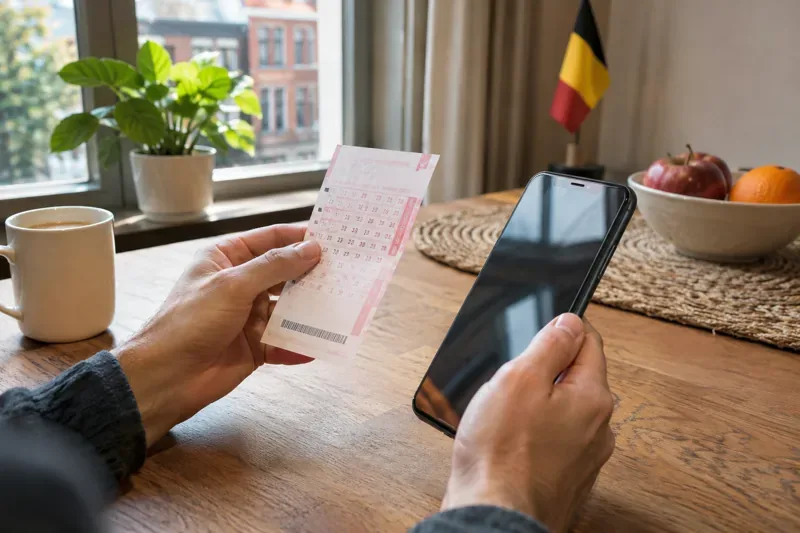
Check Australian lottery tickets through The Lott website, app or a retailer. Learn when results appear, what “pending” means and why claim deadlines vary by state.
New tree-ring research is refining the Alpine Fault’s earthquake record. Learn what the 75% 50-year estimate means, likely impacts, and practical preparedness steps.
The Adelaide 500 is the 2026 Supercars Championship decider. Here’s how the Finals format, four-driver showdown, points and race weekend fit together.
Buying a Powerball ticket tonight? Check The Lott’s Thursday draw close, how to enter, and where to verify results in Australia.
Golden State beat Sacramento 129–110 in their Nov. 25 NBA Cup group game. See the key result, matchup context and what the Warriors’ 20 threes mean.
Portland edged San Antonio 116–111 in NBA Cup play despite Victor Wembanyama’s 44 points. See how Deni Avdija and Damian Lillard helped decide the matchup.
TVSN closed after 31 years and entered liquidation in November 2026. Learn how its TV and online shopping model worked and what customers should know now.
Most Starbucks coffeehouses are open on Thanksgiving, often with reduced hours. See why schedules vary and how to check your local store before you go.
Oats can offer fibre and a filling breakfast alongside GLP-1 treatment. Here’s what the evidence says, how to build a balanced bowl and when to adjust for symptoms.