Your oven has 5 microwave power setting options. Capacity setting gives you flexibility in choosing the right oven capacity for each type of food. Wattage
%
Power capacity
High
100%
800W
Medium high
80%
640W
medium
60%
480W
Average low defrosting
40%
320W
Short
20%
160W
How to set cooking capacity
In the example below, you will be shown how to cook food in 5 minutes 30 seconds at 640W (Using 80% of oven capacity).
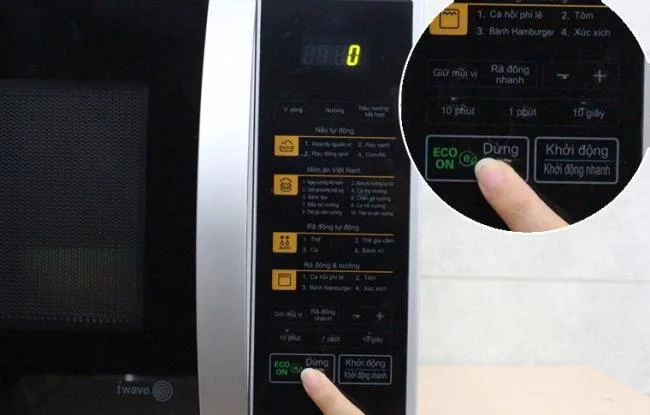
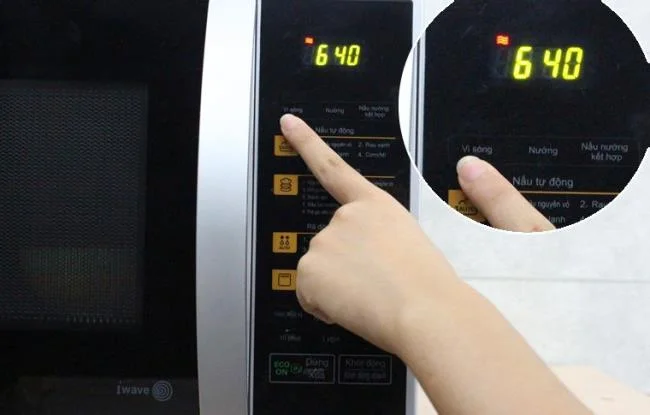
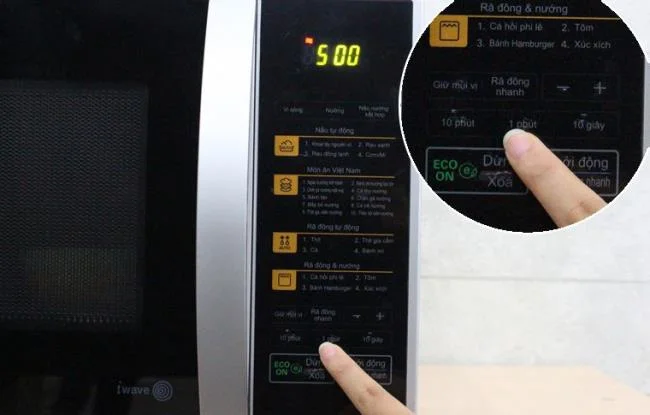
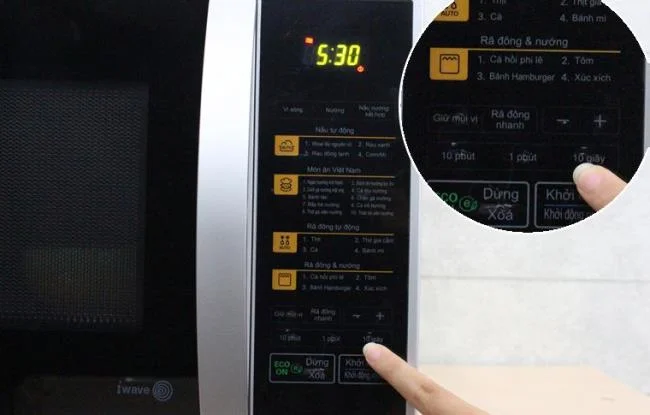
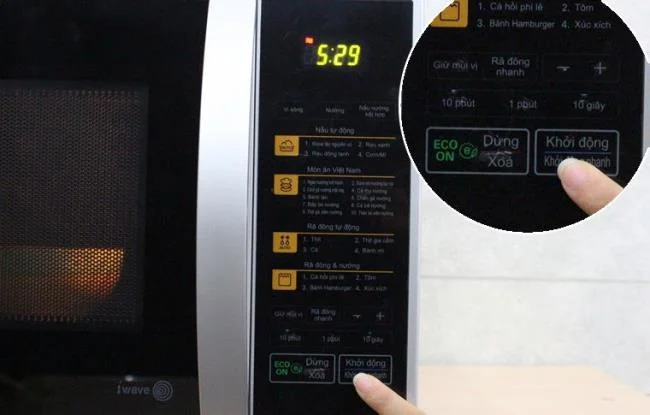
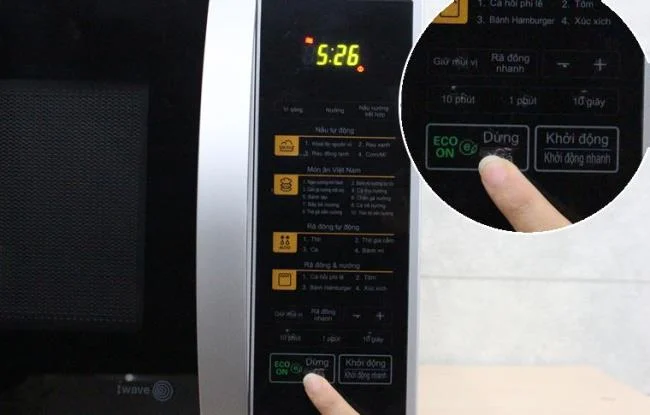
Press the “STOP / DELETE” button to return the microwave oven to its original state (no cooking setting is available)Press the "MICRO" button twice to select the option - "640" will appear on the screenPress “1 MINUTE” 5 times - this equates to 5 minutes durationPress "10 SEC" 3 times
Using the above steps, you have set the cooking time to 5 minutes 30 seconds.
Press “START” to start the ovenIf you want to pause cooking, press “STOP / DELETE”.
More information: Appropriate power levels
Your microwave is equipped with 5 different energy levels for versatile cooking flexibility. The table below includes examples of dishes and the appropriate energy level for your reference.
Microwave energy level
Use
Microwave energy level (%)
Power capacity
High
Hot water
Beef stew
Poultry, fish, and vegetables
Cook the meat tender
100%
800W
Medium high
Warm all over
Grilled meat and poultry
Cook mushrooms with shrimp, crab
Cook foods containing cheese and eggs
80%
640W
medium
Bake all kinds of cakes
Egg
Make custard
Rice, soup
60%
480W
Thawing / Medium low
Thawed completely
Melt butter and chocolate
Cook the meat tender
40%
320W
Short
Soften butter and cheese
Make cream foam
Yeast proliferation
20%
160W
Just through simple steps, you have installed the right capacity for the dish when using LG MH6342B microwave oven.