Build a Reusable AutoYaST Profile for SLES 15 Installs

Turn an existing SLES 15 system into a reviewed AutoYaST profile, validate it, and use it to deploy a test server with fewer manual steps.
Adding alternating blank rows in Excel will help you add content to the data table. Normally, you can also use the add row feature in Excel , but if you follow this operation, it will take a lot of time and be quite manual. The following article will guide you through some ways to add alternating blank rows in Excel.
How to insert alternating blank lines in Excel using Go to Special
With this data table, we will insert 1 blank row alternating with 3 data rows to use as a Field title row, for example.

Step 1:
In the extra column outside the data table, in the 4th row we will fill in the number 1, which means inserting a blank row after 3 rows of data.

Step 2:
Next, from cell number 1, you select 2 more new cells .
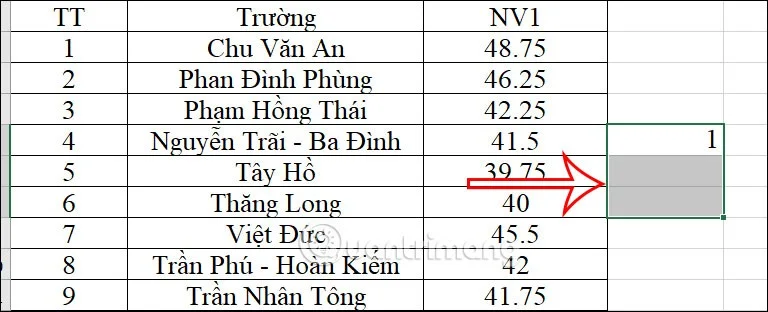
Then at the bottom right corner of the new square add 2 rows, we click to get the automatic serial number column. The result is as shown below.
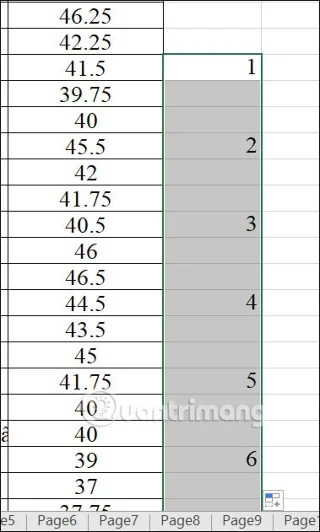
Step 3:
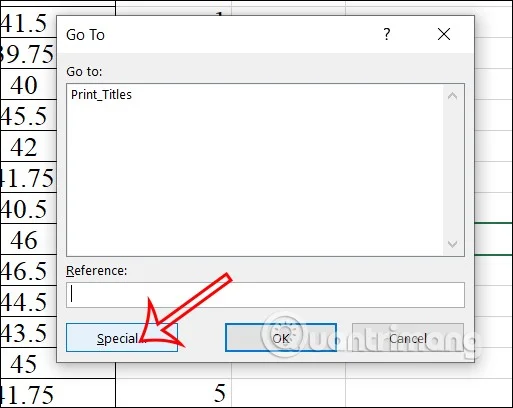
Press Ctrl + G to open the Go To dialog box and then click the Special button .
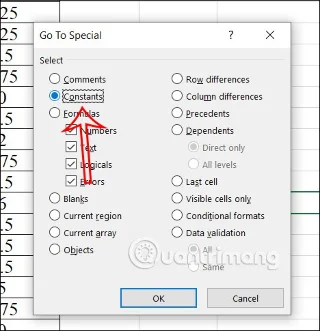
In the new dialog box that appears, click on Constants and then click OK below.
Step 4:
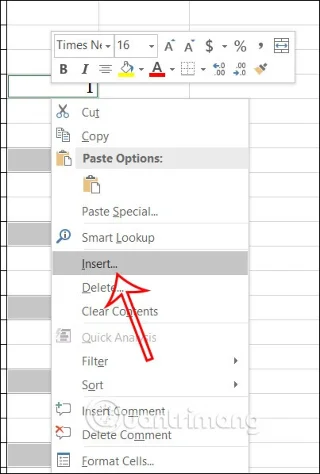
Next, right-click on this column and select Insert from the displayed list.
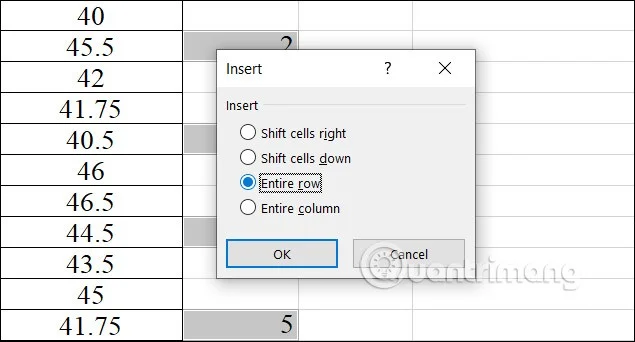
Click on Entire Row and then click OK below.
Step 5:
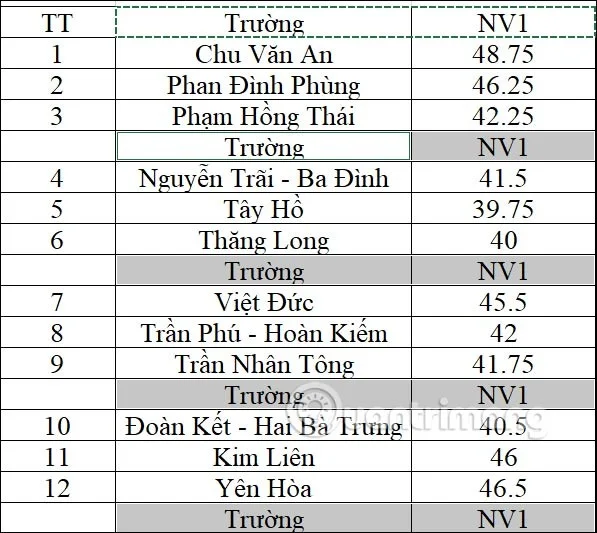
The result you see is a blank row every 3 rows of data for you to use. Now you just need to fill in the headers for the blank rows in the data table.

Step 6:
To quickly fill in the title line , copy the original title line , then highlight the entire data table and press Ctrl + G to open the Go To dialog box , click Special .
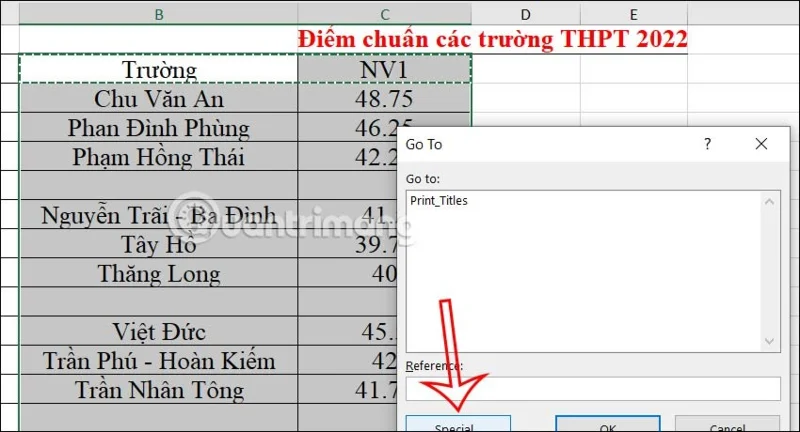
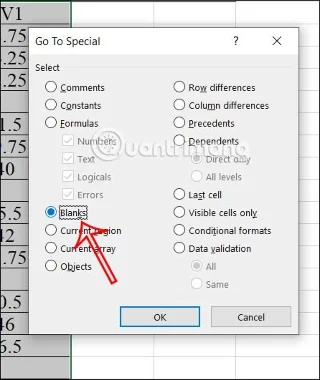
Select Blanks to select only blank rows in the selected data range.
Finally, we paste the title line in the Excel table .
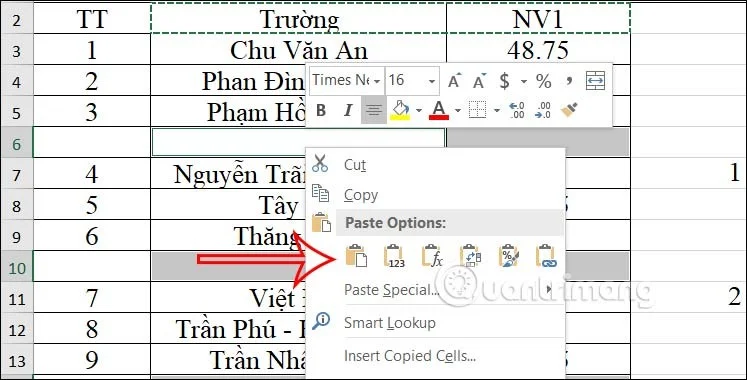
The results are shown in the data table below.
Video tutorial on alternating blank rows in Excel
How to insert blank rows in Excel using Sort
Step 1:
Open the Excel file that needs to add blank lines in the content. First, add the serial number from 1 to the end of the data table to the last column and repeat in the rows below that have no data.

To work faster, type 1 then press and hold Ctrl and drag the mouse to the right corner and down.

Step 2:
Next, at the serial number line added below, right-click, select Sort and select Custom Sort .
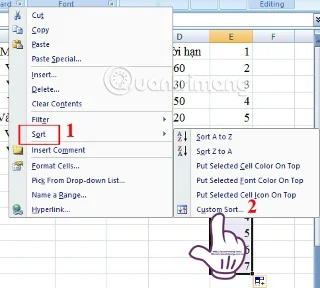
Step 3:
The small Sort Warning window interface appears . We continue to click on the Sort button right below. Note , check the box Expand the selection.

Step 4:
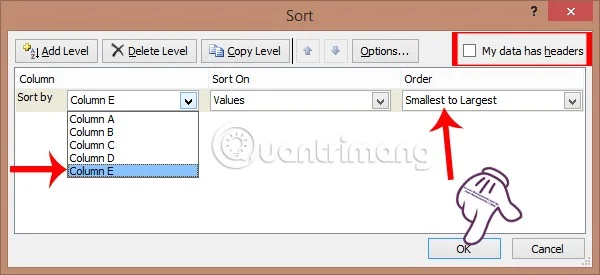
In the new Sort interface , uncheck My data has header .
Next, in the Sort by section, we select Column E. The Order will be Smallest to Largest from smallest to largest. Then click OK .
The final result will be an additional blank line in the Excel data table as shown below. We just need to delete the serial number in column E and we're done.
Note , if you want to add 2 or 3 blank rows to the table, you also need to create a serial number from 1 to the row you want to insert, then if you want to insert 2 or 3 rows, repeat the corresponding serial number.
As shown below, I will create 2 more blank rows in the table, then create 2 more columns from 1 to 3.

Then, also perform the same steps as above and get the result as shown below.

So you can add one or two blank rows to the data table as you like. The only difference when inserting a blank row or more than two blank rows in Excel is the addition of a column of serial numbers from 1 to the row to be inserted.
Turn an existing SLES 15 system into a reviewed AutoYaST profile, validate it, and use it to deploy a test server with fewer manual steps.
Install the SLES 15 KVM and libvirt tools, enable the right host service, and configure selected virtual machines to start after a reboot.
Use systemd jobs and the previous boot journal to locate a slow service, mount, or storage dependency, then correct it without masking the cause.
Use firewall-cmd to inspect the active zone, allow HTTP safely, preserve SSH access, and verify that the rule survives a reload on SLES 15.
Trace a PAM failure to its service, account policy, or identity provider, then repair the right SLES configuration while preserving a working admin session.
Trace a failed kernel module at SLES startup, correct an obsolete boot entry or repair the required driver, and verify the next boot.
Prepare SCSI SAN paths, enable multipathd, inspect SUSE’s hardware defaults, and verify stable device maps without guessing array settings.
Find the process holding Zypper’s package lock, distinguish process conflicts from package locks, and retry updates without deleting lock files blindly.
Register SLE HA, bootstrap SLES 15 nodes, then add fencing, quorum, and tested service resources before relying on failover.
Trace a Zypper refresh error to SUSE, RMT, or a third-party endpoint, then apply the right server-side or cache fix without disabling essential updates.








