Instructions for drawing a semicircle in PowerPoint

PowerPoint doesn't have a semicircle option for you to draw directly onto a slide, but there are a variety of methods for creating a semicircle or half circle in PowerPoint. Here's how to draw a semicircle in PowerPoint.

How to draw a semicircle from Partial Circle Shape PowerPoint

Step 1:

In the PowerPoint slide, click Insert, then click Shapes and select Partial Circle to draw on the slide as shown below.
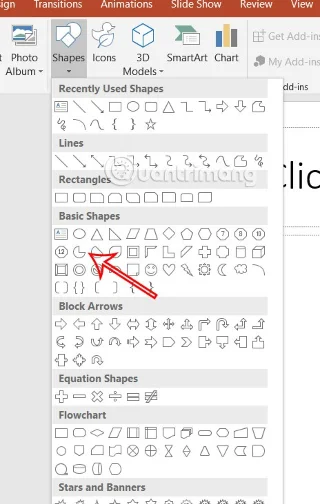
Instructions for drawing a semicircle in PowerPoint

Step 2:

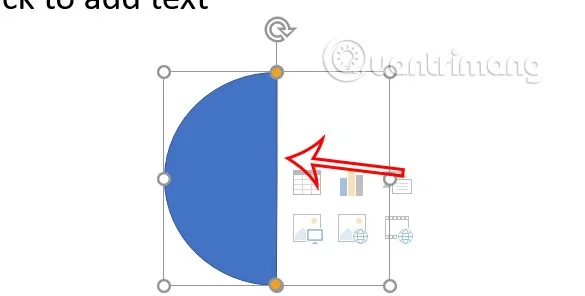
Click on the circle and adjust the yellow dots to form a semicircle. You can move the yellow dots to create a semicircle that best suits your needs.

Instructions for drawing a semicircle in PowerPoint

This method can be used to create circles with different display styles of half a circle or part of a circle.

Instructions for drawing a semicircle in PowerPoint

How to create a semicircle using Merge Shapes

Step 1:

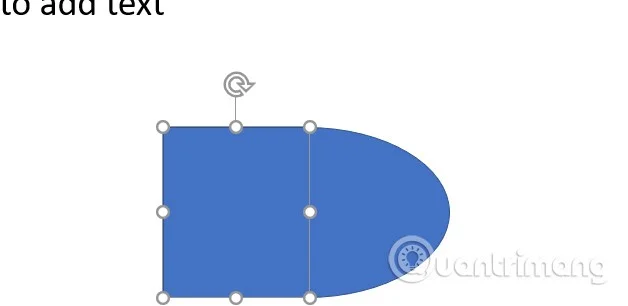
We will draw an oval into the slide , then draw a rectangle covering half of the oval as shown below. You adjust the top and bottom edges of the rectangle to match the lines of the oval as shown below.

Instructions for drawing a semicircle in PowerPoint

Step 2:

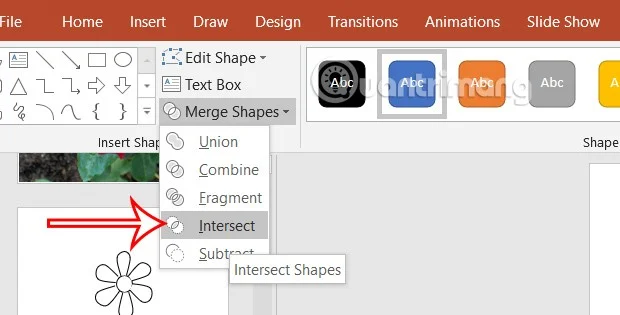
Press the Shift key and click on the 2 shapes to select . Continue clicking on Shape Format > Merge Shapes > Intersect .

Instructions for drawing a semicircle in PowerPoint

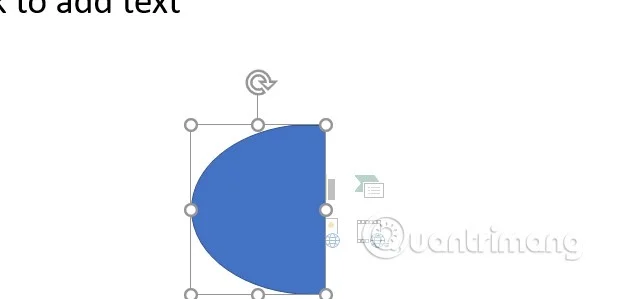
This will remove the square and leave only the half circle. This will also give you a semicircle in your PowerPoint slide.

Instructions for drawing a semicircle in PowerPoint

Finally, you edit the semicircle like adding color, adding border depending on your needs to edit the shape.
Leave a Comment

Enable FIPS Mode on SLES 15 and Verify the Boot State

Enable FIPS Mode on SLES 15 and Verify the Boot State

Follow SUSE’s SP7 procedure to enable FIPS mode, reboot safely, verify the active policy, and check whether your compliance requirement calls for validated modules.

Set Up a LUKS-Encrypted Data Volume on SLES

Set Up a LUKS-Encrypted Data Volume on SLES

Compare YaST and cryptsetup for a new encrypted SLES data volume, choose LUKS1 or LUKS2, and verify unlock and mount behavior safely.

Build a Custom AppArmor Profile on SUSE Linux

Build a Custom AppArmor Profile on SUSE Linux

Create, refine, and verify a least-privilege AppArmor profile on SLES 15 SP7, with a clear note on SLES 16’s SELinux default.

Build a Local SUSE Update Server with RMT on SLES 15

Build a Local SUSE Update Server with RMT on SLES 15

Set up RMT on SLES 15, mirror entitled repositories, and verify HTTPS registration and package access from a test client.

Join SLES 15 to Active Directory with SSSD in YaST

Join SLES 15 to Active Directory with SSSD in YaST

Connect SLES 15 to AD with YaST’s SSSD-based logon management, then verify directory lookup, domain login, and Kerberos tickets.

Enable SLES Live Patching and Verify a Kernel Fix

Enable SLES Live Patching and Verify a Kernel Fix

Set up the right Live Patching path for SLES 16.0 or 15 SP7, apply eligible kernel fixes, and confirm what is active without confusing it with a reboot-required kernel update.

Install and Sign Custom Kernel Modules on SLES 15 Secure Boot

Install and Sign Custom Kernel Modules on SLES 15 Secure Boot

Load a custom SLES 15 kernel module without disabling Secure Boot. Match the running kernel, sign the .ko file, enroll a MOK key, and verify loading.

Keep Services Available During a SLES 15 SP5 to SP6 Upgrade

Keep Services Available During a SLES 15 SP5 to SP6 Upgrade

SLES 15 SP5 can migrate online to SP6, but each node must reboot. Use a tested rolling upgrade or blue-green cutover to keep workloads reachable.

Apply the SLES 15 STIG Safely with OpenSCAP

Apply the SLES 15 STIG Safely with OpenSCAP

Use SUSE’s supported STIG profile to scan SLES 15, test remediation, review remaining findings, and retain assessment evidence.

Restore Cockpit Access to SUSE Linux Enterprise Server

Restore Cockpit Access to SUSE Linux Enterprise Server

Trace a failed Cockpit connection through DNS, port 9090, the systemd socket, firewalld, TLS, and login settings using current SUSE guidance.