Home
» Today
»
Leptospirosis in Australia: Symptoms, Spread and When to Get Help (Nov. 5, 2026)
Leptospirosis in Australia: Symptoms, Spread and When to Get Help (Nov. 5, 2026)
Information checked: November 5, 2026, 8:24 p.m. AEDT (Sydney, UTC+11:00; November 5, 2026, 09:24 UTC).
Leptospirosis is a bacterial infection that people can catch through water, mud, or soil contaminated with the urine of infected animals. It can resemble the flu at first, with fever, headache, muscle pain, and chills. In some people, however, it progresses to serious problems involving the kidneys, liver, lungs, or brain.
For Australians, exposure can happen during farming, animal handling, gardening, freshwater recreation, and cleanup after heavy rain or flooding. Anyone who develops a fever or other compatible symptoms after possible exposure should seek medical advice promptly and explain where they have been. Early antibiotic treatment can reduce the severity and duration of the disease. This article explains the verified health guidance; increased search interest alone does not establish a new outbreak.
Destaques
Leptospirosis spreads primarily through contact with animal urine or contaminated water and soil; routine person-to-person spread is very rare.
Symptoms most often appear 5–14 days after exposure, but the possible range is 2–30 days.
Fever, severe headache, calf or lower-back pain, red eyes, and vomiting are warning signs worth discussing with a clinician after a relevant exposure.
Severe breathing difficulty, sudden confusion, or other life-threatening symptoms require emergency care. In Australia, call 000.
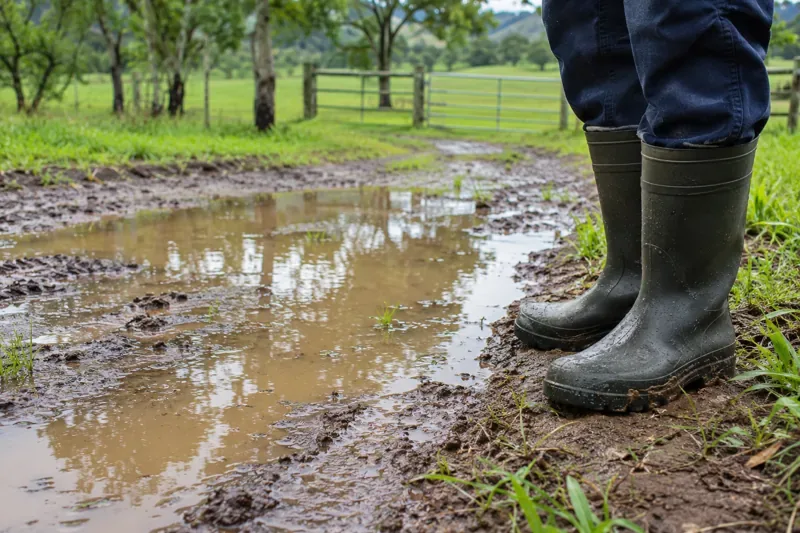
Illustration: Waterproof boots near rain-soaked soil, one of the environments where exposure to contaminated water may occur. The image does not depict a confirmed infection or outbreak.
What is leptospirosis, and why does it matter in Australia?
Leptospirosis is caused by bacteria in the Leptospira group. It is a zoonotic disease, meaning it can pass from animals to humans. Infected animals may not look sick, yet they can shed bacteria in their urine. Rodents, cattle, pigs, dogs, and other mammals are possible sources.
The infection occurs around the world and is particularly relevant in warm, wet conditions. Australian guidance notes that cases are more common in tropical areas, including parts of Queensland. Rainfall and flooding can bring people into contact with contaminated water or damp soil, but not every puddle or freshwater exposure causes infection.
Most symptomatic illness is mild to moderate, but a severe form sometimes called Weil's disease can involve jaundice, kidney damage, and bleeding. Life-threatening lung complications or meningitis can also occur. These possibilities make early recognition important even though the initial symptoms are nonspecific.
What are the early symptoms of leptospirosis?
Symptoms typically begin abruptly. Some infected people have no symptoms, while others experience several of the following:
Fever, chills, and unusual tiredness
Headache, sometimes severe
Muscle aches, often pronounced in the calves, thighs, or lower back
Nausea, vomiting, diarrhea, or abdominal discomfort
Red eyes without the usual thick discharge associated with some eye infections
Occasionally, a rash or sensitivity to light
Symptoms generally appear 5–14 days after contact with the bacteria, although the reported incubation window extends from 2 to 30 days. A person may initially improve and then become ill again. Because influenza, other infections, and several tropical diseases can look similar, symptoms alone cannot confirm leptospirosis.
How is leptospirosis transmitted?
The most common pathway is contact with water or soil contaminated by urine from an infected animal. Bacteria can enter through broken skin or the moist surfaces of the eyes, nose, and mouth. Swallowing contaminated water is another route. Direct contact with infected animals or their tissues also creates risk. Ordinary contact with another person who is sick is not a common transmission route.
Situations that may increase exposure include:
Wading through floodwater, especially with cuts or abrasions
Swimming, rafting, or other activities in potentially contaminated freshwater
Working with livestock, pets, animal waste, or rodent-infested areas
Working in wet soil, drains, sewers, or muddy agricultural environments
Drinking untreated water or eating food contaminated by rodent urine
Who is at higher risk in Australia?
Farmers, agricultural workers, veterinarians, abattoir workers, sewer workers, and people taking part in some outdoor water activities have greater chances of encountering the bacteria. Risk is linked to the exposure, not simply to living in a particular state. A person visiting a wet or tropical area may also be exposed.
For context, Queensland Health’s public health guideline reports 76 leptospirosis notifications for 2025 and describes how wet weather and contaminated environments contribute to transmission. This is historical surveillance information, not evidence of a newly confirmed outbreak in November 2026. Queensland’s surveillance case definition also changed from January 1, 2026, to notify confirmed cases only, so comparisons across that change require care.
When should you see a doctor or seek emergency help?
Contact a GP or another medical service promptly if you develop fever, muscle pain, headache, red eyes, vomiting, or unusual fatigue after possible exposure to contaminated freshwater, mud, rodents, or animal urine. Tell the clinician what happened and when, even if the exposure was several weeks earlier. Do not wait for yellowing of the eyes or other severe features before asking for help.
Seek urgent assessment for yellow skin or eyes, reduced urination, unusual bleeding, severe weakness, a stiff neck, or symptoms that are worsening. Call 000 for an ambulance in Australia if someone has severe trouble breathing, sudden confusion, collapses, or has another life-threatening emergency. These problems can have causes other than leptospirosis and still require immediate care.
If you are unsure where to seek non-emergency care, Australia’s healthdirect service offers 24-hour nurse advice on 1800 022 222. Read its emergency care guidance and contact information for details.
How is leptospirosis diagnosed and treated?
A health professional will ask about symptoms, travel, work, animal contact, and water exposure, then assess whether laboratory testing is appropriate. Tests may detect bacterial genetic material early in the illness or antibodies as the immune response develops. The test selected depends on timing; a follow-up blood sample may be needed because an early result does not always settle the diagnosis.
Antibiotics are the main treatment, with doxycycline or penicillin among medicines clinicians may use. Treatment is most effective when started early. When suspicion is high, clinicians may begin treatment before confirmatory results return. More serious cases may require hospitalization, intravenous antibiotics, and support for affected organs. Do not self-prescribe antibiotics or assume everyone who has touched floodwater needs preventive medication; that decision belongs with a clinician.
How can you reduce the risk after heavy rain or flooding?
Avoid swimming or wading in floodwater or freshwater that may be contaminated with animal urine.
Wear waterproof boots, gloves, and appropriate protective clothing when working in mud or with animals.
Cover cuts and scratches with waterproof dressings before a potentially risky activity.
Wash with soap after possible exposure and clean contaminated equipment appropriately.
Use safe drinking water; boil or properly treat water when a supply may be contaminated.
Reduce rodent access to food and living or work areas, and avoid food that rodents may have contaminated.
There is no generally available human leptospirosis vaccine in Australia. Vaccination of some animals may be recommended by a veterinarian, but it does not replace careful handling and environmental precautions.
What happens after infection, and what should people watch for next?
Some people recover within days or weeks, while others need longer to regain strength. The next steps depend on symptom severity, test findings, and response to treatment. Following a suspected exposure, the important action is to monitor for compatible symptoms during the following month and obtain medical assessment if they develop.
Heavy rain or flooding can raise exposure risk in affected places, particularly where people must work or clean up in contaminated water. That is a conditional health risk, not a prediction that a particular Australian community will experience an outbreak.
Yes. Infection is possible if floodwater is contaminated with urine from infected animals and bacteria enter through the skin or mucous membranes, or if contaminated water is swallowed. Exposure does not mean infection is inevitable.
How long after exposure do leptospirosis symptoms start?
Usually 5–14 days, but symptoms can begin as early as 2 days or as late as 30 days after exposure.
Is leptospirosis curable?
It is a bacterial infection that can be treated with antibiotics, especially when treatment begins early. Severe illness may still need hospital care. Seek medical advice promptly if symptoms follow a possible exposure.