Iowa Lead Azide Detonation: What the Explosive Is and Why It Matters — Nov. 25 Update
A clear guide to lead azide, the Army’s planned Nov. 25 detonation in Iowa, and why officials warn about possible lead dust.
Information checked: November 23, 2026, 11:54 p.m. London GMT (UTC+00:00), based on Transport for London's published strike guidance. Service conditions may change after this check.
London commuters should prepare alternative routes for Thursday, November 26, and Friday, November 27, 2026. Transport for London (TfL) lists planned Tube drivers' strikes from 12:00 p.m. Thursday to 11:59 a.m. Friday, London GMT (UTC+00:00). Underground service is expected to be disrupted across all lines, even though trains may run on many of them. The practical answer is to identify a non-Tube rail route first, then use buses, walking, or cycling for the final stretch—not to assume the entire Underground network will be closed.
TfL says the Elizabeth line, Docklands Light Railway (DLR), London Overground, buses, and trams are expected to operate normally during these strikes, but with heavier passenger loads. This describes the published plan, not a guarantee that every service will run without unrelated delays. Check the live status shortly before leaving.
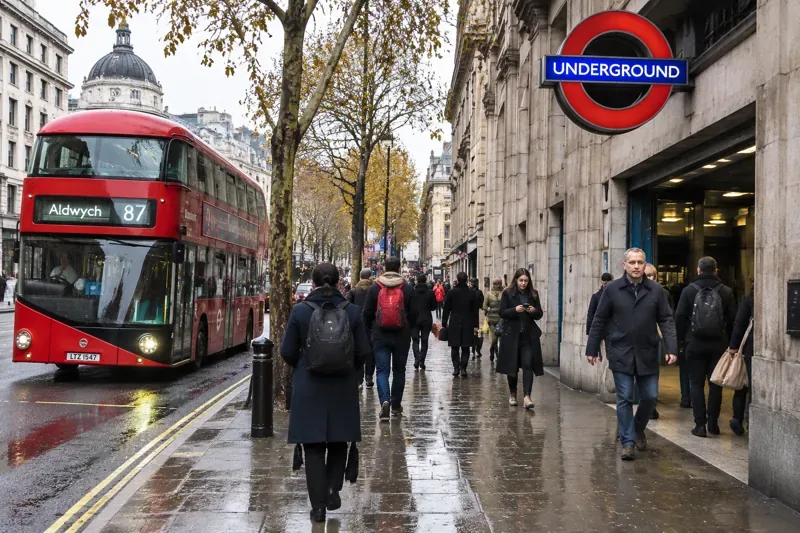
According to the official TfL strike advisory, the first strike day is expected to see normal service on most lines until roughly 10:00 a.m. London GMT, followed by reduced operations. From noon, all lines may be affected. TfL specifically anticipates no Circle or Piccadilly line service throughout the first day, and no Waterloo & City service from noon. By after 9:00 p.m. on Thursday, no Tube service is expected.
On Friday, November 27, trains are expected to resume from around 7:00 a.m., but the Circle, Piccadilly, and Waterloo & City lines are not expected to operate before noon. TfL says the network will then recover gradually, with approximately normal service expected from 6:00 p.m. These are forecasts published ahead of the action; actual conditions can differ if plans change.
For many journeys that would normally involve the Central, Piccadilly, or Circle lines, the Elizabeth line provides a useful east–west backbone. Its central stations run through Paddington, Bond Street, Tottenham Court Road, Farringdon, Liverpool Street, and Whitechapel. From Whitechapel, branches serve Canary Wharf and Abbey Wood or Stratford and destinations farther east. Passengers coming from Heathrow or Ealing Broadway may also be able to travel directly toward central London without relying on the Piccadilly line. Choose the correct branch and confirm the train destination on station displays.
These station connections are published on TfL's Elizabeth line route page. Because this route may attract diverted passengers, leave extra time for platforms, transfers, and boarding.
The DLR can be useful for Canary Wharf, Bank, Lewisham, Greenwich-area stations, and parts of east London. London Overground offers orbital connections that can avoid a central Underground interchange. For example, travelers on compatible routes can connect through Stratford, Whitechapel, or other interchange stations instead of funneling through busy West End Tube stations. The best choice depends on where your trip starts and ends, not merely on which alternative line appears closest on a schematic map.
National Rail may be suitable for trips involving Waterloo, London Bridge, Victoria, Blackfriars, or other mainline terminals. Railway operators set their own timetables, engineering restrictions, and fares, so check the specific operator as well as TfL. Do not assume a Tube fare or ticket will automatically be accepted on an alternative train unless an acceptance arrangement has been explicitly announced.
The Elizabeth line connects Heathrow Airport with Paddington, Bond Street, Tottenham Court Road, Farringdon, Liverpool Street, and other stops. TfL's Heathrow travel guidance explains its terminal services and notes that airport journeys carry special fares. For flight connections, build in a larger buffer than usual and verify the operating terminal and any transfers. A train running to Heathrow Terminals 2 & 3 does not necessarily continue to Terminal 4 or Terminal 5.
In central London, walking between nearby destinations can be more predictable than joining a long line at a crowded rail interchange or bus stop. Before choosing a detour with two transfers, compare the whole journey with a direct walking route. TfL provides walking maps and transport maps; use street-level directions for crossings, accessibility, and weather. Cycling may work for confident riders with a suitable route, but wet November conditions and traffic require caution.
TfL expects its buses and trams to run as normal during the listed strike action, although buses are likely to be crowded and journey times may increase where roads are busy. Buses are useful for the last mile, not necessarily a fast substitute for a long Underground trip across the entire city. Consider riding a functioning railway as far as possible, then finishing by bus.
For fares, TfL currently lists an adult bus/tram pay-as-you-go fare of £1.85 and a Hopper arrangement for qualifying additional bus/tram rides within an hour of the first touch-in, using the same payment method. The Hopper benefit does not turn a separate rail journey into a free transfer. Review your exact fare and applicable caps before traveling.
If you need step-free travel, do not assume an alternate route is accessible simply because the line is running. Check station lifts, platform-to-train gaps, and accessible interchange paths. TfL's Journey Planner includes options such as full step-free access, routes with less walking, and fewer changes. For time-sensitive medical appointments or other essential journeys, confirm assistance arrangements ahead of departure where possible.
TfL also lists further planned strikes on December 17–18 and December 19–20, 2026, with additional dates into early 2027. Those dates remain prospective and could be revised. If the November action proceeds as advertised, the largest immediate difficulties are likely to involve the midday transition on Thursday, the unavailable evening Tube network, and Friday's gradual restart. The severity on any specific route remains uncertain until actual service information is available.
TfL says the Elizabeth line is expected to run as normal, but it may be busier. Check live updates for unrelated disruptions.
TfL currently expects no Tube service after 9:00 p.m. London GMT (UTC+00:00). Make a non-Tube plan rather than depending on a late train.
Enter your precise start and end points in TfL Journey Planner, compare rail, bus, walking, and cycling options, and check the live service status immediately before departure.
Sources checked: Transport for London strike advisory, TfL Journey Planner, TfL service status, Elizabeth line route and Heathrow guidance, and TfL bus fare guidance. Details are current to the stated verification time and may change.
A clear guide to lead azide, the Army’s planned Nov. 25 detonation in Iowa, and why officials warn about possible lead dust.
FSANZ lists a specific Coca-Cola Zero Sugar 30-pack recall in Queensland and northern NSW. Check the batch and best-before details and learn what to do.
A BBC funding reform is under review, but no new streaming levy has been adopted. Here is what the UK government and Parliament have actually proposed.
Check Civil Service pension payments, payslips and case updates through Capita’s portal. See what the latest recovery figures mean and how to seek help.
UHDB says to attend planned appointments unless contacted. Find official Royal Derby Hospital updates, visitor guidance and urgent-care routes.
RMT says its Tube drivers’ strike will go ahead Nov. 26. Check TfL’s expected disruption, live updates and practical alternatives before you travel.
ESA’s Hera spacecraft reached the Didymos asteroid system in November 2026. Learn what it will study, how it follows NASA’s DART test and why it matters for planetary defence.
Check your UK tax code against HMRC records, spot errors in your job or income details, and learn how a correction could affect your take-home pay or tax refund.
Learn how UK tax codes such as 1257L, BR, K and W1 affect PAYE, what the letters and numbers mean, and how Scotland and Wales are reflected.
A reported UK transfer to Eswatini raises questions about refugee resettlement. Learn how the process normally works and how it differs from removal to a third country.