Home
» Today
»
National Voter Registration Day 2026: Why Getting #VoteReady Matters Now More Than Ever
National Voter Registration Day 2026: Why Getting #VoteReady Matters Now More Than Ever
September 15, 2026 is National Voter Registration Day, and the most useful way to celebrate is simple: make sure your voter registration is current before your state’s deadline. The nationwide nonpartisan campaign says more than 2,000 Community Partners are participating this year, with events and outreach designed to help people register, check their status, and update their information ahead of the 2026 midterm elections.
Getting #VoteReady does not mean choosing a candidate or political party. It means removing the administrative problems that can keep an eligible voter from casting a ballot smoothly: an outdated address, a missed deadline, an inactive registration, uncertainty about identification rules, or not knowing where to find official election information. With the federal general election scheduled for November 3, 2026, National Voter Registration Day gives voters a practical checkpoint while there is still time to fix many issues.
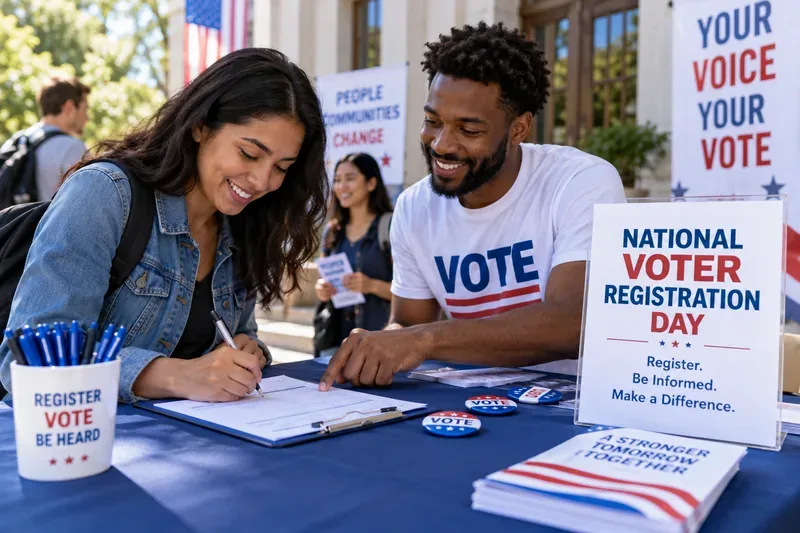
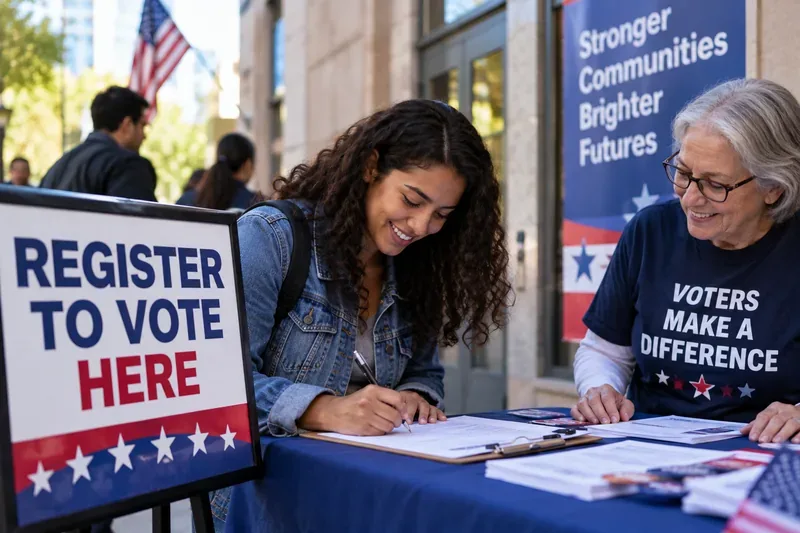
A community voter-registration table gives eligible voters a place to register, update their information, and ask questions before upcoming election deadlines.
What does getting #VoteReady actually mean?
At its most basic, being #VoteReady means knowing that your registration information is correct and knowing what your state requires before you vote. The official federal voting portal, Vote.gov, lets you select your state or territory to begin registration, update an existing registration, check your status, and find state-specific information.
For many voters, the most important action is not registering for the first time. It is confirming that the registration already on file still matches their current circumstances. A move, a name change, or a long period without voting can make a status check especially worthwhile.
USAGov advises voters to verify their registration before their state deadline and to check details such as name, address, party affiliation where applicable, and polling information. The government also notes that some registrations may be marked inactive if a voter has not responded to election mail and has not voted in recent federal elections. You can review the official guidance at USAGov’s voter registration status page.
Why does National Voter Registration Day matter in 2026?
This year’s observance falls less than two months before the November 3 general election. According to the National Voter Registration Day campaign, the 2026 ballots include every seat in the U.S. House of Representatives, dozens of U.S. Senate and gubernatorial contests, thousands of state legislative races, and many local offices. Those local and state contests often decide policies that affect schools, transportation, public safety, housing, taxes, courts, and other services people encounter directly.
The campaign is also unusually broad. Its organizers reported in August that more than 2,000 Community Partners in every state were preparing for the September 15 event, alongside more than 130 national Premier Partners. Since the observance began in 2012, the campaign says its partners have helped more than 6 million Americans register or update their information. Those figures come from the event organizer’s own reporting, so they are best understood as campaign totals rather than independent government statistics. The current campaign information is available from National Voter Registration Day.
Do you need to register again if you are already registered?
Not necessarily. If your registration is active and your name and address have not changed, you generally do not need to submit a new registration simply because an election is approaching. But you should still check your status.
You may need to update or re-register if you have moved, changed your name, or moved permanently to another state. State procedures vary. Some states let voters update information online, while others use mail forms, phone procedures, or in-person election offices. USAGov’s official voter registration update guidance explains the common situations in which an update may be needed.
If you recently moved, do not assume that changing your driver’s license automatically updated your voter record. Election records and motor vehicle records are related differently from state to state. Check the election record itself.
Is there one national voter registration deadline?
No. There is no single nationwide voter registration deadline. Each state sets its own rules, and the deadline can be as much as 30 days before an election in some states. Other states permit same-day registration. North Dakota does not require voter registration at all.
That variation is one reason National Voter Registration Day is useful: September 15 is early enough for many voters to resolve a problem before an October registration cutoff. But it is not itself a universal deadline. Always use your state’s official deadline rather than assuming that rules from another state apply to you.
National Voter Registration Day is especially relevant for people whose situation has changed since the last election. That includes first-time voters, college students who have moved, renters with a new address, newly naturalized citizens, people who recently changed their name, military families, Americans living abroad, and voters who have not cast a ballot in several election cycles.
Young voters should also check their state’s age rules. Federal guidance says a voter must generally be 18 on or before Election Day to vote in federal, state, and local elections, while almost every state permits people to register before turning 18 if they will be 18 by Election Day. Some states also allow certain 17-year-olds to participate in primaries. Eligibility details are summarized at USAGov’s voting eligibility page.
What if you cannot register online?
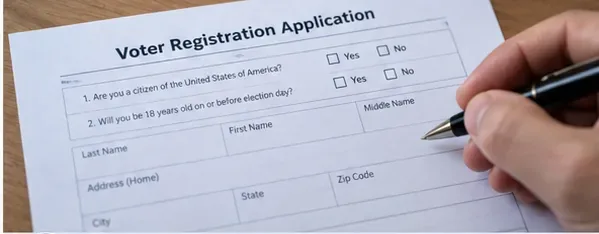
Online registration is not the only option. Depending on your state, you may be able to register by mail or in person. The U.S. Election Assistance Commission provides the National Mail Voter Registration Form, which can be used to register, update a name or address, or make certain party-affiliation changes where applicable.
The form includes state-specific instructions, and those instructions matter. The Election Assistance Commission says voters must follow the rules listed for their state, sign the form, and send it to the appropriate state or local election office. A generic form does not override state requirements.
What should you check before you consider yourself #VoteReady?
A useful check takes only a few minutes but should cover more than whether your name appears in a database.
Registration status: Confirm that you are shown as registered and active where your state provides that status.
Name and address: Make sure the record matches your current legal name and residence.
Registration deadline: Know the last day to register or update information in your state.
Polling place or voting method: Check where you vote and whether you plan to vote early, by mail where eligible, or in person on Election Day.
Identification rules: Requirements differ by state, so verify what identification, if any, you may need.
Election office contact: Save the contact information for your state or local election office in case a record looks wrong.
Why check now instead of waiting until Election Day?
Waiting creates unnecessary risk. A registration problem discovered several weeks before an election may be easy to correct. The same problem discovered at the polling place can be more complicated and may require additional steps, depending on state law.
Checking early also gives you time to learn your voting options. Some voters may prefer early in-person voting; others may qualify or choose to vote by mail under their state’s rules. Polling locations can also change. Being #VoteReady means replacing assumptions with confirmed information from election officials.
Does National Voter Registration Day support a party or candidate?
No. National Voter Registration Day describes itself as a nonpartisan civic holiday focused on helping eligible Americans register and participate. Its partner network includes election officials, libraries, schools, nonprofits, businesses, campuses, and other community organizations.
That distinction is important. Voter registration is an administrative prerequisite to participation in most states, not an endorsement of a particular political viewpoint. People with very different political beliefs can all benefit from accurate registration records and clear election information.
What is the most useful thing to do today?
If you are eligible to vote, take five minutes to check your registration through your state’s official election system, using Vote.gov or your state election office as the starting point. If everything is correct, note your deadline and voting plan. If something is wrong, update it promptly.
Then consider helping someone else do the same without telling them how to vote. A family member who moved, a student voting for the first time, or a neighbor who is unsure about a deadline may simply need the correct official link.
National Voter Registration Day is most meaningful when the celebration produces a practical result. In 2026, getting #VoteReady means knowing that your information is current, understanding your state’s rules, and entering the November 3 election period with fewer surprises between you and the ballot.