Home
» Today
»
South Florida Flood Safety: Road Alerts, Emergency Contacts and Preparedness | Nov. 18, 2026
South Florida Flood Safety: Road Alerts, Emergency Contacts and Preparedness | Nov. 18, 2026
Checked: November 18, 2026, 8:05 p.m. EST (South Florida, UTC−05:00; November 19 at 01:05 UTC).
A National Weather Service flood watch remained in effect for Miami-Dade, Broward, and Palm Beach counties through Thursday evening, November 19, as of the latest official information reviewed. The NWS said additional rounds of rain could bring 2 to 4 inches across southeast Florida, with localized 6 to 8 inches and isolated amounts above 10 inches possible. Those are forecast amounts, not a guarantee for every neighborhood. Flooding had already affected parts of the region, and Broward County declared a local state of emergency on Wednesday, November 18.
For drivers, check live conditions before leaving: the state’s FL511 system showed wet roads and possible intermittent slow traffic in Broward, while Broward County reported flooding on some roads leading to Fort Lauderdale-Hollywood International Airport and Port Everglades. The available alerts do not provide a dependable, complete list of flood closures across all South Florida streets. Conditions can change quickly, so follow barricades and official local updates. Never drive or walk into floodwater.
Highlights
Flood watch: NWS Miami listed a watch across South Florida through Thursday evening, November 19.
Forecast: 2 to 4 inches of additional rain were possible, with higher localized totals; exact placement and timing remain uncertain.
Roads: Broward reported flooding on some access roads to the airport and seaport; check FL511 and local alerts for current closures.
Get help: Call 911 for an immediate threat to life; use county information lines for non-emergency updates.
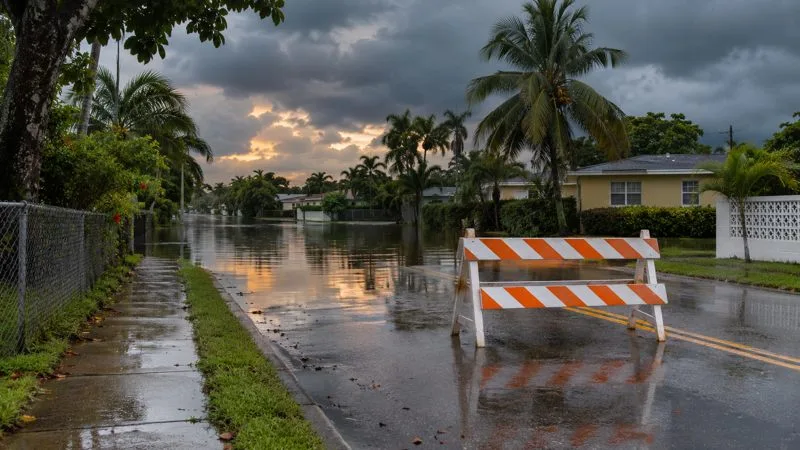
Illustrative image generated for this article; it does not show a verified flood location or current road closure.
What is the current South Florida flood alert?
The National Weather Service Miami flood watch covered coastal and inland areas of Miami-Dade, Broward, and Palm Beach counties through Thursday evening, November 19. A watch means conditions could lead to flooding; it is not a statement that every location is flooding or that a warning is in force everywhere. NWS Miami’s forecast discussion said the risk of urban flooding along South Florida’s east coast was expected to continue through Thursday, with the precise timing and location of heaviest rain uncertain.
Separately, Broward County announced a local state of emergency effective 7 a.m. Wednesday, November 18, due to weather and flooding. The county said its government offices, parks, and libraries were closed that day, while Fort Lauderdale-Hollywood International Airport and Port Everglades remained open. Broward also reported that some roads leading to those facilities had experienced flooding, and that crews were monitoring roadway conditions. These are dated county statements; residents should check the county’s current closure page for any changes before traveling.
Are roads closed in Miami-Dade, Broward, or Palm Beach?
There is no single static closure list that can safely represent every street in the tri-county area. At the time of review, FL511, Florida’s official real-time traffic information source, displayed a Broward alert for wet roads and intermittent slow traffic. Its displayed alert was last updated earlier on November 18, so it should not be read as a guarantee that a particular route is clear now. Check the live map and incident notices before departure, and check county or municipal channels for neighborhood roads that may not appear in state traffic feeds.
Broward County’s closures page and Miami-Dade’s Emergency Activation page are useful county-level references. Miami-Dade’s page listed no current expressway, toll, or bridge updates when checked; that does not establish that all local roads are passable. For Palm Beach County, check local emergency-management and municipal notices in addition to FL511. Road conditions can change faster than a saved screenshot, search result, or social post.
Never go around a barricade, even if the water looks shallow. Floodwater hides pavement damage, debris, open drains, and downed electrical lines. The National Weather Service says just six inches of fast-moving water can knock a person off their feet; deeper moving water can carry vehicles. If you reach water across the road, turn around and choose a different route. Do not rely on another driver’s tracks as proof that the road is safe.
What should residents do before more rain?
Keep alerts enabled and have more than one way to receive warnings, such as wireless emergency alerts, local radio, and county notifications. Know which nearby routes and locations are higher ground, and agree on a household check-in plan. Miami-Dade advises residents to prepare supplies for at least 72 hours, including drinking water, food, medications, a flashlight, batteries, first aid supplies, cash, and essentials for infants and pets. Put important documents in a waterproof container and keep a phone charger or battery pack ready.
If you live in a low-lying area or near a canal, creek, or other waterway, plan where you would go if officials advise evacuation. People who may need transportation or medical assistance should arrange support in advance and enroll in relevant county assistance programs. Clear leaves and debris from accessible drains and gutters if it is safe to do so; do not enter floodwater or approach storm drains during heavy rain. Secure outdoor items that could wash or blow into roads.
What should you do during or after flooding?
If a Flash Flood Warning is issued for your location, move to higher ground promptly and follow instructions from emergency officials. Avoid walking, swimming, or driving through floodwater. If water begins rising around a vehicle, get out only if it is safe to do so and move toward higher ground; never remain in a car trapped in rising water. Keep away from downed wires and do not touch electrical equipment while standing in water. Call 911 for a life-threatening emergency, not for routine road-condition checks.
After water recedes, return to an affected property only when authorities say it is safe. Watch for damaged gas lines, unstable structures, contaminated water, and electrical hazards. Photograph damage when safe to do so and report it through the appropriate county process. Miami-Dade residents can report flood damage using the county’s assessment form or by calling 311 or 305-468-5900.
Which emergency contacts should South Florida residents use?
Immediate danger, injury, or rescue: Call 911.
Broward County information and flood-related calls: Dial 311 or 954-831-4000. Broward says its call center is operational for flood-related calls during the emergency.
Miami-Dade County information: Dial 311 or 305-468-5900. The county lists 911 for emergencies.
Palm Beach County: The county’s Emergency Management office lists 561-712-6400 for contact; use 911 for emergencies.
State road incidents and traffic: Check FL511’s live map or call 511 where available.
Forecasts and road conditions can change during the watch period. The NWS rainfall totals are possibilities, while the emergency declaration and county road reports are confirmed official actions as of their stated dates. Recheck official alerts before travel and follow any newer evacuation, closure, or safety instructions.
Frequently asked questions
How long is the flood watch in effect?
The NWS Miami watch covering parts of Miami-Dade, Broward, and Palm Beach counties was listed through Thursday evening, November 19. Check the live NWS alert page for extensions or changes.
Where can I check South Florida road closures?
Use FL511 for live state traffic and incidents, then check county and city alerts for local street closures. Never cross water or bypass a barricade.
Who should I call about flooding?
Call 911 for immediate danger or a life-threatening emergency. For non-emergency information, Miami-Dade residents can call 311 or 305-468-5900, and Broward residents can call 311 or 954-831-4000.