Home
» How to
»
The meaning of the green ticks in Facebook Messenger
The meaning of the green ticks in Facebook Messenger
Video The meaning of the green ticks in Facebook Messenger
When you send a message to someone, you will initially see the blue circle icon on the white background , then the blue circle on the white background with the blue tick inside and then it changes into a green background circle, traces white ... Have you ever wondered what these icons in Facebook Messenger mean? Perhaps many people find them quite confusing. Therefore, download.vn will help you explain the meaning of each symbol.
Blue circle, white background
This icon means your message is being sent. At this point, it is best to keep the application open, do not exit Facebook Messenger or return to the home screen or sending messages will have problems.
Green circle, white background and green traces inside
When this icon appears, your message has been sent but the recipient has not seen it, maybe they are not online or not connected to the network. You can navigate to another page without worrying about lost messages.
Green circle background, white vestige
This icon appears when your message has been sent successfully, the opponent has received the message but has not yet viewed it. They will see your message whenever they use your phone, tablet or computer.
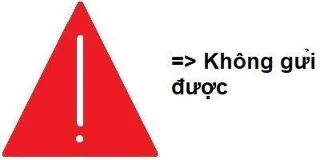
Red triangle icon with exclamation mark
A red triangle with an inner white exclamation mark appears if your message cannot be sent due to an Internet connection loss.
A message will appear next to this triangle icon “ This message didn't send. Check your internet connection and click to try again ”(ie this message could not be sent. Please check your Internet connection and click to resend) . At this point, if you navigate away from the site without an Internet connection, the message will be lost. To keep the message from going away, save a copy of the offline message.
Circle image the recipient avatar
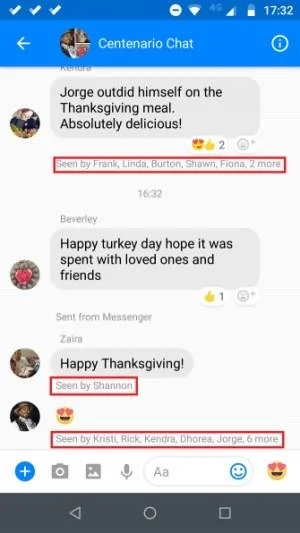
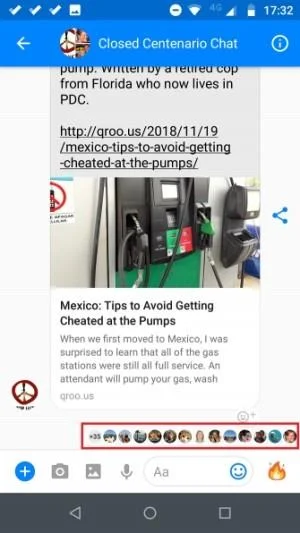
If someone has viewed your message on Messenger, a circle with their avatar will appear directly below the last message they read. In addition, you may also see the word " Seen " (or Seen ) displayed under the message.
How not to let others know if they have read their messages or not
Facebook has a feature that allows you to mark messages as unread. This makes many people think that they can read the messages that the senders still think they have not read. Sorry, this thought is completely wrong. When you have clicked on the message, as mentioned above, an avatar image will appear immediately below the message and notify the sender that you have read their message. This feature is immutable and you cannot retract the read icon.
At this point, the only way you can use 3rd party tools in the browser to avoid the enemy knowing you have seen the message. Or the best way is not to open the message to read.
Can strangers send you messages on Messenger?
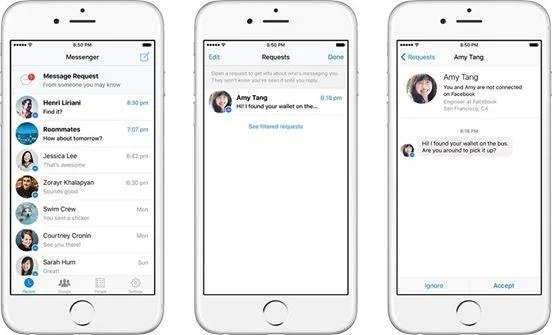
Facebook has also changed the way strangers can send messages to you. Now, if a stranger sends a message, three things will happen:
You will receive a notification that there is a Message Waiting.
The recipient will have the option Bypass (Ignore) or accepted (Accept) message to read it.
A notification will remain on Messenger so you know that you are not friends with that person on Messenger.
The " Message waiting " section is an update to the Other (Other) section of the inbox in the old version of Facebook Messenger.
How to delete messages in Facebook Messenger
There are 4 ways to hide or delete messages on Messenger:
Storage ( archiving ) a conversation will move the conversation out of your Inbox and saved in a folder Archived. You can also do the opposite to bring the conversation from the archive to the inbox.
Remove conversation ( Deleting a conversation ) will delete a message in a conversation in your inbox in your inbox but others remain. Once deleted, you cannot recover.
Deleting Messages ( Deleting Messages ) allows you to select specific messages to be permanently deleted from your inbox but it remains in someone else's inbox.
Message Block ( Blocking Messages ) will prevent others in conversation send messages to you. You can also unblock.
Initially, Messenger was intended to work on the Facebook platform, but it can now act as a standalone messaging app, as long as you provide a phone number.
Other alternatives to Facebook Messenger
While many users have had problems with Messenger permission requests, it is still one of the most used messaging apps available today. Currently Facebook Messenger has more than 1.3 billion monthly users and you can almost contact the person you want at all times, in many forms such as messaging, voice calling or video calling.
However, if you do not like, you can choose for yourself another messaging application among countless options like Viber , Skype , Whatsapp ...
 , then the blue circle on the white background with the blue tick inside
 and then it changes into a green background circle, traces white
 ... Have you ever wondered what these icons in