01. Current Data
The current data that matter most
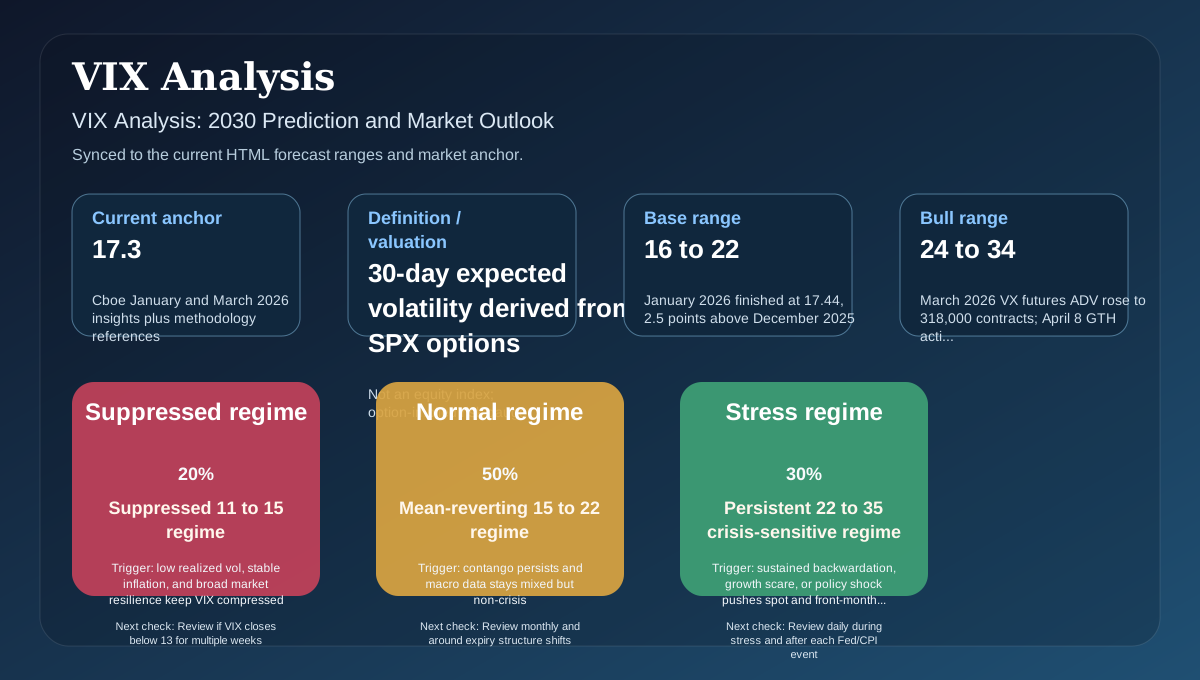
| Metric | Latest figure | Why it matters |
|---|---|---|
| Current anchor | 17.3 | Defines the starting point for the scenario discussion |
| Valuation or definition | 30-day expected volatility derived from SPX options | Shows how the market should interpret the asset |
| Structural characteristic | Not an equity index; option-implied risk gauge | Provides context for what this benchmark actually measures |
| Latest source anchor | January 2026 finished at 17.44, 2.5 points above December 2025 | Cboe January and March 2026 insights plus methodology references |
| Additional context | March 30, 2026 Cboe commentary cited VIX around 31 during an energy and growth scare | Helps turn the thesis into something monitorable |
The VIX has to be described correctly before it can be forecast. It is not a stock, not an earnings stream, and not a traditional index of cash flows. It is Cboe's 30-day forward-looking volatility measure derived from SPX option prices. That alone changes how scenario analysis should work. A normal VIX regime is usually mean-reverting. A stress VIX regime is usually event-driven, reflexive, and fast.
Recent official Cboe commentary gives a usable anchor. In January 2026, the VIX closed at 17.44, up 2.5 points from the prior month. By March 30, 2026, Cboe was discussing a weekly jump of 4.3 points that brought the VIX to around 31, its highest level since the previous spring sell-off. That spread between 17 and 31 is the story. It tells you that VIX forecasting is mostly about regime shifts, not about pretending a volatility index trends like a stock price.
Market structure data reinforce that point. Cboe's methodology documents remind investors that VIX is built from out-of-the-money SPX options, while its term-structure materials emphasize the difference between contango and backwardation. Cboe also notes that backwardation has occurred less than 20% of the time since 2010. That makes backwardation useful as a signal: rare, but not automatically predictive of catastrophe. In other words, the VIX is most informative when combined with structure, not when quoted alone.
02. Key Factors
Five factors shaping the next move
The first factor is spot level versus term structure. A VIX reading in the high teens usually means the market is uneasy but functional. A move toward 30 or above usually means investors are paying urgently for protection. But even then, the more important question is whether the term structure is still in contango or has flipped into backwardation. Contango usually signals a temporary shock; backwardation signals that the market is pricing more immediate stress.
The second factor is realized macro stress. Inflation, growth scares, geopolitical shocks, and policy repricing all push the VIX in different ways. April 2026 CPI at 3.8% and March 2026 core PCE at 3.2% matter not because they directly determine VIX, but because they influence the probability of policy surprises and equity repricing. The third factor is equity concentration. A narrow market with crowded leadership can keep realized volatility low for a while, then make shock moves more violent.
The fourth factor is derivatives flow. Cboe's March and April 2026 volume updates showed elevated activity in SPX and VIX-linked products, including strong VX futures ADV and a high-volume global trading hours session. That flow data does not predict the next move by itself, but it tells you whether investors are actively paying for protection. The fifth factor is mean reversion. Volatility spikes can persist, but they usually do not drift upward forever without a continuing catalyst.
| Factor | Why it matters | Current Assessment | Bias | Current evidence |
|---|---|---|---|---|
| Spot level | Shows the market's current 30-day fear premium | Moderate outside crisis, spike-prone | 0 | January 2026 closed at 17.44; late March stress commentary cited 31 |
| Term structure | Tells whether vol is normal or stressed | Usually contango, backwardation is rare | 0 | Cboe notes backwardation has happened less than 20% of the time since 2010 |
| Flow / hedging demand | Measures whether investors are paying up for protection | Elevated during macro stress windows | + | March and April 2026 VIX-related activity accelerated on Cboe |
| Macro regime | Inflation and growth shocks change volatility demand fast | Mixed | 0 | April 2026 CPI 3.8% year over year; core CPI 2.8%; March 2026 headline PCE 3.5%; core PCE 3.2% |
| Structural view | VIX is a risk gauge, not an asset with cash flows | Mean-reverting but shock-sensitive | 0 | The VIX is not a stock and should never be treated like one. It is a regime signal. The highest-quality VIX analysis starts with whether volatility is being priced as a temporary hedge, a structural macro warning, or a full stress event. |
03. Countercase
What could weaken the current thesis
The mistake many readers make is to assume any higher VIX reading is automatically bullish for the VIX in a lasting sense. In reality, the VIX often falls quickly after a shock if the market stabilizes. That is why the bearish case for the VIX is not 'nothing bad will happen.' It is that stress proves temporary, term structure normalizes, and implied volatility mean-reverts faster than people expected.
A second risk to bullish VIX calls is over-reading backwardation. Cboe's own educational material makes clear that backwardation is relatively rare, but it is not a guaranteed sign of a deeper down market. A third risk is that realized macro stress fades even if headlines remain loud. In those cases, volatility buyers can lose quickly as the hedging premium collapses.
| Risk | Latest data point | Why it matters now | What would confirm it |
|---|---|---|---|
| Macro pressure | March 2026 headline PCE 3.5%; core PCE 3.2% | Rates and growth still matter for both benchmarks | Sticky inflation or worsening growth scare |
| Structure / breadth | March 2026 VX futures ADV rose to 318,000 contracts; April 8 GTH activity was driven by SPX and VIX options | The internal quality of the signal matters as much as the headline | Narrower participation or adverse structure change |
| Valuation / regime risk | 30-day expected volatility derived from SPX options | Cheap-looking or calm-looking conditions can still reverse | Loss of valuation support or renewed stress spike |
| Narrative oversimplification | March 30, 2026 Cboe commentary cited VIX around 31 during an energy and growth scare | The benchmark can be misread if investors rely on one storyline | Data stop confirming the preferred narrative |
04. Institutional Lens
How official source material changes the outlook
The most credible VIX sources are methodology documents, index dashboards, and market-structure commentary from Cboe itself. Those sources tell us what the index is designed to measure, how its futures curve behaves in normal versus stressed regimes, and where recent stress episodes have pushed the index. That is much more useful than vague language about 'fear' detached from the mechanics of SPX options.
The practical takeaway is that the VIX should be monitored as a regime variable. When the index is in the mid-teens with contango intact, a bearish long-vol thesis is usually the better default. When the index jumps toward 30 with heavy futures and options activity and the curve threatens to invert, the odds of a prolonged stress window rise materially. That is why this rewrite uses regime ranges and structural triggers instead of pretending VIX has a normal equity-style valuation model.
| Source type | Concrete datapoint | Why it matters here |
|---|---|---|
| Official benchmark or methodology source | 30-day expected volatility derived from SPX options | Defines what the benchmark measures and how it should be interpreted |
| Latest benchmark snapshot | January 2026 finished at 17.44, 2.5 points above December 2025 | Provides the most recent quantitative anchor |
| Macro data | April 2026 CPI 3.8% year over year; core CPI 2.8%; March 2026 headline PCE 3.5%; core PCE 3.2% | Sets the rate and growth backdrop that moves both benchmarks |
| Recent market-structure commentary | March 30, 2026 Cboe commentary cited VIX around 31 during an energy and growth scare | Shows how the regime has behaved in the current year |
05. Scenarios
Scenario analysis with probabilities and review points
The scenario ranges below are designed to be monitorable. Each path has a probability, a practical trigger, and a clear review rhythm so the thesis can be updated as the data change.
| Scenario | Probability | Range / implication | Trigger | When to review |
|---|---|---|---|---|
| Stress regime | 30% | Persistent 22 to 35 crisis-sensitive regime | Trigger: sustained backwardation, growth scare, or policy shock pushes spot and front-month VIX higher | Review daily during stress and after each Fed/CPI event |
| Normal regime | 50% | Mean-reverting 15 to 22 regime | Trigger: contango persists and macro data stays mixed but non-crisis | Review monthly and around expiry structure shifts |
| Suppressed regime | 20% | Suppressed 11 to 15 regime | Trigger: low realized vol, stable inflation, and broad market resilience keep VIX compressed | Review if VIX closes below 13 for multiple weeks |
References