Home
» Today
»
Voter Registration Deadlines by State for the 2026 Election: Complete November 3 Guide
Voter Registration Deadlines by State for the 2026 Election: Complete November 3 Guide
Updated September 15, 2026. The 2026 U.S. general election is Tuesday, November 3, 2026. Voter registration is not governed by one nationwide deadline: each state sets its own cutoff, submission rules, and late-registration options. The quickest safe approach is to find your state below, use the linked official page, and verify your status before the deadline rather than waiting for the final day.
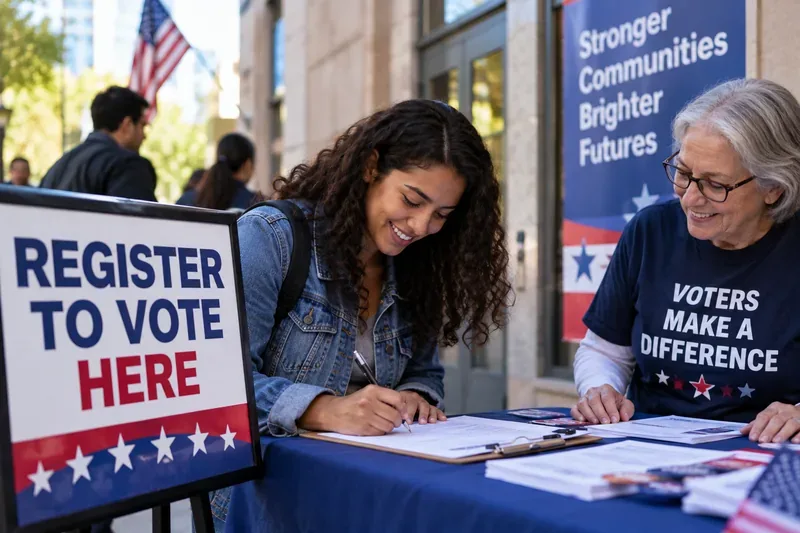
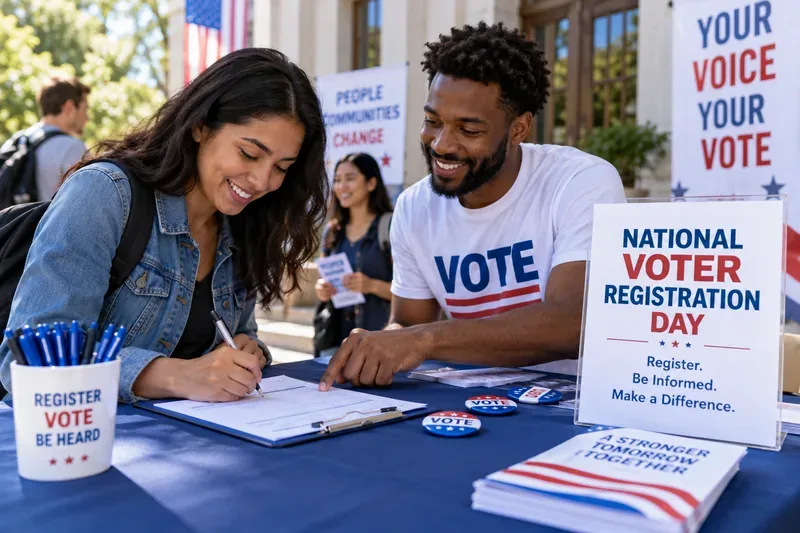
Voters review a November 2026 calendar while completing registration paperwork; deadlines and available registration methods vary by state.
Quick answer: when is the 2026 voter registration deadline?
For the November 3, 2026 general election, deadlines range from early October to Election Day itself. Some states use a single deadline for online, mail, and in-person registration. Others set different dates by method. Several states also offer same-day or Election Day registration after the regular advance-registration cutoff. North Dakota is the major exception because it does not require voter registration.
The table below is designed as a practical reference, not a substitute for the state election office. It highlights the principal 2026 cutoff and the most important exception when a later registration route exists. Where mail and online dates differ, the note calls that out. Because weekend rules, receipt-versus-postmark rules, identification requirements, and local office hours can matter, click your state name to confirm the current official instructions on Vote.gov before submitting anything.
No general online registration; most voters may register in person through Election Day. Mail registration is limited to qualifying circumstances and has an earlier receipt deadline.
Standard deadline is 25 days before Election Day; same-day registration is available during the early-voting period, not as a general Election Day option.
Mail applications must generally be received 14 days before Election Day; eligible voters may register in person through Election Day.
How to use this table correctly
1. Treat “postmarked” and “received” as different rules
A mailed registration form can be valid based on the postmark date in one state but must physically arrive by the deadline in another. That distinction matters most when you are mailing a form close to the cutoff. Vote.gov lists the applicable mail rule for each state, and the U.S. Election Assistance Commission’s National Mail Voter Registration Form includes state-specific instructions. If your state requires receipt by a date, mailing it on that date is too late.
2. Do not assume the online deadline matches the paper deadline
Several states keep online registration open longer than mailed registration. Nevada is a clear example: its mail cutoff comes much earlier, while online registration continues closer to Election Day and in-person registration remains available through Election Day. Louisiana also has a later online deadline than its mail/in-person cutoff. On the other hand, some states do not provide general online voter registration at all. Always use the method-specific deadline shown on the official state page.
3. Same-day registration is a backup route, not a reason to wait
States such as Colorado, Connecticut, Idaho, Iowa, Maine, Maryland, Michigan, Minnesota, Nevada, New Mexico, Utah, Vermont, Washington, Wisconsin, and Wyoming allow eligible voters to register in person very late in the process, often through Election Day. California provides conditional voter registration after its regular deadline. Virginia allows same-day registration with a provisional ballot after the regular deadline. Requirements can include proof of residence or identification, and the location may be limited to a clerk’s office, vote center, or polling place.
North Carolina is different: same-day registration is available during its early-voting period, but that should not be read as a general Election Day registration rule. If you miss North Carolina’s regular deadline, check the current early-voting schedule immediately.
What should you do if you moved, changed your name, or are unsure of your status?
Do not assume an old registration automatically follows you. A change of address, especially a move to another state, may require a new registration or an update before the deadline. A legal name change may also require an update. Start with Vote.gov’s state selector, then use your state election authority’s registration-status tool. The federal site specifically recommends checking that your legal name and address are current before voting.
If your registration shows as inactive or your information is incorrect, contact the state or local election office rather than submitting duplicate applications blindly. Local election officials can explain whether you should update an existing record, file a new application, or use a same-day process.
What about military members and U.S. citizens living overseas?
Military and overseas voters follow a separate federal process under the Uniformed and Overseas Citizens Absentee Voting Act. The usual starting point is the Federal Post Card Application, which can register an eligible voter and request an absentee ballot. Use the Federal Voting Assistance Program for current state-specific instructions and transmission deadlines. Do not rely only on the domestic-registration date in the table if you are voting from abroad or while serving away from home.
Practical checklist before the 2026 election
Confirm that the election you care about is the November 3, 2026 general election; primaries and local elections have separate deadlines.
Open your state’s official registration page and check whether your method is online, mail, or in person.
If mailing a form, verify whether the deadline is based on postmark or receipt.
Check your registration status after submitting an application, especially if you recently moved or changed your name.
If you missed the regular deadline, look immediately for same-day, Election Day, grace-period, or conditional registration options.
Confirm any identification or proof-of-residency documents required for late registration.
For military or overseas voting, use FVAP instead of relying only on domestic deadlines.
Why these dates can still change
Election rules can be amended by legislation, court orders, administrative changes, or emergency procedures. This article was researched against current federal and state election information available as of September 15, 2026, including Vote.gov and the U.S. Election Assistance Commission’s state voting directory. The EAC itself advises voters to verify timelines through linked state and local election sources because states administer elections differently.
For that reason, use this page to identify the date and the issue you need to check, then confirm on the official state site before acting. If two sources appear to conflict, follow the state election authority or your local election office for the election in which you are voting.
Bottom line
The safest deadline is the earliest one that applies to your chosen registration method. Registering early gives you time to correct an address, name, identification, or processing problem before voting begins. If the regular deadline has already passed, do not assume you are out of options: many states offer a later in-person path, and North Dakota does not require registration at all. Check your state now, save the confirmation, and verify your status again before Election Day.