Australia’s $110 Million Powerball: What to Check Before the November 26 Draw
Australia’s Powerball jackpot is listed at $110 million for November 26. Check your entry, cutoff time, odds and ticket verification steps before playing.
Checked Thursday, November 26, 2026, at 2:11:31 a.m. UTC (Greenwich Mean Time, UTC+00:00).
A UCAV—an unmanned or uncrewed combat aerial vehicle—is an aircraft without an onboard pilot that is intended for combat roles, including the ability to carry out strikes. The term describes a mission and capability, not a single design or level of automation. A military drone is a much wider category: many uncrewed aircraft are used for surveillance, communications, training or other support and are not combat aircraft. The distinction also does not tell you whether a person pilots the aircraft remotely or whether any targeting function is automated.
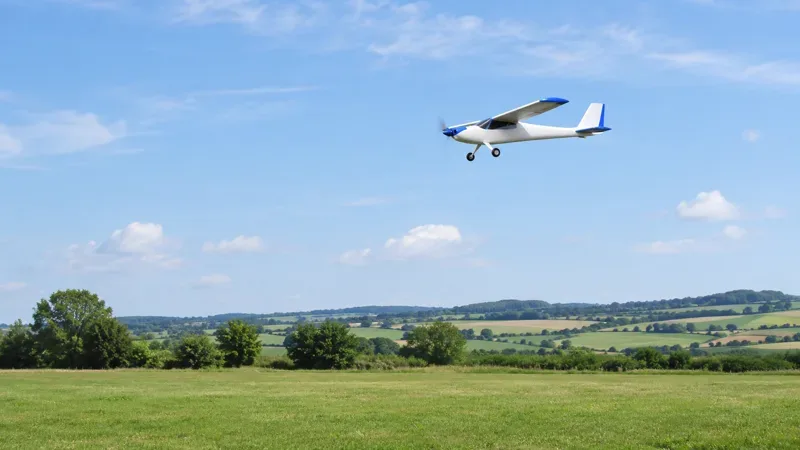
UCAV is commonly expanded as “unmanned combat aerial vehicle”; UK defence writing increasingly uses “uncrewed” in place of “unmanned.” In everyday reporting, the acronym usually means an uncrewed aircraft designed for combat, rather than every aircraft that flies without a pilot on board. It is a useful shorthand, but it should not be mistaken for a universal legal category with one fixed technical definition.
UK defence doctrine uses more specific terms. It defines an uncrewed aircraft as an aircraft with no human operator on board, operated remotely with varying levels of automated functions. An uncrewed aircraft system includes not only the aircraft but also the supporting network, equipment and personnel needed to control it. The RAF commonly calls its larger systems remotely piloted air systems, or RPAS. That wording puts the human pilot and wider control system in view rather than treating the aircraft as an isolated machine.
“Military drone” is an umbrella phrase. It can describe a small uncrewed aircraft used to observe an area, a larger platform carrying sensors, or an aircraft built for a combat role. A UCAV is the narrower idea: an uncrewed aircraft with combat or strike capability. Some platforms combine intelligence-gathering and strike roles, so a single aircraft may support different missions. The label alone does not tell a reader which mission took place on a particular flight.
It also does not tell you whether the system is remotely piloted or autonomous. These are separate dimensions. “Uncrewed” describes the absence of a pilot in the aircraft. “Remotely piloted” means a human pilot controls the aircraft from elsewhere. “Automated” generally refers to a system following programmed rules for particular tasks. “Autonomous weapon” is a more specific and disputed term; the ICRC describes such a weapon as one that, once activated, can select and apply force to targets without further human intervention.
The ICRC stresses that an armed drone piloted by a person who identifies the target and decides when to fire is not, for that reason alone, an autonomous weapon. Conversely, a platform can have automated flight functions while human beings continue to make decisions about targeting. Headlines that treat “drone,” “AI” and “autonomous weapon” as synonyms blur distinctions that matter legally and ethically.
The RAF’s Protector RG Mk1 is a contemporary UK example of a remotely piloted aircraft with both surveillance and strike roles. The RAF says it entered service in June 2025, describes its work as including intelligence, surveillance, target acquisition and reconnaissance, and lists strike operations among its capabilities. Its public aircraft page identifies it as a remotely piloted system. It is therefore useful to discuss it as a UK armed RPAS or combat-capable drone; the RAF’s own terminology is more precise than simply labelling it a UCAV.
Protector replaced the RAF’s Reaper capability. The Ministry of Defence’s 2026 equipment statistics say Reaper left service in October 2025 and had been replaced by Protector, based on the force position at 1 April 2026. The RAF also reported that a Protector aircraft completed its first European transit through civilian airspace in June 2026, flying from RAF Waddington to RAF Akrotiri. That was a deployment and airspace milestone, not evidence of a strike or combat event.
These examples help separate aircraft capability from an individual use. An aircraft may be equipped for multiple roles, but its name or payload does not establish what it did on a particular mission. Claims about a strike, target or outcome require separate, reliable evidence.
No. Removing the pilot from the aircraft does not remove legal duties from the people and states involved. UK Joint Doctrine Publication 0-30 says uncrewed aircraft missions are subject to the same rules of engagement and legal requirements as crewed missions. In armed conflict, international humanitarian law requires parties to distinguish military objectives from civilians and civilian objects, assess whether expected incidental civilian harm would be excessive in relation to the anticipated military advantage, and take feasible precautions to avoid or reduce harm.
The ICRC notes that these assessments depend on context and circumstances. Remote operation can change the practical setting in which decisions are made, while greater autonomy in selecting and applying force raises additional concerns about prediction, human judgement and accountability. Existing humanitarian law still applies; the debate is about whether it is sufficient for emerging autonomous systems and whether additional rules are needed. The ICRC is calling for legally binding limits on certain autonomous weapons, but that policy position should be distinguished from a statement that every armed drone is unlawful.
UK doctrine states that UK weapons remain under human control and that UK uncrewed aircraft are not fully autonomous. This is a description of UK policy in the cited doctrine, not a blanket statement about every country’s systems. Questions about a particular strike require evidence about the target, circumstances, decision process and applicable law—details a platform label alone cannot answer.
Using precise language helps avoid two opposite errors: assuming every military drone is armed, or assuming a remotely piloted armed aircraft is autonomous. For a UK reader, “RPAS” is common official RAF terminology, while “uncrewed aircraft system” describes the broader system around the aircraft. “UCAV” is useful when the combat role is central, but the reader should still ask whether the aircraft is remotely piloted, what function is being described and whether a claim concerns a general capability or a specific operation.
Sources checked: the RAF’s Protector RG Mk1 profile, its June 2025 service announcement and June 2026 transit report; the MOD’s UK armed forces equipment statistics for 2026; the UK’s Joint Doctrine Publication 0-30; and the ICRC’s FAQ on autonomous weapon systems.
No. Military drones include uncrewed aircraft used for surveillance and support; UCAV usually refers to an aircraft with a combat role.
Not necessarily. The ICRC distinguishes a human-piloted armed drone from an autonomous weapon that selects and applies force without a person choosing the specific target.
No. International humanitarian law applies to attacks by uncrewed aircraft as it does to attacks by crewed aircraft.
Australia’s Powerball jackpot is listed at $110 million for November 26. Check your entry, cutoff time, odds and ticket verification steps before playing.
Lotterywest says Australia's Powerball jackpot rose from A$100 million to A$110 million. Existing Draw 1593 entries qualify automatically; see cutoff and draw details.
Philadelphia and Miami are set for an NBA Cup matchup in Philadelphia. The game has not started as of 4:48 p.m. EST; here is what is confirmed and what comes next.
Jennifer Barreto of Puerto Rico won Miss Universe 2026. See what official event coverage and her biography confirm—and what search trends cannot tell us.
Roma held PSG to a 2–2 draw in Paris, ending the hosts’ perfect Champions League league-phase start. Here’s what happened and what it means.
Jennifer Barreto’s Miss Universe 2026 win is driving searches for the new titleholder, the historic milestone and what happens next.
LOSC vs. Bayern is trending as Lille hosts a pivotal Champions League clash. See the live score, kickoff details, team context and what the result could mean.
Miami entered 2–0 in NBA Cup East Group B and could clinch with a win. The live score feed is stale, so no current score or final is claimed.
Find Pacifica Municipal Pier at 2100 Beach Blvd. in Pacifica, California. It is closed after structural damage, and part reportedly broke away during Nov. 25 surf.
Walmart U.S. stores will be closed on Thanksgiving, Nov. 26, 2026. See how to check your store’s hours, pickup availability and Black Friday opening time.