
América 0–2 Monterrey: Final Score and Where to Follow | Nov. 29, 2026
Monterrey beat América 2–0 to advance from the Liga MX Apertura quarterfinal. Check the final score, match timeline, and U.S. viewing options.
Verified November 29, 2026, at 5:01 a.m. CET (UTC+1).
Starlink is a satellite internet service operated by SpaceX. It connects a customer’s dish, called a user terminal, to a network of satellites in low Earth orbit (LEO), then routes data to and from the wider internet. Because those satellites orbit much closer to Earth than traditional geostationary internet satellites, Starlink can offer lower latency than many older satellite systems. For Canadians in rural or remote areas, that can make it an alternative where wired broadband is limited—but the dish needs a clear view of the sky, and actual service depends on location and the plan available there.
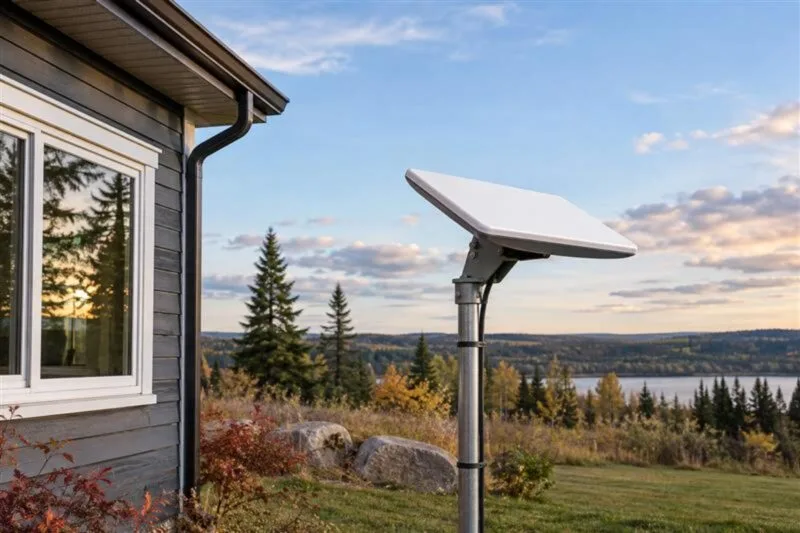
The connection starts at the user terminal installed at a home, business or other service location. The terminal communicates wirelessly with Starlink satellites passing overhead. Those satellites relay data toward a ground station connected to the internet, or pass traffic along to another satellite through optical links when the network route supports it. The response travels back through the network to the terminal, which connects to the household router and devices over Wi-Fi or a wired connection.
In everyday use, the process is automatic. A person browsing a website does not choose a satellite or gateway. Starlink’s network manages the connection as satellites move across the sky. The company describes the constellation as thousands of satellites in low Earth orbit, at roughly 550 kilometres altitude. That is far below the 35,786-kilometre orbit used by geostationary satellites, reducing the distance data must travel. Starlink says this helps lower latency, the delay before a response arrives; it does not mean every customer will experience the same speed or delay. See Starlink’s explanation of its technology.
A geostationary satellite remains over roughly the same point on Earth, but its great distance adds delay to a signal’s round trip. LEO satellites are much closer, so the signal has less distance to cover. They move quickly relative to a fixed location, however, which is why Starlink uses a constellation and shifts connections among satellites rather than relying on one satellite to serve a customer continuously.
This is still satellite internet: the customer’s connection depends on radio links between equipment in space and on the ground. It can be useful where running fibre or cable is difficult, including some rural and remote Canadian communities. It is not a guarantee of identical service everywhere. Availability, speeds, latency and data terms can differ by location, network load, hardware and service plan, so check the current Starlink availability and plan information for the specific service address.
A typical setup includes a Starlink user terminal (often called a dish), a router and the cables or power equipment supplied with the kit. The terminal needs an open view of the sky so it can maintain links as satellites move overhead. Trees, rooflines, nearby buildings or other obstacles can block a connection and contribute to interruptions or reduced performance.
Before fixing the terminal in place, Starlink recommends checking the proposed location with its app’s obstruction tool. Its support guidance says the dish works best with a clear view of the sky, and that a partially obstructed view can still cause service interruptions. If the app reports persistent obstruction, the recommended remedy is to find a clearer location or raise the mounting position when safe to do so. Read Starlink’s guidance on obstructions and how to address them.
Once online, the terminal can switch between satellites automatically. Starlink says these handoffs are generally imperceptible, but a lasting obstruction can still affect the connection. Weather, local network demand and the route traffic takes can also influence real-world performance. For this reason, advertised or typical performance figures should be treated as plan- and location-dependent rather than as a promise for every household.
Starlink may be worth considering when a household has limited wired options and can place the terminal where it has a clear sky view. Compare the service address’s availability, current monthly cost, equipment and installation needs, plan conditions, and any alternatives such as fibre, cable, fixed wireless or mobile service. In a place already served by reliable wired broadband, satellite service may not be the most suitable choice for every household. Check current details directly with the provider because offers and availability can change.
Yes. A clear view helps the terminal connect as satellites pass overhead. Trees or buildings in the way can lead to interruptions.
Both use satellites, but Starlink uses satellites in low Earth orbit, much closer to Earth than geostationary satellites commonly used by traditional satellite services.
Availability depends on the service address and current network and plan conditions. Check the provider’s availability information for the exact location.
Monterrey beat América 2–0 to advance from the Liga MX Apertura quarterfinal. Check the final score, match timeline, and U.S. viewing options.
Learn how UK pharmacy prescription substitution rules, generic dispensing, and Serious Shortage Protocols (SSPs) protect patients when medicines are out of stock.
Prescription substituted at the pharmacy counter? Here is your essential checklist of label details to inspect and critical questions to ask your pharmacist.

A clear guide to Prince Harry and King Charles’s strained relationship, key events in the rift, and the signs of renewed contact and reconciliation.

Final score and postgame recap for Oregon State vs. Fresno State on Nov. 28, 2026. The Beavers defeated the Bulldogs 38–10 at Valley Children’s Stadium.
Learn how to follow Arizona State vs. Arizona live, find the latest scores, and stream the rivalry game across official team portals, TV, and radio networks.
Baylor upsets No. 18 Houston 27-20 in their regular-season finale. Get the verified final score, stats leaders, and guide to checking official highlights.

The Flames–Rangers game has ended. See where Canadian fans can check the official recap, game report and NHL viewing options for future matchups.

The Nov. 28 Senators–Hurricanes game is final. See the score, find the official recap and game centre, and check Canadian broadcast options for their next meeting.