01. Historical Context
The current rally is backed by real shortages, not just momentum
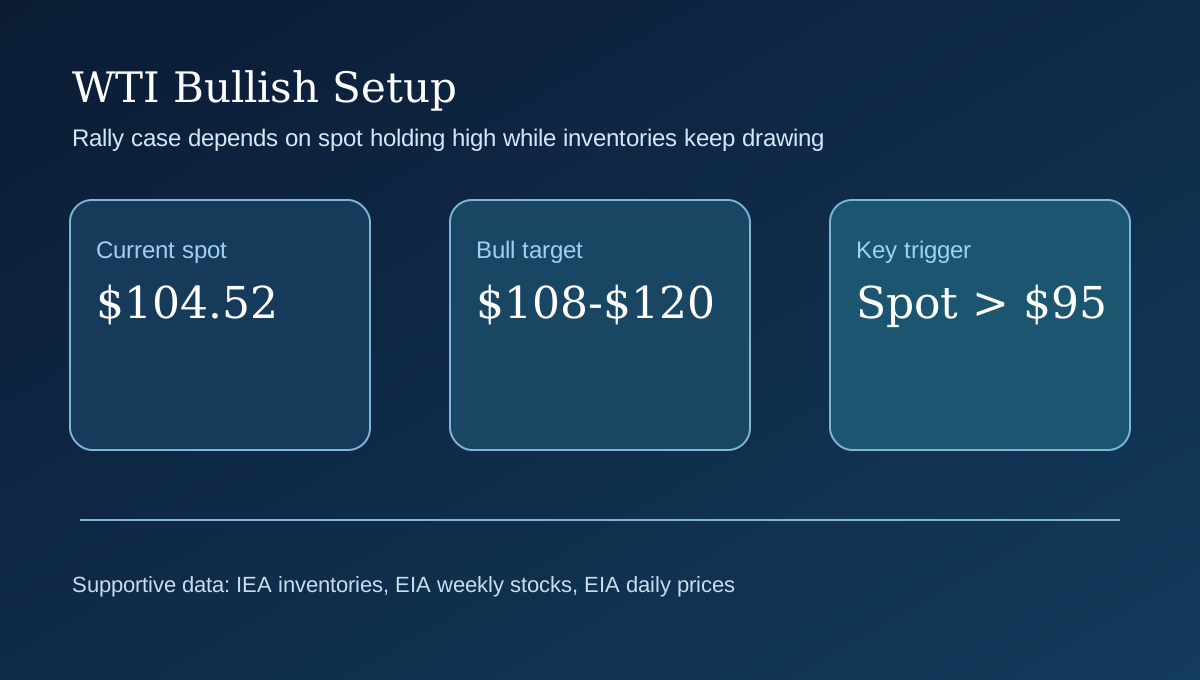
WTI has already cleared the zone where oil rallies are usually dismissed as technical noise. The EIA daily price page showed WTI spot at $104.52 on May 13, 2026, while Yahoo's front-month CL=F price was about $101.02 on May 14.
That price strength matches the physical backdrop. IEA said prompt time spreads in WTI and Brent ended April around $5 per barrel, which is a classic sign that the front of the curve is pricing immediate scarcity.
| Variable | Latest reading | Bullish threshold | Current assessment |
|---|---|---|---|
| WTI spot | $104.52 | Hold above $95 | Bullish |
| Prompt spread | Around $5/bbl in April | Stay clearly backwardated | Bullish |
| U.S. crude stocks | 452.876 mb | Keep drawing week to week | Bullish |
| Global stocks | -246 mb over Mar-Apr | Draws continue into summer | Bullish |
The rally is therefore not just narrative. It has a physical-market foundation in shut-in barrels, inventory loss, and prompt tightness.
02. Key Forces
What could keep the rally going from here
The first bullish pillar is ongoing supply loss. EIA said 10.5 million barrels per day of Gulf production had been shut in during the prior month. IEA said total losses since February had reached 12.8 million barrels per day.
The second pillar is visible stock depletion. IEA reported a 129 million barrel draw in March and another 117 million barrel draw in April. Until those numbers reverse, the burden of proof stays with the bears.
The third pillar is limited prompt relief. EIA still expects Brent near $106 in May and June because it sees global inventories falling by an average of 8.5 million barrels per day in 2Q26. WTI does not need booming demand to rise if the market is short physical barrels.
The fourth pillar is that U.S. weekly data still supports tightness. Commercial crude inventories fell 4.305 million barrels in the latest EIA report, and total stocks excluding SPR fell 5.059 million barrels week over week.
The fifth pillar is positioning via inflation hedging and geopolitical premium. World Bank says oil-price volatility during geopolitical stress is roughly twice as high as during calm periods, which means risk premium can stay embedded longer than a purely fundamental model expects.
| Factor | Latest data | Current assessment | Bias |
|---|---|---|---|
| Supply shock | 10.5 mb/d shut in per EIA | Still severe | Bullish |
| Inventories | Global stocks down 246 mb across Mar-Apr | Still drawing hard | Bullish |
| Curve shape | Prompt spreads near $5/bbl | Backwards market remains tight | Bullish |
| Demand | IEA 2026 demand -420 kb/d | Soft spot inside the bull case | Neutral to bearish |
| Macro policy | CPI 3.8% y/y in April | Can extend hedge demand but later hurt consumption | Mixed |
A rally extension is most credible while the first three rows stay intact. If they weaken, the demand and macro rows become more important very quickly.
03. Countercase
What could stop the rally even if the narrative still sounds bullish
The biggest risk is faster normalization in Gulf shipping and exports. If flows resume more smoothly than expected, the market can lose its prompt scarcity premium before the headline narrative fully catches up.
A second risk is demand elasticity. IEA already expects 2026 global demand to fall 420,000 barrels per day year over year, and high fuel prices are one reason. A rally can still extend on supply, but it becomes harder to sustain if demand keeps weakening.
A third risk is that inflation pushes policy and growth in the wrong direction. BLS reported April CPI up 3.8% year over year, with the energy index up 17.9%. If that pressure persists, oil can end up tightening financial conditions enough to undermine its own demand base.
| Risk | Trigger | Current status | Bias impact |
|---|---|---|---|
| Flow normalization | WTI loses $95 and stocks stop drawing | Not confirmed | Bearish |
| Demand destruction | IEA cuts demand again | Partly confirmed already | Bearish |
| Inflation squeeze | Higher yields and weaker growth data | Live risk | Bearish |
| Supply response | Atlantic Basin output fills the gap | Developing | Bearish |
The bull thesis works best as long as the market keeps paying for immediacy. Once the shortage becomes a story about next year instead of this month, upside becomes harder.
04. Institutional Lens
How official data lines up with the bullish case
IEA's May 13, 2026 update is the strongest bullish physical-market source right now because it still shows a deficit until the final quarter of 2026 and documents record stock draws. That is real, measurable tightness.
EIA's May 12, 2026 update is slightly less aggressive in tone but still supportive near term. Its quarterly WTI path has 2Q26 at $96.42 and 3Q26 at $90.06. That is lower than current spot, but still far above the 2025 average of $65.40.
World Bank's April 28, 2026 update matters because it quantifies the volatility premium. In stress periods, oil-price volatility roughly doubles, and Brent could average $115 in 2026 under a harsher disruption scenario.
| Source | Date | Specific signal | Bullish value |
|---|---|---|---|
| IEA OMR | May 13, 2026 | Deficit until 4Q26; inventories down 246 mb over Mar-Apr | High |
| EIA STEO | May 12, 2026 | WTI 2Q26 average $96.42 | Supportive but not euphoric |
| World Bank | April 28, 2026 | Brent stress case $115 in 2026 | Shows upside tail |
| EIA WPSR | May 13, 2026 release | Commercial crude down 4.305 mb w/w | Supportive |
The data-backed bullish argument is straightforward: the market remains physically tight enough to justify more upside before any medium-term normalization takes over.
05. Scenarios
Bullish scenarios with triggers and review points
Base bullish scenario, 55% probability: WTI trades in a $108-$120 range over the next one to three months. Trigger: spot remains above $95, weekly U.S. crude stocks keep drawing, and prompt spreads stay clearly backwardated. Review the thesis after each weekly EIA release.
High-volatility upside scenario, 20% probability: WTI spikes above $120. Trigger: renewed damage to export infrastructure or delayed restoration of Strait of Hormuz traffic. Review immediately on any change in shipping or strategic stock policy.
Failed-rally scenario, 25% probability: WTI falls back into the low $90s or high $80s. Trigger: flows normalize, the curve flattens, and inventories stop drawing. Review once two or three weekly data points confirm a change in trend.
| Scenario | Probability | Price zone | Trigger / review point |
|---|---|---|---|
| Extend higher | 55% | $108-$120 | Spot > $95 and continued weekly draws |
| Shock spike | 20% | Above $120 | Further export disruption or slower flow recovery |
| Fade | 25% | $88-$95 | Curve flattens and stocks stop drawing |
The bullish setup is actionable only while the data confirms immediate tightness. That is the line between a tradeable rally and a stale headline story.
References
Sources
- Yahoo Finance chart API for CL=F 10-year monthly history
- EIA Daily Prices page, including WTI spot and Brent spot updates
- EIA Weekly Petroleum Status Report, latest week ending May 8, 2026
- EIA Short-Term Energy Outlook tables, May 2026
- EIA press release on the May 12, 2026 STEO update
- IEA Oil Market Report, May 2026
- IMF World Economic Outlook, April 2026
- World Bank Commodity Markets Outlook press release, April 28, 2026
- BLS CPI release for April 2026
- BEA headline PCE price index page
- BEA core PCE price index page
- BEA GDP advance estimate for Q1 2026