Home
» Today
»
2026 Senate Election Results: Democrats Win Control; How to Read the Count (Nov. 4)
2026 Senate Election Results: Democrats Win Control; How to Read the Count (Nov. 4)
Information checked: November 4, 2026, 4:06 p.m. Eastern Standard Time (EST, UTC−05:00; 21:06 UTC). Democrats have won enough races in the November 3 U.S. midterm elections to take control of the Senate when the next Congress convenes, according to national race calls and results coverage. The latest verified national snapshot gives the Democratic-aligned bloc 54 seats, including two independents who caucus with Democrats, against 44 Republicans. Two Senate contests, in Alaska and Mississippi, remained uncalled in the Associated Press's November 4 reporting. That does not put control in doubt: 51 of the chamber's 100 seats constitute an outright majority.
These figures describe called races and a projected incoming Senate balance, not certified statewide totals. Election officials continue counting and reviewing valid ballots after Election Day. The distinction matters most in close races, where an early lead can change without reversing the overall Senate-control determination.
Destaques
Senate control: The Democratic-aligned bloc has secured at least 54 of 100 seats in the latest checked race-call tally; 51 is the majority threshold.
Uncalled contests: Alaska and Mississippi were still unresolved in the AP's November 4 report, so neither should be assigned a winner on the basis of a temporary lead.
Read results carefully: Votes reported, estimated votes counted, race calls, and certified results are four different things.
What's next: More ballots, possible recount procedures, and official canvasses can change individual margins before certification, while the incoming Senate's majority is already established by called seats.
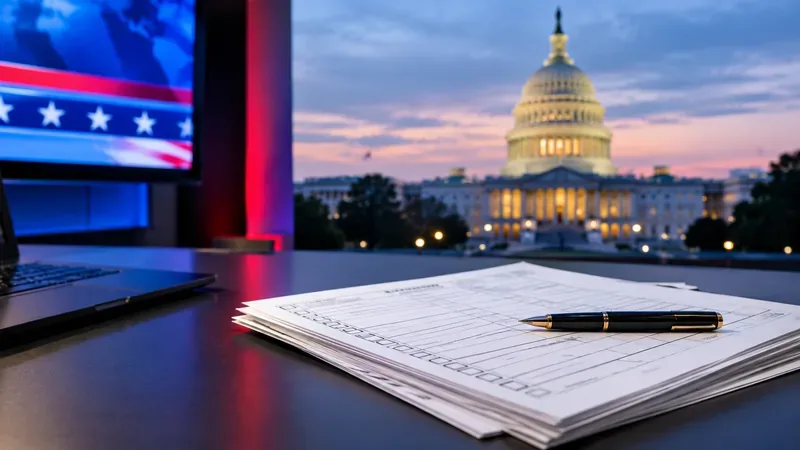
Illustration: An election-results news desk overlooking the U.S. Capitol. This is not a photograph of ballot counting or election officials.
Who won control of the Senate in the 2026 midterm elections?
Democrats are set to control the incoming Senate. The national results snapshot checked on November 4 shows 54 Democratic-aligned seats and 44 Republican seats, with two contests not yet called. The Democratic-aligned total includes the two independents who caucus with Democrats; it should not be read as 54 senators formally registered as Democrats. National coverage lists seven Democratic pickups from Republican-held seats, a result large enough to decide the chamber before every close contest has been resolved.
2026 Senate results snapshot
Seats or status
Democratic-aligned, including two independents
54 called/secured
Republican
44 called/secured
Uncalled Senate contests
2: Alaska and Mississippi
Seats needed for an outright majority
51 of 100
Senate races held in 2026
35
Snapshot note: These are national news-organization race calls available at the stated review time, not the final election certificates. Check ABC News' live national election results for subsequent calls. The U.S. Senate's party-division record documents the current, outgoing 119th Congress as 53 Republicans, 45 Democrats and two independents. Do not confuse that sitting membership with the Senate elected for the next Congress.
Which 2026 Senate races changed party control?
Reported Democratic pickups occurred in North Carolina, Texas, Iowa, Kansas, South Carolina, Ohio and Maine. National election reporting identifies Roy Cooper in North Carolina, James Talarico in Texas, Josh Turek in Iowa, Adam Hamilton in Kansas, Annie Andrews in South Carolina, Sherrod Brown in Ohio and Troy Jackson in Maine as the winners of those races. These results explain how the Democratic-aligned bloc surpassed the 51-seat mark despite Republicans entering the election with a majority in the sitting Senate.
Not every Democratic victory is a flip. A party that successfully defends a seat it already holds maintains its total; a flip changes the party holding that seat and can shift the net balance. This is why a national seat-control chart is more useful than a simple count of how many individual Democratic and Republican candidates won on Election Day.
Which Senate races are still uncalled: Alaska or Mississippi?
Alaska: Mary Peltola vs. Dan Sullivan
As of the AP's November 4 midday report, Democrat Mary Peltola and Republican incumbent Dan Sullivan were separated by a narrow margin, and AP had not called the race. Alaska uses ranked-choice voting. If no candidate receives a majority of first-choice votes, the state proceeds to ranked-choice tabulation under its rules. The Alaska Division of Elections' official results page identifies the November 3 returns as unofficial and states that ranked-choice tabulation results will not be available until November 18, 2026. Readers should avoid treating the current first-choice leader as the certified winner.
Mississippi: Scott Colom vs. Cindy Hyde-Smith
Mississippi's contest between Democrat Scott Colom and Republican incumbent Cindy Hyde-Smith also remained uncalled in the AP's November 4 report. The reported difference at that time was only a few dozen votes, so late-counted ballots and the state's subsequent review process matter greatly. AP reported that Mississippi has no automatic recount process and that a candidate may seek a court-ordered recount. A changing lead or a recount request would not, on its own, establish wrongdoing or decide the final result.
Those unresolved races can affect the size of the incoming majority, but the 54 seats already assigned to the Democratic-aligned bloc mean neither race is needed to reach 51. Since both counts can change, this article does not attach a fresh vote margin or final winner to either contest without a newer verified update.
How do you read the 2026 Senate election results correctly?
What does “votes counted” or “precincts reporting” mean?
A candidate's displayed vote total is a running count of ballots already processed and reported. The percentage of estimated votes counted is an estimate, not a guarantee about exactly how many eligible ballots remain. A separate “precincts reporting” statistic refers to reporting units, and a precinct marked as reporting may still have additional mail or other ballots to count. The Associated Press explanation of its vote-count process describes why even a very high precinct-reporting percentage does not automatically mean the total is final.
What is the difference between leading, called and certified?
Leading: A candidate has the most votes in the returns currently published; the remaining vote may still change the order.
Called: A news organization's decision desk has determined there is no realistic path for the trailing candidate to win under its race-call standards. The AP explains its approach on its race-calling methodology page.
Certified: Authorized election officials have completed the required canvass and other state procedures and formally confirmed the result. A news outlet's call cannot substitute for certification.
The U.S. Election Assistance Commission states that results remain unofficial even where a dashboard shows 100% of precincts reporting. Canvassing includes reconciliation of Election Day, early, absentee, military, overseas and provisional ballots as applicable. Audits and recounts, where required or requested under law, are separate steps.
How many Senate seats are needed for control, and why do independents count?
The Senate has 100 seats; 51 provides an outright majority. Two sitting independents caucus with Democrats, so a control tracker properly adds those seats to the Democratic organizing bloc while still distinguishing their formal party affiliation. A 50–50 division can make the vice president's constitutional tie-breaking vote decisive, but that is not the situation in the currently checked 2026 call tally.
Control also depends on when the tally applies. The Senate's published party-division history describes the sitting 119th Congress through January 2027. Election-night headlines about the next Senate do not mean that all newly elected senators are already seated or that the existing Senate has immediately changed its leadership.
Where can you track Senate results and what happens next?
Begin with a current, timestamped national race-call tracker and identify which organization made the call; note the difference between called and leading seats.
For a close state, open its election office's unofficial results rather than relying on screenshots or an unsourced social-media post. The Election Assistance Commission's state-results guidance points voters toward election authorities.
Check the source's update time and time zone. November 4, 2026 at 4:06 p.m. EST (UTC−05:00) is November 4 at 21:06 UTC; it is not the same as an earlier Election Night snapshot or a future state certification date.
Watch for official canvass reports, any legally authorized recount and the state's certification notice. Only those official processes finalize an election result.
What to expect: Additional counts may settle Alaska and Mississippi and change the final margin between the two Senate blocs. If their winners differ from current leaders, the totals should be updated when credible race callers or election authorities confirm the outcome. The broader conclusion that the Democratic-aligned bloc has already crossed 51 seats would remain unchanged unless a previously called race were unexpectedly revised.
FAQ: 2026 U.S. Senate election results
Who controls the Senate after the 2026 election?
The Democratic-aligned bloc has secured enough called seats for an outright majority in the incoming Senate. The reviewed snapshot is 54 Democratic-aligned, 44 Republican and two races uncalled; certification and seating are separate steps.
Why are Alaska and Mississippi still uncalled?
Their contests remained too close or insufficiently resolved for the AP to name winners in its November 4 report. Alaska may also require ranked-choice tabulation if nobody earns an outright majority of first-choice votes.
Are election-night Senate results official?
No. Reported vote totals and media race calls are not certification. State and local election officials must complete canvassing and any required reviews before issuing official results.