Home
» How to
»
3 Favorite Ways to Use Copilot in Outlook
3 Favorite Ways to Use Copilot in Outlook
Microsoft Copilot is a powerful tool that helps improve productivity across Microsoft 365 products, including Outlook. Copilot in Outlook offers a number of capabilities to manage messages and promote effective communication. Here are three helpful ways to stay on top of your inbox.
Note : Copilot in Outlook (and other Microsoft 365 apps) requires a Copilot license—whether it's a Microsoft 365 Copilot license issued by your organization or a Copilot Pro subscription through your personal Microsoft account (which costs $20/month).
1. Summarize long email threads
Long email threads can quickly become chaotic, making it difficult to keep track of key details. Copilot in Outlook helps you quickly and seamlessly extract key details and action points from long email threads (also known as conversations). It can easily extract key points from multiple messages and summarize a long conversation to see, for example, what decisions were made for the project item being discussed.
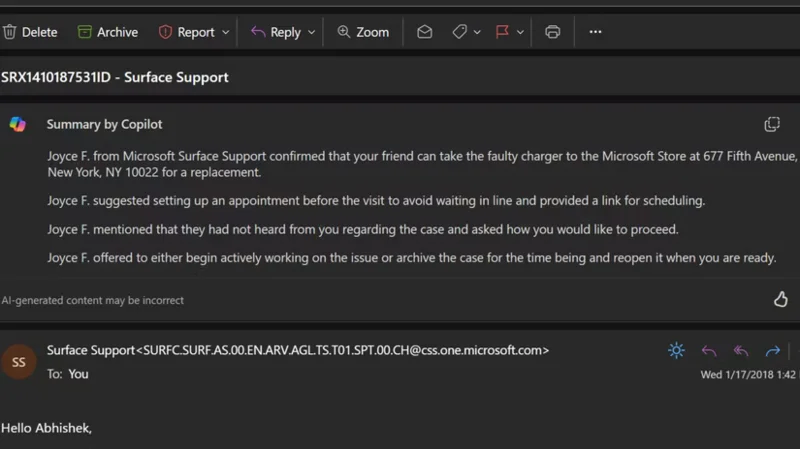
To do this, select an email conversation in Outlook and select Summary by Copilot at the top of the email thread. Copilot will scan the thread and create a summary for you at the top of the email.
In the screenshot below, Copilot created a summary from an email thread with a support manager, highlighting key points of the discussion after the service request was made and next steps.
Summary of Copilot email thread in Outlook
2. Draft emails like a pro
Copilot can help you compose a new email or reply to an existing conversation — just provide a brief prompt to clarify your needs and the AI will help you find the right words. Once you have a draft, you can adjust the length and tone of your draft to suit your style.
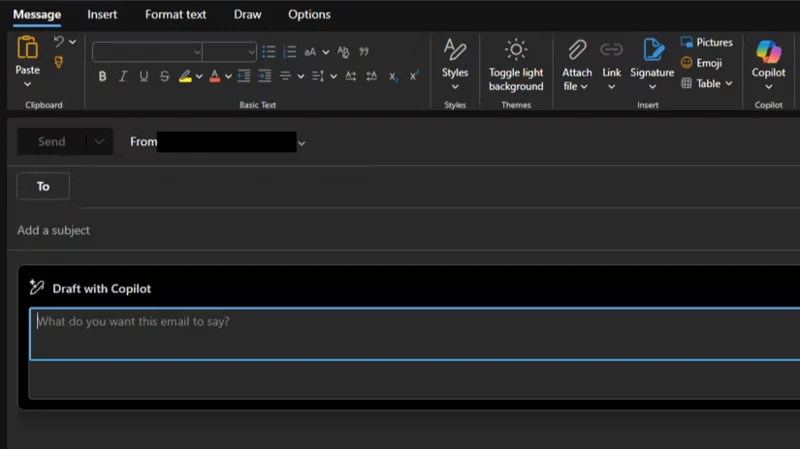
Use drafts with Copilot in Outlook to compose emails
Here's how to compose an Outlook email using Copilot:
When composing a new email, select the Copilot icon from the toolbar.
Select Draft with Copilot from the drop-down menu.
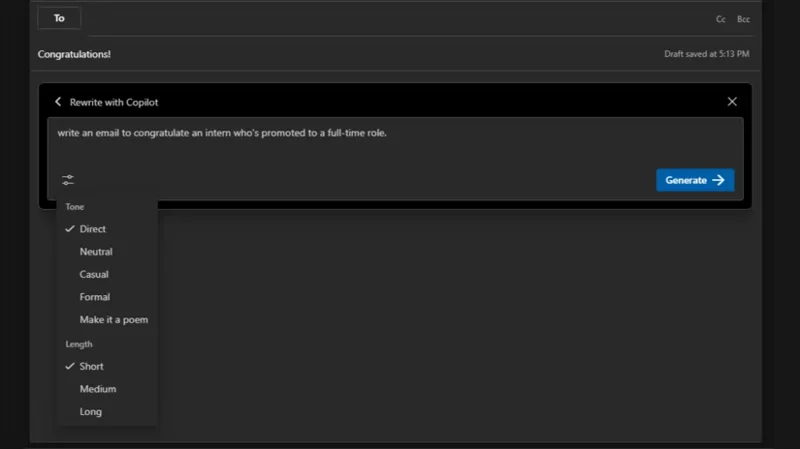
In the Copilot box, enter your prompt and use the Generation options icon to specify your desired length and tone.
When finished, select Generate and Copilot will draft the content for you.
If not quite as desired, select Regenerate draft .
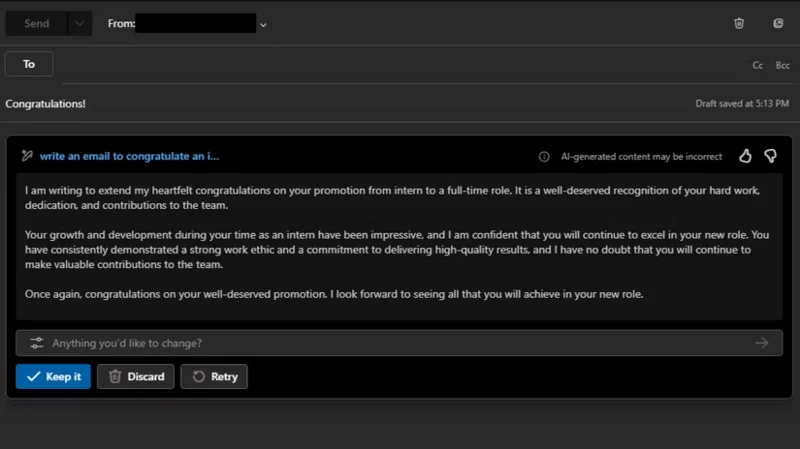
Once you are satisfied with the result, select Keep it .
Options for creating email drafts using Copilot in Outlook
Note that Copilot can create multiple drafts of the same email, each with a different tone and length. For example, you can ask Copilot in Outlook to make the email more formal or casual, longer or shorter. You can use the arrows to cycle through each draft.
Sample email draft using Copilot in Outlook
Once complete, you can edit the draft as needed to fill in or correct relevant information and send the email.
3. Maintain clarity and consistent tone throughout your emails
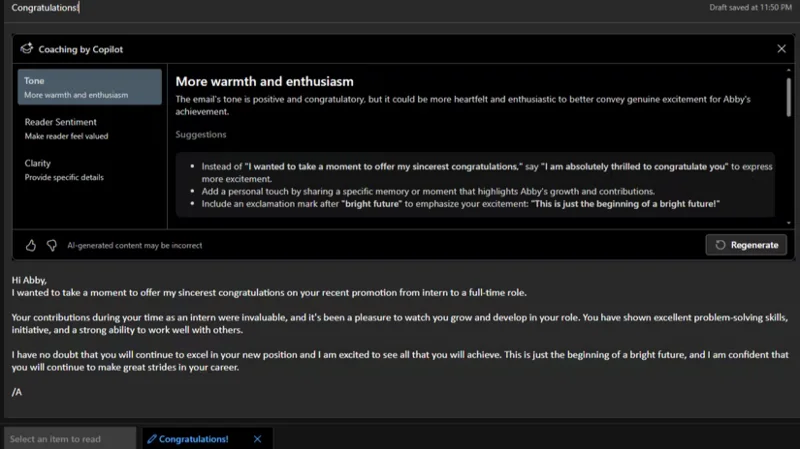
If you’ve ever struggled with whether your emails are appropriate, Copilot’s email coach can be a lifesaver. In addition to helping you compose emails, Copilot in Outlook helps you write more effective emails with its email coach. It analyzes your email drafts and makes suggestions to improve tone, sentiment, and clarity so you can get your message across in the best possible way.
Copilot Email Training in Outlook
From the Copilot icon on the toolbar, select Coaching by Copilot from the drop-down menu. Copilot will generate a small report with its findings and make suggestions for more effective communication. It will report whether the email draft has a warm, sincere, enthusiastic, apologetic tone, etc., and suggest whether the draft could be more positive, more direct, or something similar. Copilot will also check the clarity of the email and make suggestions for improvement. If you like any of the suggestions, you can add your feedback to the draft before sending it.
Note : Copilot is only available in the "new" Outlook for the web, Outlook Online, and Outlook for Windows. Additionally, other than work or school accounts, Copilot in Outlook only supports Microsoft accounts that use outlook.com, hotmail.com, live.com, and msn.com email addresses, not third-party email addresses, like Gmail.
Copilot in Outlook not only makes it easier to overcome the mental hurdle of starting or continuing an email conversation, but it also helps improve your email communications. Copilot in Outlook also offers a few additional features, such as the ability to quickly create a meeting invite from an email conversation. However, these features are only available if you have a Microsoft 365 Copilot (Work) license.