Kawaii Halloween Decor Without Gore or Jump Scares

Create a gentle Halloween look with pastel colors, friendly ghosts, easy no-carve accents, and practical safety tips for your home.
Your Samsung phone is packed with powerful audio features that you may not even know about. In addition to the usual volume and equalizer settings, these hidden features can dramatically improve your listening experience.
Table of Contents
Typically, when you connect your phone to an audio device, whether it's a Bluetooth speaker, headphones, or a car infotainment system, all audio is routed to that device, including phone calls, music, and system sounds.
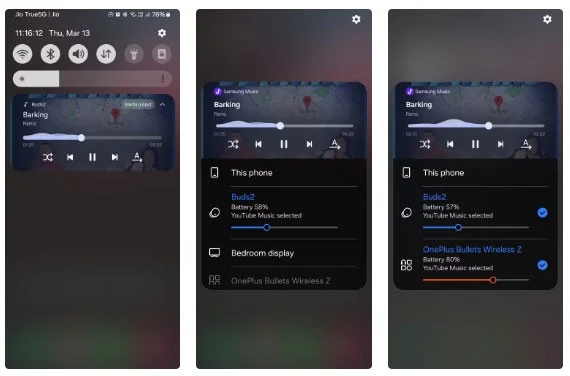
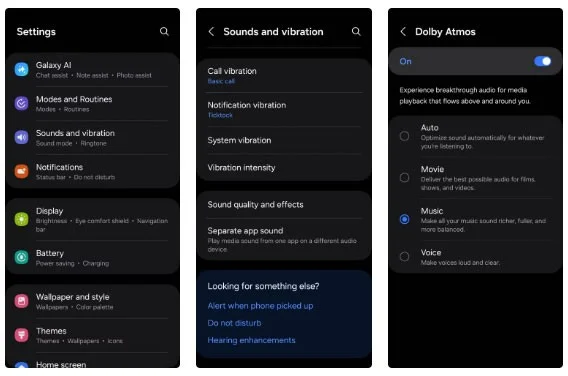
However, with Samsung's Separate app sound feature , you can assign different audio output devices to each app. This way, you can play YouTube Music through a Bluetooth speaker while still listening to Instagram Reels through your phone's built-in speaker.
You can enable and configure the separate app sound feature by going to Settings > Sounds and Vibration > Separate app sound on your Samsung phone.
Unlike most Android phones, Samsung Galaxy devices offer a Dual Audio feature that lets you play audio through two pairs of Bluetooth headphones or speakers at the same time. Simply connect the second device the same way you would the first, and you can control them individually in Bluetooth settings .
This is great when you want to watch videos or listen to music with friends without having to share headphones. You can even set different volume levels for these devices so you and your friends can listen at your preferred level.
The Dual Audio feature also helps create a stereo-like effect by allowing you to connect two different Bluetooth speakers to your Samsung phone.
There’s often no one-size-fits-all volume level for all apps. For example, you might like YouTube at 90% volume, but you don’t want Instagram Reels or your favorite game playing at such a loud volume. Luckily, you don’t have to keep adjusting the volume manually.
Samsung's Sound Assistant app lets you set different volume levels for each app. Once set, your phone will automatically remember these preferences.
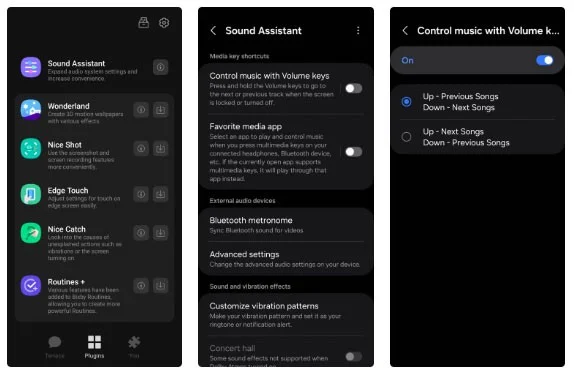
You can install the Sound Assistant app from the Galaxy Store. Once done, go to Individual app volumes and set different volume levels for each app.
The volume buttons on Samsung phones aren't just for adjusting volume; you can also use them to control music playback. This can be useful if you don't want to fumble with on-screen controls or rely on the volume buttons on your headphones or Bluetooth speakers.
To enable this feature, open the Sound Assistant app and turn on Control music with Volume keys . Once enabled, you can customize how the buttons work.
Your Samsung phone comes with Dolby Atmos , a feature that can enhance your audio experience by creating a more immersive surround sound effect. This feature works with both the phone's built-in speakers as well as external speakers and headphones.
You can enable this feature by going to Settings > Sounds and Vibration > Sound Quality and Effects > Dolby Atmos . For quick access, you can also add the Dolby Atmos tile by editing the Quick Settings panel on your Samsung phone.
One UI offers a variety of presets like Movie , Music , and Voice , so you can choose the best option depending on what you're listening to. You can also set it to Auto so your phone automatically optimizes the sound based on what you're playing.
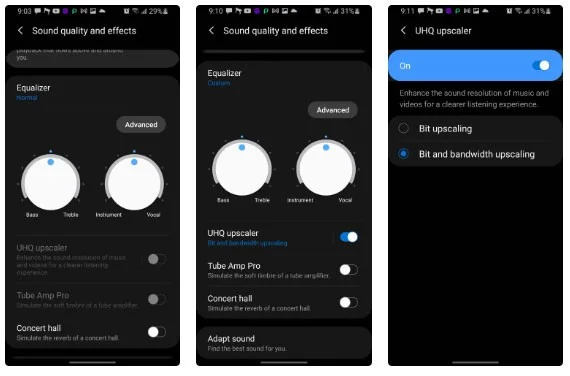
If you prefer listening to audio through headphones, you should try the UHQ Upscaler feature on your Galaxy phone. However, keep in mind that this feature only works with wired headphones and select compatible wireless headphones, such as the Galaxy Buds3 and Buds3 Pro.
To enable UHQ Upscaler, navigate to Settings > Sounds and Vibration > Sound Quality and Effects , then turn on the UHQ Upscaler toggle . You'll then see two options: Bit Upscaling , which reduces noise and distortion for cleaner sound, and Bit and Bandwidth Upscaling , which enhances both bit depth and sample rate for richer, more dynamic sound.
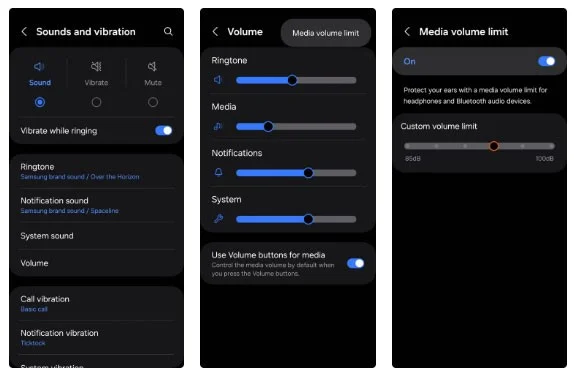
No matter how high-quality your headphones are, it's best to avoid listening for long periods of time, especially at high volumes. That's where the Media Volume Limit feature comes in handy.
This feature can help protect your hearing by preventing sounds from getting too loud. To enable it, go to Settings > Sounds and Vibration > Volume , tap the three-dot menu, and select Media volume limit . Turn it on, then adjust the maximum decibel level to your preference.
Once set, your Samsung phone will notify you with a Volume limit reached pop-up whenever you try to exceed your chosen limit. This feature is especially useful if you share your phone with children.
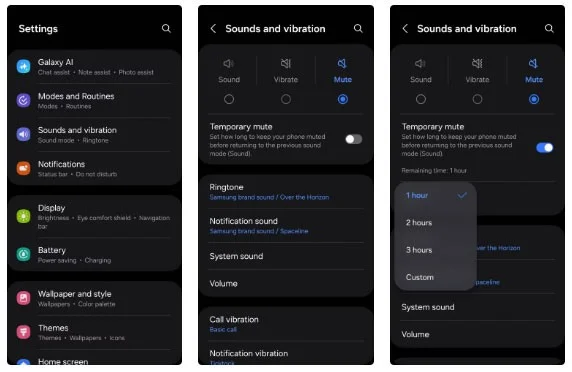
Here's a common one: You put your Galaxy phone on silent before a meeting, then forget to mute it afterward. You can't even count how many important calls and messages you've missed because of this.
Luckily, Samsung's Temporary Mute option, which lets you silence your phone for a set amount of time, can help solve this problem. To enable it, go to Settings > Sounds and Vibration , tap Mute , then turn on Temporary Mute .
You can then set a timer for how long you want your phone to be silent. When the timer expires, your Galaxy device will automatically restore sound.
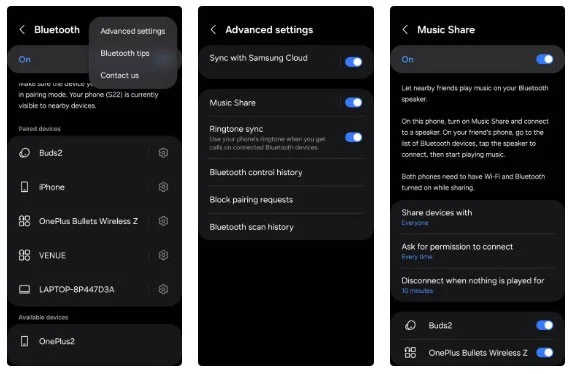
Samsung's Music Share feature lets you share your Bluetooth speaker or headphones with friends without disconnecting your own device. Here's how it works: If your Samsung phone is already connected to a Bluetooth speaker, other Samsung users can connect to your phone via Bluetooth and stream their audio through your speaker.
This feature eliminates the need to unpair your device from the speaker and pair your friend's phone. Once connected, both devices can control the volume. This feature is perfect for parties, road trips, or any situation where seamless switching between music sources is a must.
You can enable this feature on both devices by going to Settings > Connections > Bluetooth > Advanced settings > Music Share . You need to have Wi-Fi turned on on both devices for this feature to work, but you don't need to be connected to a Wi-Fi network.
Your Samsung Galaxy phone has some powerful audio features that are easy to overlook. However, you should familiarize yourself with them so you can get the best possible audio experience on your Samsung Galaxy phone.
Create a gentle Halloween look with pastel colors, friendly ghosts, easy no-carve accents, and practical safety tips for your home.
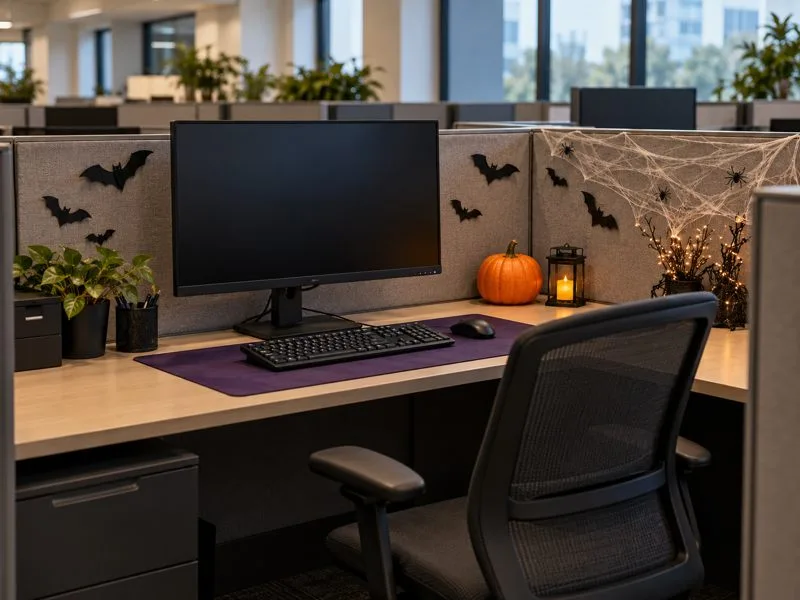
Create a spooky office cubicle with Halloween desk decor ideas that keep your workspace usable, tidy, and mindful of workplace safety.
Plan a recognizable Halloween 2026 look with pop culture costumes inspired by Spider-Man, Supergirl, Toy Story 5, Moana, Mario, and Wednesday.
Sort leftover Halloween candy safely, share or repurpose sealed treats, and choose food use or compost for pumpkins based on their condition.
Compare workplace Halloween costume choices by respect, dress code, mobility, and safety—and learn when a subtle accessory or a policy check is the better option.
Find a couples costume that fits your style, budget, and comfort level, from Addams Family classics to original inside-joke duos.
Need a last-minute high school Halloween costume? Compare 10 easy closet-based ideas by prep time, comfort, school-day practicality, and simple safety checks.
Use a simple 2026 Halloween decorating timeline for indoor décor, outdoor displays, and fresh pumpkins, with practical adjustments for weather and events.
Mix five vivid, approachable Halloween cocktails with measured recipes, simple prep tips, and an alcohol-free option for your party guests.
Find 15 office-friendly Halloween costume ideas for 2026, with practical checks for dress codes, respectful themes, comfort, and workplace safety.