GTA 6 Gameplay and Features: What’s Confirmed as of November 21, 2026

See what Rockstar has confirmed about GTA 6 gameplay, Jason and Lucia, Leonida’s locations, platforms, visuals, and features—and what remains undisclosed.
Updated: November 20, 2026, 8:05 p.m. UTC.
The Bolo Program and police partners unveiled a refreshed Top 25 list of Canada’s most wanted on November 19, showing life-sized AI-generated videos of all 25 suspects at a Toronto-area news conference and posting them online. Police described the clips as realistic portrayals of how the wanted people might appear in public. The refreshed campaign also carries up to C$650,000 in rewards across eight cases.
The latest confirmed development is the new list and its public launch, not a newly announced AI surveillance system. Bolo had already said in December 2024 that its Top 25 could be viewed “in motion” through AI-generated images. As of this check, no later post-launch update was confirmed in the official material reviewed.
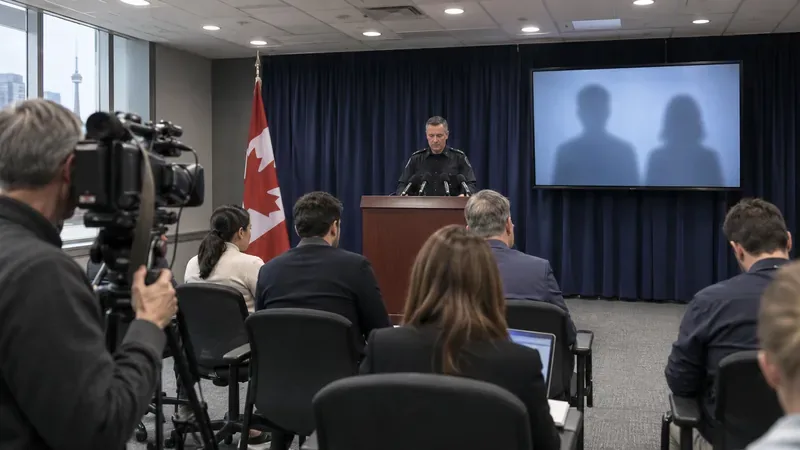
The updated Top 25 was unveiled at Toronto Police College in Etobicoke, Ontario. The Toronto Police Service’s advisory scheduled the news conference for Thursday, November 19, 2026, at 10:30 a.m. Eastern Standard Time (EST, UTC−05:00), which was 3:30 p.m. UTC on the same date. A police release the following day confirmed the revised list had been unveiled.
Niagara Regional Police reported that life-sized AI-generated videos of all 25 suspects were presented at the event and posted to boloprogram.org. The service said most people on the list are wanted in connection with murder or attempted murder cases. The clips are meant to give the public a more realistic sense of how a suspect may look in everyday settings, according to the police release.
The money attached to the list is case-specific, not a single reward available for any tip. Toronto Police said Bolo was offering up to C$650,000 across eight cases, including rewards for the five people at the top of the list. Bolo’s current site states that all of its listed rewards are in Canadian dollars. Anyone considering a tip should check the individual case page for the responsible police service and the exact reward terms.
The initiative is a public-awareness partnership, not a police service. Bolo says it amplifies priority wanted notices at the request of police partners and does not collect tips itself. That distinction matters when a reader finds an image or video: use the official case page to verify the current notice and send information to the named police agency.
No. In an update dated December 4, 2024, Bolo said all Top 25 suspects could be viewed on its website in motion using AI-generated images. The November 19, 2026, announcement is a newer campaign iteration: it pairs a refreshed Top 25 with life-sized videos shown at the Toronto event and new incentives for public tips. The distinction helps avoid presenting the AI format itself as a brand-new technology deployment.
Toronto Police also offered historical context: it said 19 of the 28 Toronto cases featured in Bolo campaigns since 2018 had resulted in arrests. That figure does not establish that the AI videos caused those arrests, or measure whether generated video performs better than photographs or other outreach. No comparative results for the new videos were included in the releases reviewed.
What is confirmed is limited: police call the clips AI-generated, describe them as life-sized, and say they are intended to help people recognize the suspects in public. They are not actual footage of a suspect walking through a store or airport, and the releases do not identify a real location or sighting shown in the videos.
The November announcement did not explain which source images were used, which model or production method created the motion, how the results were checked against the official photographs, or how uncertainty is communicated on each clip. The police releases also do not say that Bolo used facial-recognition software or automated camera searches. Those are important boundaries: a generated resemblance can prompt a tip, but it cannot independently confirm a person’s identity, current appearance, or whereabouts.
For public trust, clear labeling and a direct link to the official wanted notice matter. Bolo’s legal information says it circulates information already made public by law enforcement. The new AI videos raise reasonable questions for future updates about source-photo provenance, review procedures, corrections, and the risk of mistaken identification. These are transparency questions, not evidence that a particular clip is inaccurate.
Do not approach or confront anyone based on a resemblance to a video. Compare information only against the current case page, and use the contact or tip route listed for that specific case. If there is an immediate sighting or danger, follow the police instructions on the notice and call 9-1-1. Bolo’s FAQ directs people to each case profile for the correct reporting channel; the program itself is not the tip line.
People should also avoid posting an unverified identification, address, or accusation on social media. A public tip should go to investigators, not a comment thread. This protects bystanders from being wrongly identified and keeps potentially useful information with the police service responsible for the case.
The updated list gives Bolo and its police partners another national campaign window, with generated motion added to familiar wanted-person notices and rewards. It may help some viewers remember a face, but the practical test will be whether police receive specific, reliable tips and whether investigators can connect those tips to cases. Until Bolo or police publish results tied to this format, the effect of the AI clips remains unmeasured.
For readers, the key takeaway is straightforward: the November update broadened how the Top 25 is presented, while the official purpose remains public recognition and reporting. Treat the AI video as an illustration attached to a police notice—not as surveillance footage, proof of a sighting, or a substitute for the official case details.
The list was unveiled on Thursday, November 19, 2026, at Toronto Police College in Etobicoke. The Toronto Police Service had scheduled the event for 10:30 a.m. EST (UTC−05:00), or 3:30 p.m. UTC.
No. Police described them as AI-generated videos that portray how suspects may appear in public. The releases do not present them as recordings of actual sightings.
Use the police contact or tip instructions on the individual Bolo case page. Bolo says it does not collect tips. Do not approach anyone you believe may be a wanted person.
See what Rockstar has confirmed about GTA 6 gameplay, Jason and Lucia, Leonida’s locations, platforms, visuals, and features—and what remains undisclosed.
An AI-generated call about superannuation highlights risks from cold callers and scams. Learn how to verify callers, protect account details, and act if you shared information.
GTA VI launched on PS5 and Xbox Series X|S on 19 November. Here is what Australian players need to know about availability, the story, PC status and next steps.
An AI caller targeting Ellen Fanning’s super details has been reported across Australia. Here’s what the latest reporting and official guidance say to do.
An AI caller named Alex has cold-called Australians about switching super funds. Learn how lead generation works and how to protect your retirement savings.
Build a practical three-day UK emergency kit with water, no-cook food, light, medicines, and a plan—without panic buying or waste.
Billie Eilish is confirmed for BST Hyde Park on July 3, 2027. See current ticket prices, presale and general sale dates, and what is still to be announced.
Bon Jovi, Muse, Billie Eilish and RAYE are among BST Hyde Park 2027’s confirmed headliners. See dates, ticket prices, sale details and what is still to come.
UK emergency-preparedness purchases rose after Be Ready advice. See the latest grocery sales data, what it measures, and what the government actually recommends.
UK food-store sales rose in October as shoppers bought more long-life groceries after the Be Ready campaign. Here’s what the data and official advice mean.