Home
» Today
»
Fraud Targeting: What to Do Now to Limit the Damage — Checked Nov. 26, 2026
Fraud Targeting: What to Do Now to Limit the Damage — Checked Nov. 26, 2026
Information checked: November 26, 2026, 18:29 UTC.
If you think you have been targeted by fraud, stop contact with the sender and do not click, reply, send money, or share a verification code. If you already paid or gave away bank details, contact your bank or payment provider immediately through a trusted number or website. Acting quickly can limit further withdrawals, account takeover, and the chance that money becomes harder to recover.
You do not need to prove that a message was fraudulent before taking precautions. Keep the message and payment records, secure any affected accounts, and report the incident through the right UK channel. A report does not guarantee an investigation or reimbursement, but it can give banks and authorities information they can use.
Highlights
Call your bank using the number on your card or statement, its official app or website, or 159; never use contact details supplied in the suspicious message.
If you shared a password, change it from a trusted device and change it anywhere else you reused it.
In England, Wales, and Northern Ireland, report fraud to Report Fraud; in Scotland, report it to Police Scotland on 101.
Forward suspicious emails to report@phishing.gov.uk and report scam texts or calls to 7726.
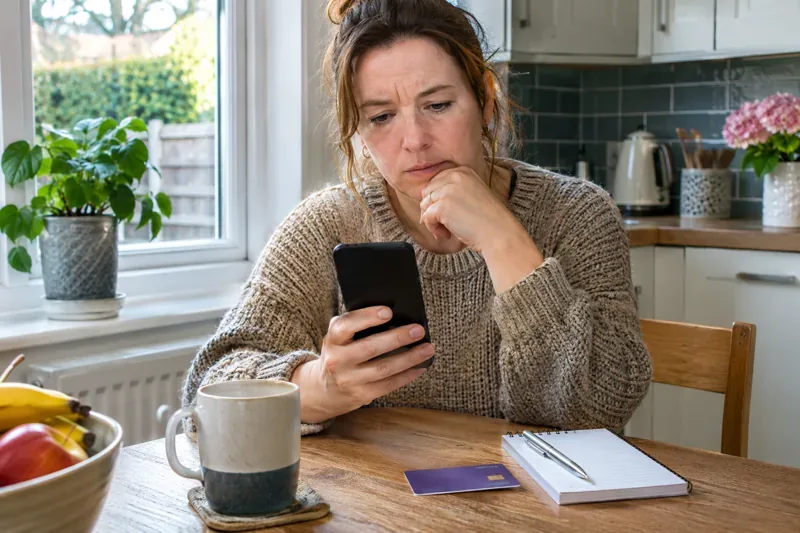
Illustrative image: pause, preserve the message, and contact your bank through a trusted channel.
What should I do first if I think a fraudster targeted me?
End the conversation. Do not follow instructions to move money to a “safe” account, install remote-access software, reveal a one-time passcode, or keep the call secret. A caller can spoof a real organization’s phone number, so caller ID alone is not proof. Look up the organization’s contact information independently, or use the number on your bank card or statement. The UK campaign Stop! Think Fraud also advises people to stop, avoid links and requests for personal or bank details, and break contact when needed.
If the person claims to be from your bank, payment app, phone company, government department, or a retailer, contact that organization directly. Ask it to secure the relevant account, cancel or replace exposed cards, block pending transactions where possible, and check whether contact details or security settings were changed. If you shared account credentials, ask whether the account needs to be locked or sessions signed out. Do not assume that deleting a message or changing one password has closed every route of access.
What if I sent money or gave away banking information?
Call your bank or payment provider as soon as possible and say plainly that you suspect fraud. Give the time, amount, payment method, recipient details, and any reference number you have. Ask the provider to try to stop or recall the payment, secure the account, and explain how to make a reimbursement claim. Contact it using a known channel, not a link or phone number in the message. Stop! Think Fraud lists a trusted bank website, the number on your card, or 159 as contact options.
For unauthorized payments, the Financial Conduct Authority (FCA) says to tell your provider immediately and ask for a refund. For a payment you were tricked into authorizing, reimbursement depends on how and when you paid and other eligibility rules. Under current UK rules, qualifying authorized push payment fraud sent within the UK through Faster Payments or CHAPS on or after October 7, 2024 may be covered up to £85,000; providers usually refund within five working days, although a claim can take up to 35 working days. The provider may not reimburse the first £100, and exceptions apply. Card, overseas, cryptocurrency, and other payment routes can follow different rules. These protections are not a promise that every loss will be repaid. Read the FCA guide to fraudulent payments and ask your provider which rules apply to your transaction.
If you gave away a password, change it promptly from a device you believe is safe. Change it on any other account where you reused it, beginning with email, banking, and mobile-provider accounts. Turn on multifactor authentication where available, review recovery phone numbers and email addresses, and sign out of sessions you do not recognize. If you opened a link on a computer or followed instructions to install software, the National Cyber Security Centre (NCSC) advises running a full antivirus scan if you have antivirus software. For a work device, tell your IT team.
How do I report suspected fraud in the UK?
If you lost money or were hacked, report the crime as well as contacting your bank. In England, Wales, and Northern Ireland, use Report Fraud or call 0300 123 2040. In Scotland, report fraud to Police Scotland by calling 101. Call 999 if someone is in immediate danger or a crime is happening now. The FCA’s consumer guidance explains these routes and notes that reports should go to Report Fraud or Police Scotland depending on where you live.
If you received a suspicious email but did not lose money, forward it to report@phishing.gov.uk. Forward scam texts to 7726; you can report a suspicious call by texting “Call” followed by the number to 7726. Report suspicious websites to the NCSC. HMRC impersonation attempts have separate routes: forward emails to phishing@hmrc.gov.uk and texts to 60599. If the fraud used a social platform or impersonated a company, report it to that platform or company too.
What evidence should I keep, and what happens next?
Save the original email, text, caller number, website address, screenshots, receipts, bank statements, payment references, and any letters from your provider. Record a short timeline of what happened and when. Do not forward suspicious links to friends or revisit a harmful site just to collect evidence. The FCA recommends keeping correspondence with the scammer because it can help with a bank claim or a complaint.
Ask the bank for a case reference and write down the date, time, and outcome of each call. If the provider refuses reimbursement or you disagree with how it handled the case, make a formal complaint to the provider. If you remain dissatisfied after its final response, the Financial Ombudsman Service may be able to review the complaint. The FCA says it cannot recover a victim’s money itself, so be wary of anyone claiming they can guarantee recovery, especially if they demand an upfront fee or ask for more account details.
Frequently asked questions
Should I contact my bank even if I have not lost money?
Yes, if you shared banking information, a one-time code, or account access, or believe someone can reach your account. Ask the bank to secure it. If you only received a suspicious message and did not respond, report the message through the relevant NCSC channel.
Can I get my money back after a scam?
Possibly. It depends on the payment type, date, circumstances, and applicable protections. Report it promptly, ask your provider to assess a claim, and keep its decision in writing. Do not treat a potential reimbursement as guaranteed.
Where should I report fraud if I live in Scotland?
Contact Police Scotland on 101. If a crime is in progress or someone is in immediate danger, call 999.