GTA 6 Gameplay and Features: What’s Confirmed as of November 21, 2026

See what Rockstar has confirmed about GTA 6 gameplay, Jason and Lucia, Leonida’s locations, platforms, visuals, and features—and what remains undisclosed.
Verified and updated: November 20, 2026, at 8:01 p.m. UTC (3:01 p.m. EST).
Canada’s Bolo Program has added life-sized, AI-generated videos to its campaign featuring the country’s 25 most wanted fugitives. Unveiled with policing partners in Toronto on November 19, the moving depictions are intended to help the public recognize people police are already seeking. They do not, by themselves, scan crowds or identify passersby.
That distinction matters: “AI video” can describe both synthetic public-awareness clips and software that helps investigators search recorded evidence. Those are different uses with different privacy implications. Toronto Police reported the new Bolo list and the role of its generated videos; its separate AI inventory describes tools used to compare suspect images with police records and to review video evidence.
Bolo—short for “be on the lookout”—is a public-awareness program that works with police services to promote selected wanted-person cases. At the November 19 announcement, Toronto Police said life-sized, AI-generated videos were used to help people picture how a suspect might look while moving in public. The underlying purpose is familiar: put case information in front of more people and encourage useful tips.
The word “generated” is important. A clip can create movement from still photographs or other reference material, but that does not make the movement a record of what the person actually did. Viewers should treat it as an illustrative depiction, not surveillance footage, proof of a location, or a new behavioural clue. The official Bolo listing and the police service responsible for each case remain the places to check current case details and tip instructions.
Toronto Police reported that 19 of 28 Toronto cases featured by Bolo since 2018 had led to an arrest. That figure is the service’s reported result; it does not establish that the videos caused those arrests. Police also said that tips should go directly to the service responsible for the case.
A generated clip is made to communicate an appearance. Video-analysis software, by contrast, can help investigators work through material collected during an investigation. The Toronto Police Service’s public AI inventory says its BriefCam testing helps investigators review large video files faster, flagging specified objects or reading licence plates so an investigator can review the relevant moments. The inventory describes potential matches and flags as prompts for human assessment, not decisions that act on their own.
Facial recognition is another distinct use. Toronto Police says its NeoFace Reveal system compares a suspect image captured in connection with an occurrence against lawfully obtained criminal-record booking images. The system returns possible matches for review by a facial-recognition analyst and an investigator. York Regional Police likewise says its facial-recognition searches use images lawfully gathered after an incident and that results are investigative leads, not evidence on their own. York says it does not use that system for real-time surveillance.
These examples are service-specific. They do not prove that every Canadian police agency uses the same vendors, databases, processes or restrictions. The RCMP’s technology transparency blueprint, for example, says the federal force uses face matching to process lawfully obtained investigation evidence and distinguishes this from facial identification searches against a database.
Facial recognition involves biometric information that can identify a person, and the Office of the Privacy Commissioner of Canada and provincial and territorial counterparts warn that misuse can threaten privacy and equality rights. Their joint guidance says police must have lawful authority, assess necessity and proportionality, minimize collected data, and build privacy protections into the design and operation of a system. It also notes that the legal framework remains fragmented and that uncertainty persists about when police uses are lawful.
For the public, the practical questions are specific: What images are searched? Where did they come from? Is the system comparing evidence after an event or scanning people in real time? Who checks a possible match, records the decision and corrects errors? How long is the information retained? Agencies should be able to explain the purpose, legal basis, oversight and safeguards in terms people can understand.
AI can help investigators sort evidence or make a wanted-person appeal more vivid, but neither a generated likeness nor a software match should be mistaken for confirmation of identity. A potential match needs corroboration and accountable human review. If someone recognizes a person featured in a wanted appeal, police advise contacting the responsible service; do not approach anyone described as dangerous. In an immediate emergency, call 911.
The confirmed development is the Bolo campaign’s use of generated motion in its latest public appeal. The broader impact will depend on how agencies evaluate whether that presentation produces useful tips, whether the public can tell synthetic imagery from real footage, and how clearly police disclose the limits of the technology. Those are issues to watch, not outcomes established by the announcement.
For investigative tools, transparent inventories and public privacy assessments can help communities distinguish narrowly targeted evidence review from broader surveillance. The privacy commissioners’ guidance calls for ongoing monitoring and reassessment as technology and circumstances change. As more services disclose their practices, residents can compare stated safeguards with actual uses and ask elected police boards and commissioners to scrutinize changes.
Sources: Toronto Police Service: Bolo’s updated most-wanted list and AI-generated videos; Toronto Police Service: AI inventory and governance; RCMP: National Technology Onboarding Program transparency blueprint; York Regional Police: Facial recognition technology; Office of the Privacy Commissioner of Canada: Privacy guidance on facial recognition for police agencies.
The published information describes generated depictions for public recognition, not a system that scans live camera feeds to locate people.
No. Police services describe possible matches as investigative leads that require human review and further investigation.
Contact the police service listed for that case and follow its instructions. Do not approach a person police describe as dangerous; call 911 for an immediate emergency.
See what Rockstar has confirmed about GTA 6 gameplay, Jason and Lucia, Leonida’s locations, platforms, visuals, and features—and what remains undisclosed.
An AI-generated call about superannuation highlights risks from cold callers and scams. Learn how to verify callers, protect account details, and act if you shared information.
GTA VI launched on PS5 and Xbox Series X|S on 19 November. Here is what Australian players need to know about availability, the story, PC status and next steps.
An AI caller targeting Ellen Fanning’s super details has been reported across Australia. Here’s what the latest reporting and official guidance say to do.
An AI caller named Alex has cold-called Australians about switching super funds. Learn how lead generation works and how to protect your retirement savings.
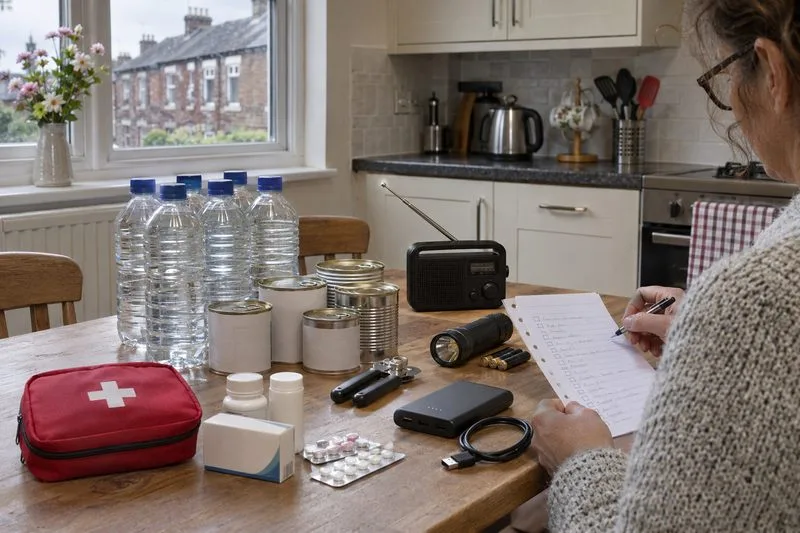
Build a practical three-day UK emergency kit with water, no-cook food, light, medicines, and a plan—without panic buying or waste.
Billie Eilish is confirmed for BST Hyde Park on July 3, 2027. See current ticket prices, presale and general sale dates, and what is still to be announced.
Bon Jovi, Muse, Billie Eilish and RAYE are among BST Hyde Park 2027’s confirmed headliners. See dates, ticket prices, sale details and what is still to come.
UK emergency-preparedness purchases rose after Be Ready advice. See the latest grocery sales data, what it measures, and what the government actually recommends.
UK food-store sales rose in October as shoppers bought more long-life groceries after the Be Ready campaign. Here’s what the data and official advice mean.