Home
» PC Tips
»
How to add exceptions in Windows Defender on Windows 10
How to add exceptions in Windows Defender on Windows 10
Windows Defender , built into Windows 10, runs in the background and scans files for malware. To improve performance for tasks like compiling code or running virtual machines, you can add exceptions so Windows Defender never scans those files.
Warning : Be careful about what you exclude. Windows Defender will not scan excluded files and folders for malware.
How to add exceptions to Windows Defender in Windows Security
Step 1:
First, you need to launch Windows Security to change some settings. Open the Start menu and type Windows Security . Then, select the Windows Security app.
Step 2:
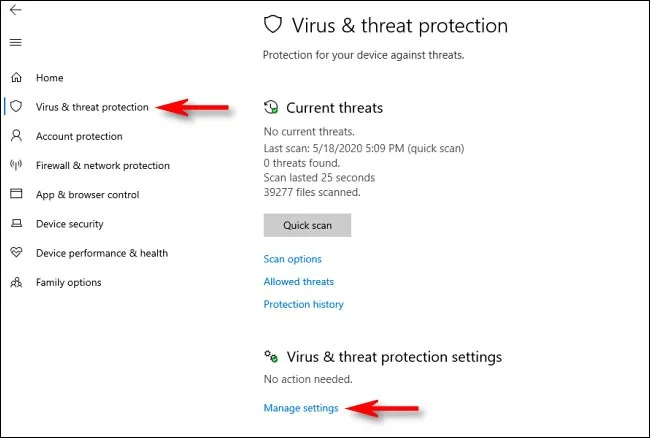
In Windows Security , navigate to Virus & Threat Protection . Then, click Manage Settings.
In Windows Security, navigate to Virus & Threat Protection
Step 3:
In Virus & Threat Protection Settings , scroll to the bottom of the page and click Add or Remove Exclusions .
Step 4:
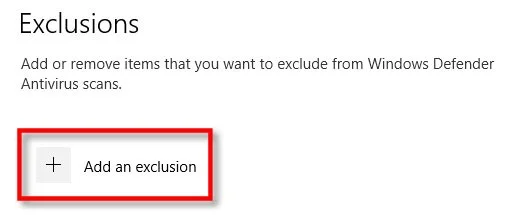
On the Exclusions page , you can add or remove files that you want to exclude from Windows Defender scanning. To add an exception, click the Add An Exclusion button next to the large plus sign ( + ) icon.
Click the Add An Exclusion button
Step 5:
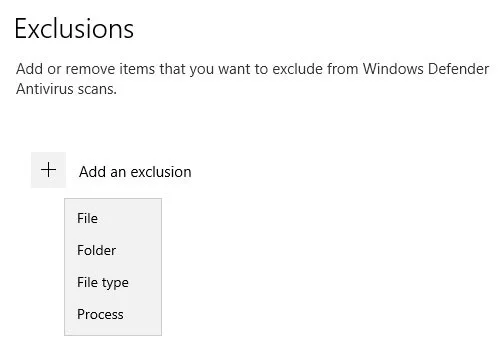
A small menu will appear that allows you to specify the exception by File, Folder, File type or Process .
A small menu will appear allowing you to define the exception.
What you choose depends on the type of exception you are trying to throw. Here is what each option will do.
File: If you select this, a box will appear that allows you to browse your computer to select a file that will be excluded from future scans. Select the file you want, then click Open.
Folder: Like the File option , this will allow you to browse your computer for a specific folder and exclude it from scanning. The contents and subfolders within this folder will also be excluded.
File type : A box will appear asking you to enter the file extension (e.g. .MID ) that represents the type of file you want to exclude. All files of that type will be excluded from future scans. This is dangerous, as you could accidentally exclude a large group of potentially malicious files, such as PDF or DOC files.
Process : A window will appear asking you to enter the name of a process (a running program, such as explorer.exe ) to exclude from scanning. If there is a program that you know is safe, but would be flagged by Defender, you can enter it here.
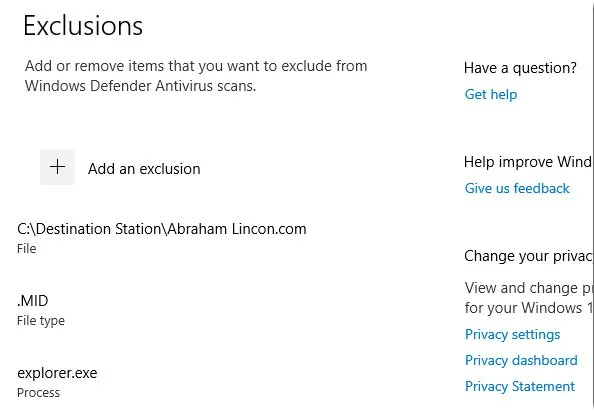
Select one of these options and make the necessary selections in the following pop-up dialog box. When you add an exception, it will appear in a list on the Exclusions page.
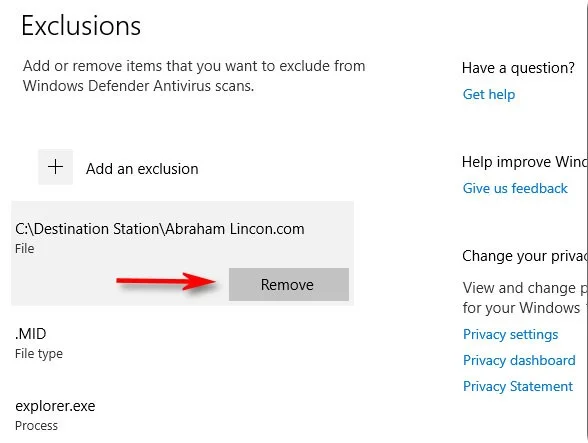
Exceptions will be displayed in a list on the Exclusions page.
Step 6:
If you want to remove a defined exception, hover your mouse over it until a down arrow appears, then click the Remove button .
Click the Remove button to remove the exception.
Step 7:
Once you're done, close Windows Security and your settings will be saved. The next time the system runs a Defender scan, the items you added to the exclusion list won't cause any problems.
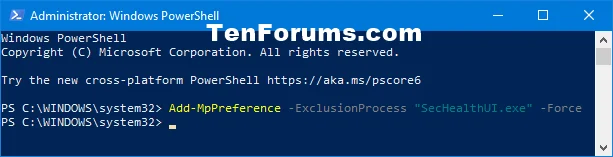
How to Add Exceptions in Windows Defender Using PowerShell
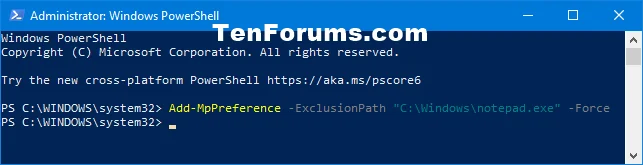
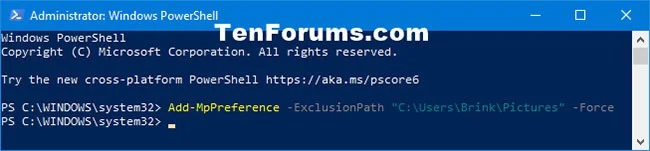
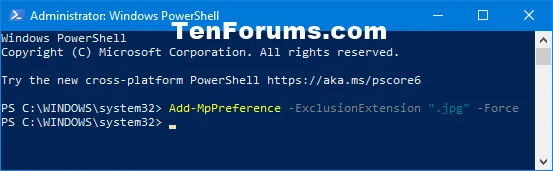
Add exception file for Microsoft Defender Antivirus in PowerShell
This option is used to add a specific file as an exception, preventing it from being scanned by Microsoft Defender Antivirus.