Stop Element Desktop Crashes on Wayland with Xwayland
Test Element Desktop through Xwayland, preserve your local data, and isolate graphics or package issues when Linux Wayland crashes the app.
Microsoft Copilot and many other AI features are now built into Windows. However, they are not mandatory; you can disable most of them if you don't like the AI. This guide will cover all the methods for removing Copilot and other AI features from Windows.
Uninstall Copilot in Windows
While it was difficult to remove Copilot after its initial introduction, it is now much easier as it is a standalone app. If you are running the latest version of Windows 11, you can uninstall Copilot just like any other app in Windows.
In Windows Settings, go to Apps → Installed apps . Find the Copilot app and select Uninstall from the More options menu next to it.
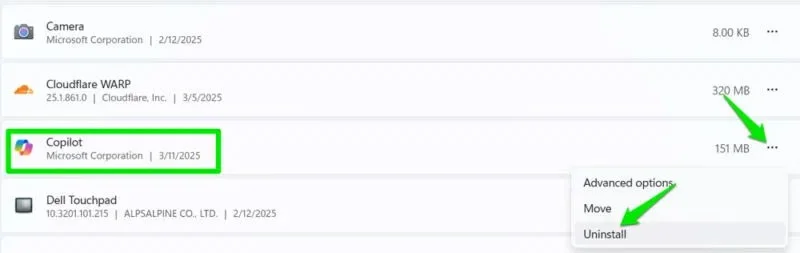
This will uninstall the Copilot app, but it won't make Copilot unusable in other apps. It will, however, remove some background processes that Copilot runs even when you're not using the app.
Microsoft Edge AI is primarily found in the Copilot sidebar, AI writing suggestions, and AI search features. Luckily, you can turn off these AI features from settings or Edge flags.
Remove Copilot button from Edge toolbar
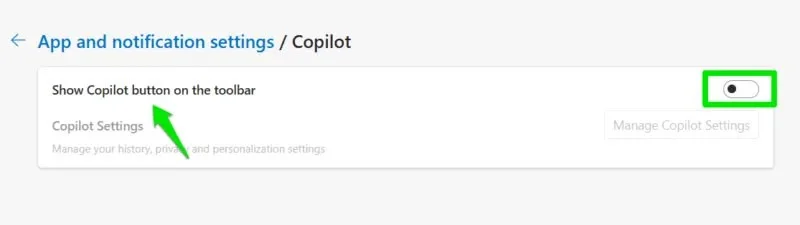
Microsoft Edge has a Copilot button on the toolbar that you can click to open Copilot in a sidebar for interactive browsing. You can turn this button off in Edge's settings.
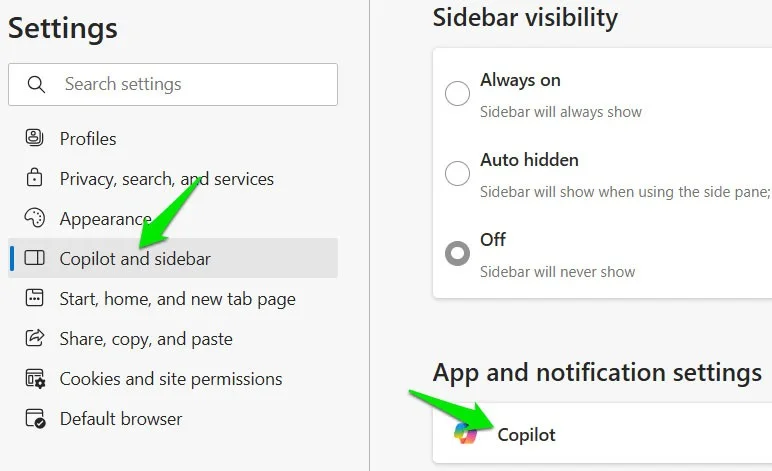
From the Edge main menu, click Settings , then go to Copilot and sidebar -> Copilot .
Turn off the toggle next to Show Copilot button on the toolbar and the Copilot button will be replaced with a sidebar button.
Disable AI writing assistant
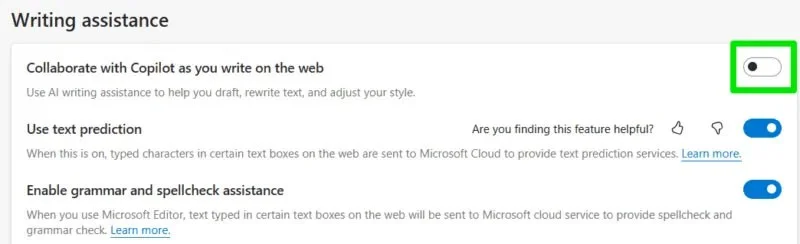
Edge includes Microsoft Editor for grammar and spelling suggestions, but it also now uses an AI-powered writing assistant to help you rewrite text and adjust your style. This additional feature can be disabled via settings.
In Edge's settings, go to Languages and turn off the Collaborate with Copilot as you write on the web option .
Disable AI in DevTools
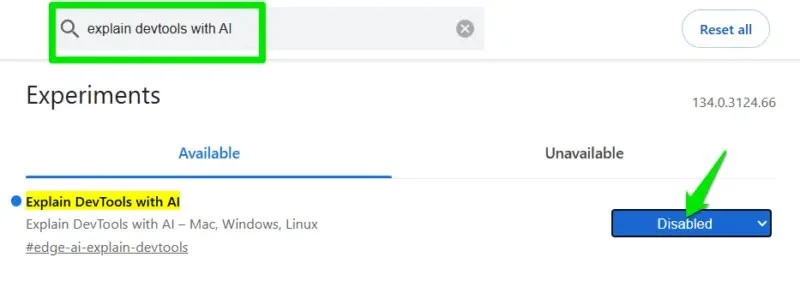
Microsoft Edge can help you troubleshoot website errors inside DevTools ( Ctrl + Shift + I ) using AI. Click the Copilot button next to the error and Copilot will help you learn more. If you don't need this extra help, you can turn it off from Edge flags.
Type edge://flags/ in the address bar to open the experimental features. Search for "explain devtools with AI" in the top search bar and select Disabled next to the Explain DevTools with AI flag . You'll need to restart your browser for the changes to take effect.
Remove AI features in Notepad
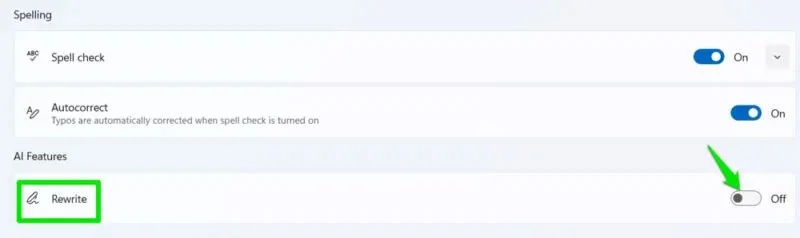
The modern Notepad app has a lot of powerful features, and Microsoft didn’t waste time adding AI capabilities to it. When taking notes, you can click the Rewrite button in the upper right corner to rewrite the content or change the color/formatting using AI. You can remove this button in Notepad settings if you want.
Click on Notepad settings next to the Rewrite button and turn off the Rewrite option under AI Features .
Disable Copilot in Microsoft Office
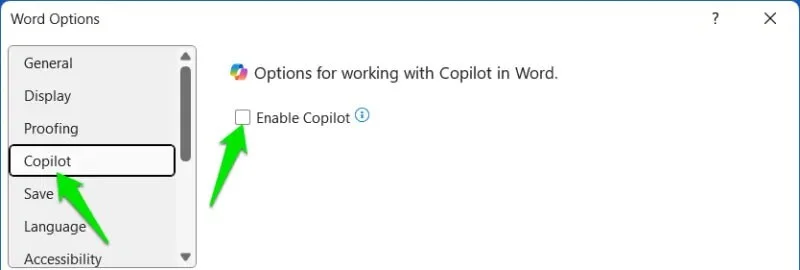
Whether it’s Word, Excel, or PowerPoint, Copilot is now part of the Microsoft Office suite – there’s always a dedicated button for quick access to it. Luckily, you can disable all AI features from a single option if you don’t want to use AI in Microsoft Office. When using any of these Office apps, you can disable Copilot by following the steps below.
Navigate to File -> Options and go to the Copilot section . Uncheck the box next to Enable Copilot . You will need to do these steps for each application individually and must have the latest version to disable Copilot.
Added: Disable AI Scareware blocker
Microsoft Edge has another AI feature: Scareware Blocker. At the time of writing, it’s disabled by default, but you may want to make sure it stays that way. It’s supposed to detect scareware attempts by analyzing every page you visit, which many users may not want. Find this option in Edge’s settings by going to Privacy, search, and services -> Security -> Scareware blocker .
These steps will minimize the impact of AI and remove Copilot, giving you more control over Windows. However, Microsoft isn't slowing down on integrating AI, so you may want to explore the cool things Copilot can do before removing it.
Test Element Desktop through Xwayland, preserve your local data, and isolate graphics or package issues when Linux Wayland crashes the app.
Set up Element Android with UnifiedPush and ntfy, then check the self-hosted Matrix gateway and Android background settings when alerts fail.
Restore background photo detection by checking Nextcloud upload settings, iOS permissions, battery mode, and the limits of iPhone background scheduling.
Compare ONLYOFFICE font hinting modes, check zoom and Linux font availability, and verify whether blur is limited to the editor or affects the whole desktop.
Convert a PDF locally in ONLYOFFICE Desktop Editors, then review the DOCX for layout changes, scanned pages, and text that needs correction.
Add your ownCloud account to ONLYOFFICE Desktop Editors, understand what the connection enables, and choose between direct access, sync, and browser editing.
Use the right portal or WebDAV address, test HTTPS reachability from your phone, and distinguish private-network, TLS, and login problems.
Build and test a custom ONLYOFFICE Desktop Editors plugin, install its .plugin archive, and activate developer tools for debugging.
Make a Python function available in Calc, run it against the open spreadsheet, and troubleshoot missing macros or imports without mixing up LibreOffice and system Python.
Lock a specific passage against routine edits while keeping the rest of a Writer document usable, and learn when file encryption is the better choice.