Build a PipeWire Output Toggle Script That Moves Active Audio

Switch Debian audio between named PipeWire outputs with a pactl script that updates the default sink and reroutes streams already playing.
If you regularly use a multi-monitor setup, FancyZones can be a game changer. This Windows PowerToys utility allows you to completely customize your monitor layout. This guide explores different FancyZones configurations designed to improve dual-monitor window management and increase productivity.
Install PowerToys
To access FancyZones, you'll first need to download PowerToys. You can get it from the Microsoft Store or the official GitHub release page .
Install PowerToys on your Windows PC. Once the utility launches automatically, select FancyZones from the left menu to see an overview of the instructions.
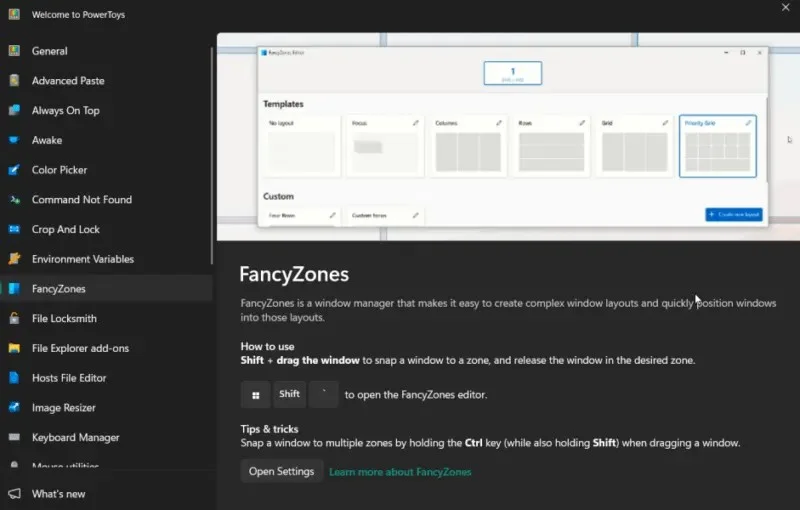
Remember that you can activate FancyZones by pressing Win + Shift + ` , which will take you directly into Editor mode .
Extend your screen
To get the most out of FancyZones with a dual monitor setup, make sure you extend your displays first. This tool allows you to configure separate layouts for each monitor.
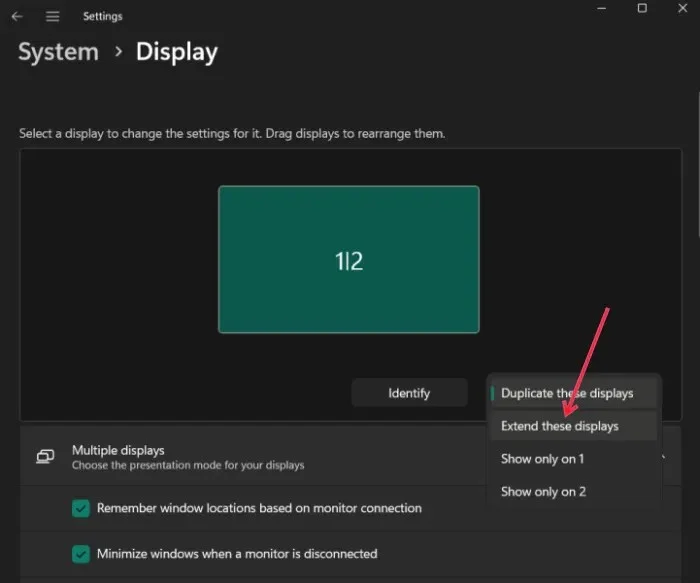
On your PC, go to Settings -> Display . Click the Duplicate these displays button and select the Extend these displays option instead.
Confirm the changes in the pop-up window by clicking Keep the Changes . Your new dual monitor setup will take over and each monitor will be ready to support its own layout.
Choose your preferred layout for each screen
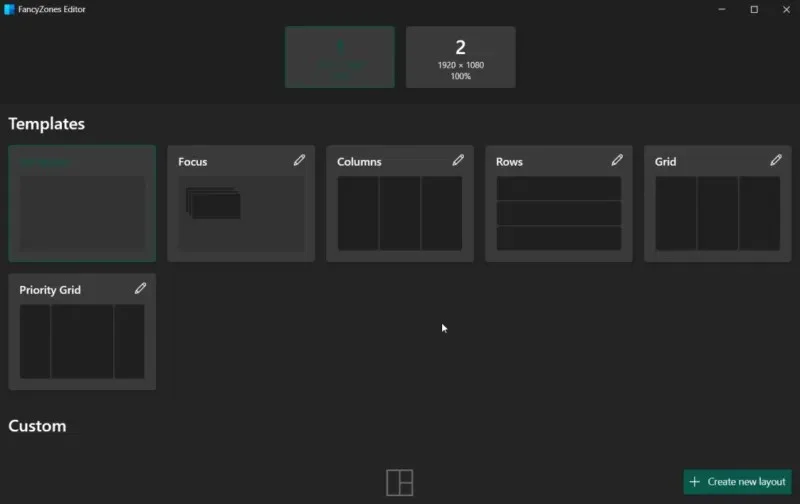
FancyZones works by resizing windows into pre-set grid layouts. To customize your setup, open the FancyZones Editor, with all your connected displays listed at the top.
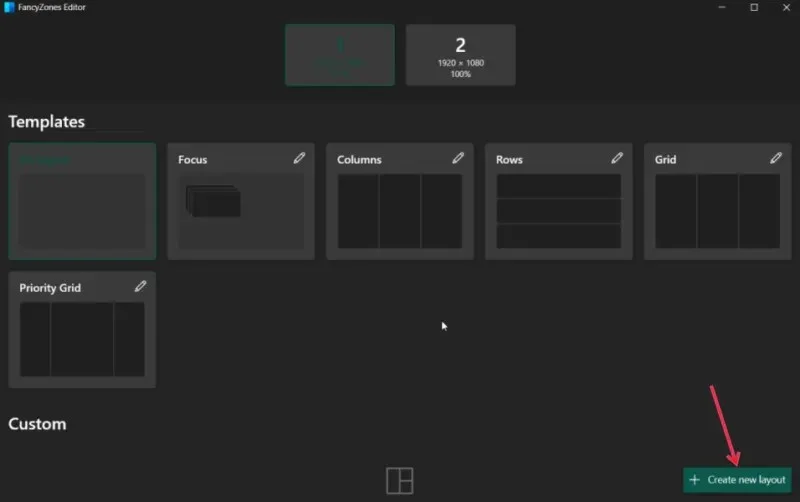
Select one of the screens at the top and view the Templates section with available layouts. Start by choosing a layout that works for you.
Note : You will need to manually select a layout for each screen.
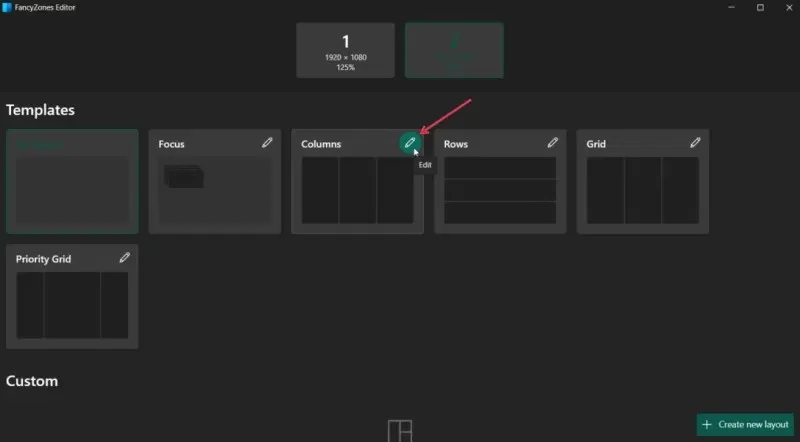
If you feel these layouts could use improvement, you can easily edit them by tapping the pencil icon.
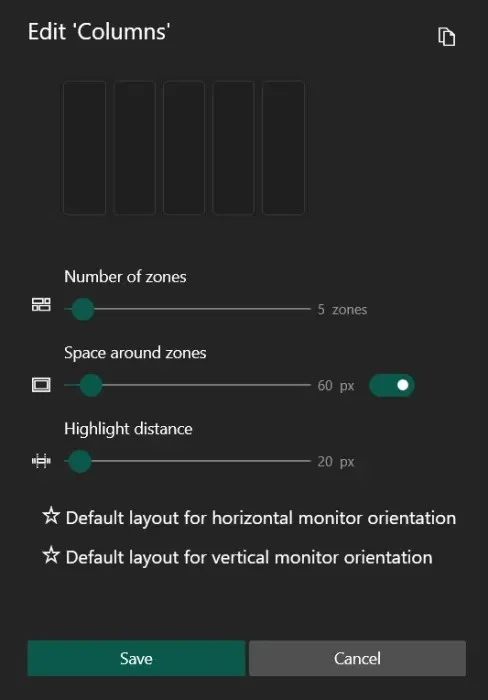
Increase the number of zones and add distance between them or increase the highlight distance.
Set up dual monitor layouts with FancyZones
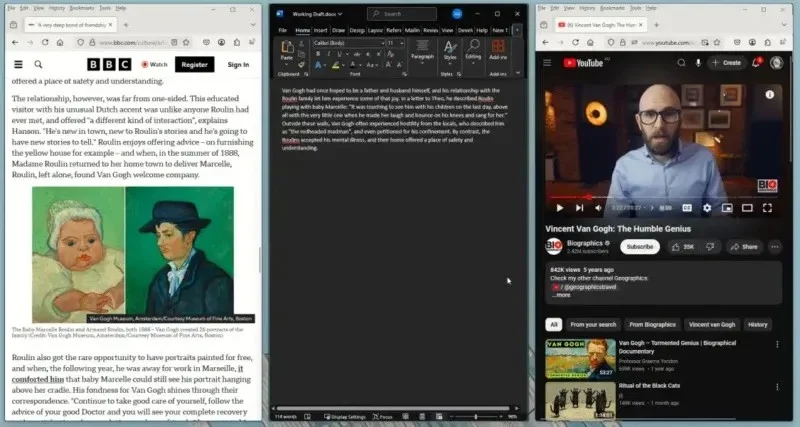
This article will configure a dual monitor setup optimized for everyday writing activities. The second screen (the larger one in this case) will handle writing tasks, while the main screen will keep other handy utilities within reach.
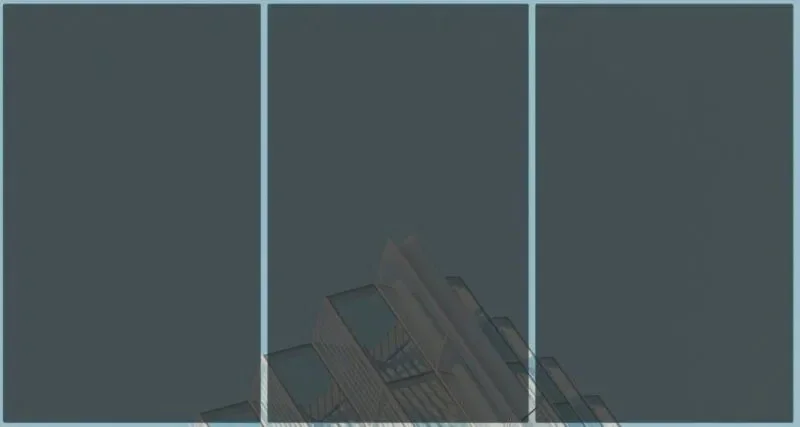
Open all the applications and browser pages you need for your session before opening the FancyZones Editor. Switch to the second screen and select the Columns template . For this purpose, 3 separate zones are enough, but if you need more, you can always add more at will.
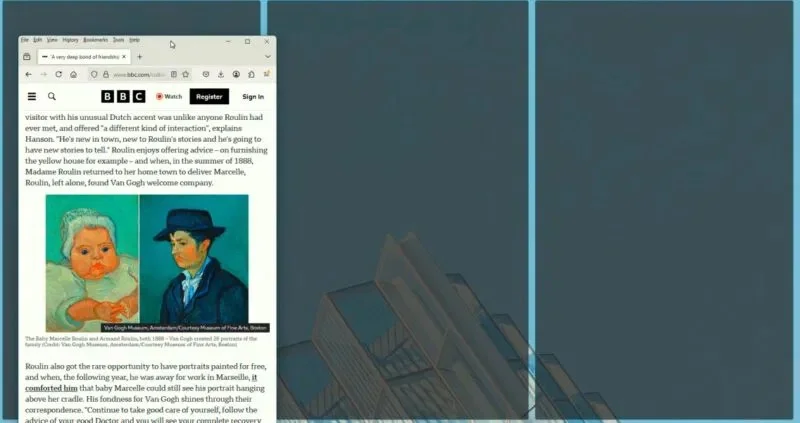
Now, to start snapping applications to the appropriate slots, click on the application or program window to bring it to the front, then press the Shift key . Drag the window by its title bar to the appropriate slot and it will automatically snap into place.
Repeat this for all regions.
This example includes:
Create custom layouts in FancyZones
Now that you have a layout for the larger screen, you need to create a custom layout for the smaller screen. In the FancyZones Editor, switch to the main screen. Click the Create new layout button .
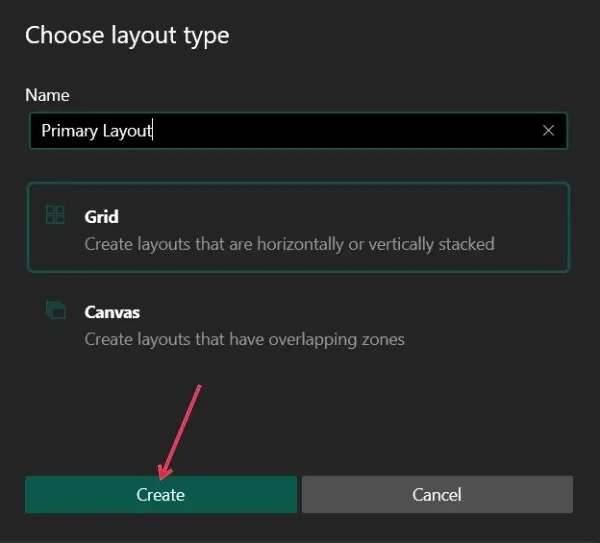
Name your new layout and choose whether you want to create a grid or canvas (for overlapping areas), then press Create . For example, we'll choose the first option.
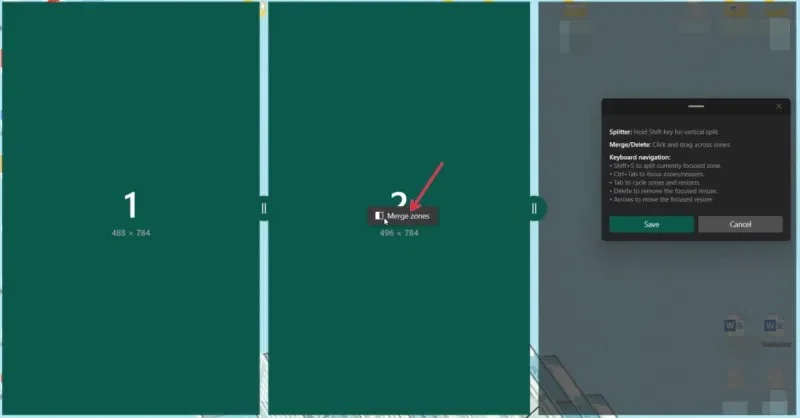
Start defining your layout on the next screen. By default, it starts with three columns. You can start modifying it from here. When you hover over a region, a blue bar will appear. Click to split the region into two. If you need to split vertically, just hold down the Shift key .
For example, you don't need three evenly divided zones. Instead, you need one large zone and two smaller zones on the right that are horizontally divided. To do this, tap and hold the first zone, then click the second zone. Click the Merge Zones button to merge the two zones into one.
Other possible actions include:
Once you're done arranging your layout, hit Save in the small window (which also contains some instructions) to save your custom layout.
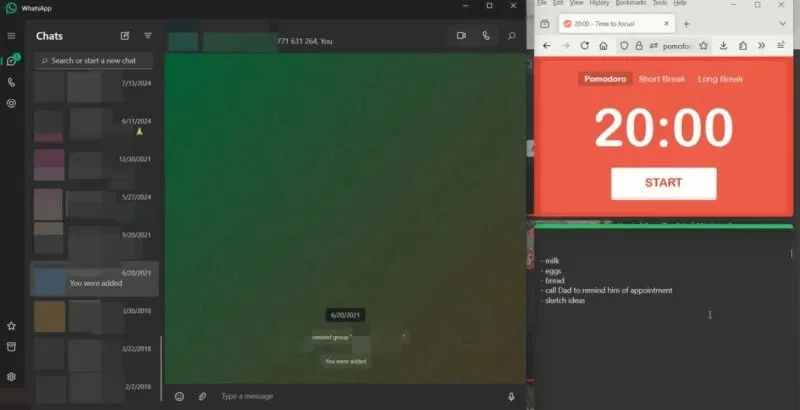
Once your custom layout is ready, add your apps:
Some apps, like Spotify and Calculator, won't fit into smaller areas on a small screen. I was going to put Spotify or the Calculator app in area 3, but ultimately decided against it because they don't scale well.
How to easily switch between layouts in FancyZones
Once you create multiple custom layouts, you can easily switch from one layout to another as you move between tasks throughout the day.
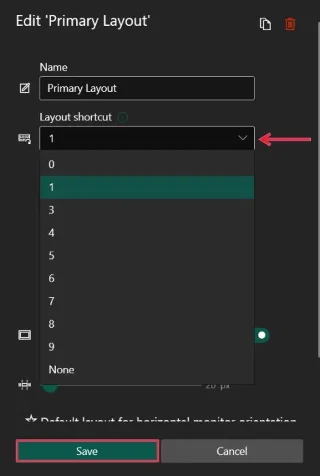
In the FancyZones Editor, find the custom layout you use often and click the pencil button.
Click on the Layout shortcuts bar and select a number. Hit Save at the bottom. Apply this layout by pressing the Win + Ctrl + Alt + Number shortcut .
Note : Make sure Enable quick layout switch is enabled in FancyZones Settings via PowerToys.
Adjust FancyZones settings
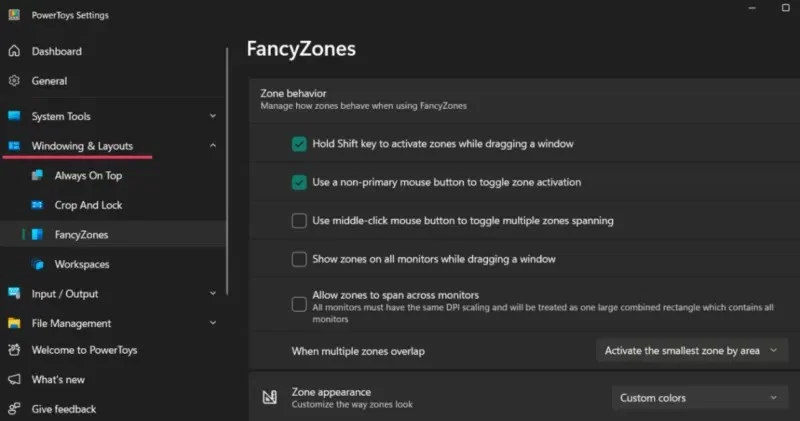
Open PowerToys Settings from the system tray. Go to Windowing & Layout -> FancyZones to see the Settings area .
Check the Zone behavior section to manage how zones behave when using FancyZones. For example, you can enable the Allow zones to span across monitors option .
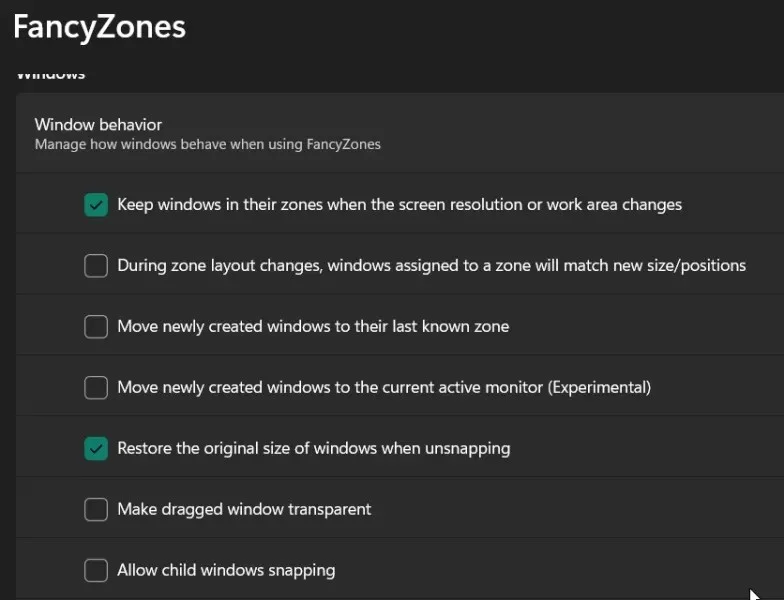
Manage window management on dual monitors in the Window behavior section . For example, you can instruct FancyZones to restore the original size of windows when undocked. Review all of these options to see which ones might be useful.
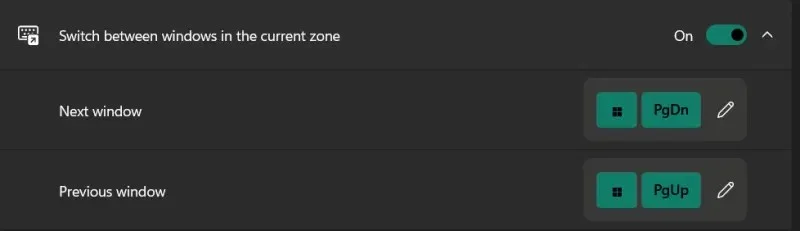
You can also set custom keyboard shortcuts to switch between windows in the current area.
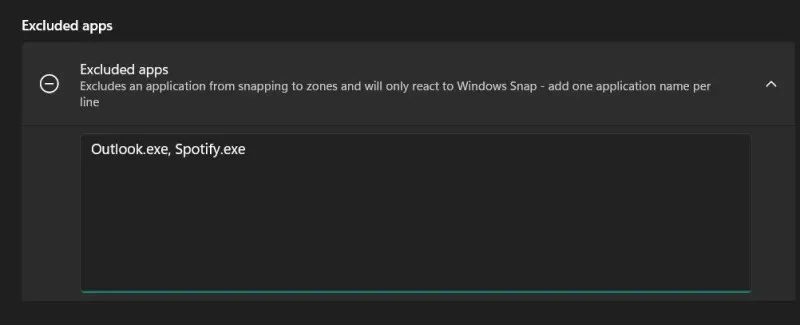
At the end, you can set up apps that you don't want to include in FancyZones for whatever reason.
Switch Debian audio between named PipeWire outputs with a pactl script that updates the default sink and reroutes streams already playing.
Get your Bluetooth headset mic working by selecting the right input, using a hands-free audio profile, and checking Ubuntu’s PipeWire route.
Learn why Flatpak apps may ignore Ubuntu 24.04 GTK themes and follow safe steps to check theme extensions, refresh Flatpak apps, and diagnose portal issues.
Install Ubuntu 24.04 alongside Windows 11 with BitLocker safely. Compare separate-drive and shared-drive paths, recovery keys, partitioning, and boot checks.
Diagnose NVIDIA driver failures after an Ubuntu kernel update. Check DKMS and Secure Boot, rebuild the matching module, enroll a MOK, and verify the fix.
Fix Ubuntu 24.04 Wi-Fi drops after suspend with checks for NetworkManager, radio blocks, updates, power saving, and drivers—then verify each resume.
Learn why tracker-miner-fs-3 uses high CPU in Ubuntu GNOME and how to check indexing, exclude folders, update Ubuntu, or safely rebuild the search index.
Fix Debian’s UEFI boot error by checking boot mode, the EFI System Partition, GRUB files, and firmware boot order—without reinstalling Debian first.
The Outlook Inbox Repair Tool fixes corrupted PST files quickly so you can recover emails and restore normal Outlook function. Follow these exact steps to run scanpst.exe without data loss.
Get the Adobe PDF Installer Offline to install Acrobat Reader on any PC without needing internet during setup. Follow these exact steps for the full standalone package.








