Home
» PC Tips
»
How to Stop Windows Updates on PC
How to Stop Windows Updates on PC
Windows keeps picking the worst times to install updates, so let's take back control in a truly efficient way. Here's how to harden and tweak your system so that updates happen on your schedule, not Microsoft's.
5. Pause update installations
Let's start with the simplest method. Windows Update has a built-in pause feature, but it's more limited than you might think. Open Settings ( Win + I ), then select Windows Update , and you'll see the Pause updates option .
The problem is: Windows 11 Home users can only pause for up to a week, while Pro and Enterprise users can pause for up to five weeks. Once the pause period ends, Windows will force you to install any pending updates before you can pause again. Microsoft intentionally designed it this way to prevent people from delaying updates indefinitely.
This method works well for short-term needs, like when you’re working on an important project or preparing for a presentation a week in advance. But it’s not a long-term solution. People use this method when they know an update has just been released and want to wait a few weeks to see if other people report problems.
4. Set network connection to Metered mode
While not specifically designed to stop or pause updates, this trick takes advantage of Windows' built-in data-saving features. When you set your connection to Metered mode, Windows will be much more cautious when downloading large files, including updates.
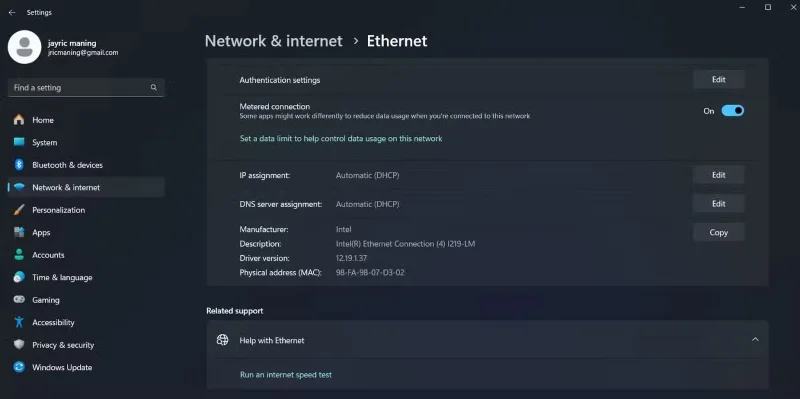
To use this trick, open Settings , go to Network & internet , select your connection type ( Wi-Fi or Ethernet ) and turn on Metered connection . For Wi-Fi, you'll first need to click on your network name.
Select Metered connection
The clever thing about this approach is that Windows handles metered connections differently. It will still download important security updates, but it will hold back feature updates and driver downloads. This gives you more time while still maintaining basic security.
The downside is that setting your connection to Metered mode doesn’t just affect Windows Update. Some apps may behave differently, syncing less frequently or asking for permission before downloading content. For example, OneDrive pauses automatic syncing on metered connections unless you give it permission.
This method is especially useful on laptops where you really want to save bandwidth. However, it’s not a perfect solution. Windows will eventually override the size limit setting for updates it deems important, especially if your system is slow to update patches.
3. Turn off Windows Update service (services.msc)
Now we'll look at more drastic methods; disabling the Windows Update service will stop the update tool completely.
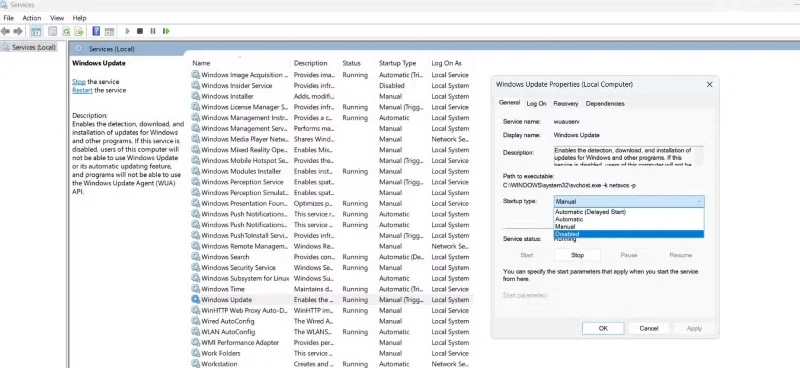
Press Win + R , type "services.msc" and press Enter. Scroll down to Windows Update in the list of services. Right-click it, select Properties and change the Startup type to Disabled . If the service is currently running, click Stop first, then select Apply to apply your changes.
Turn off Windows Update using services.msc
In my experience, this method works extremely well. No more unexpected downloads, no automatic reboots, nothing. The system stays the same until you manually turn the service back on.
Unfortunately, this isn’t a permanent solution, as Windows has backup mechanisms that can restart this service. For example, the Update Orchestrator service can wake up the Windows Update service even if you’ve disabled it. Some Windows updates can also reset your service configuration during installation, so make sure to check this service every time you manually update.
Disabling this service will eventually stop updates on your device; but the problem is that it requires you to manage all updates manually. You’ll lose automatic security patches, which can leave your system vulnerable if you forget to periodically check for important updates.
2. Turn off Update Orchestrator (Task Scheduler)
Windows Update and the Update Orchestrator work together to ensure updates are installed on your PC. Enabled by default, they schedule tasks that can wake your computer from sleep and restart services that have been turned off.
To effectively fix this issue, you need to make a few tweaks. Press Win + R , type “taskschd.msc” and navigate to Task Scheduler Library > Microsoft > Windows > UpdateOrchestrator . Tasks like Reboot and Schedule Scan should be given attention.
1. Using Group Policy Editor (Pro and Enterprise versions)
Group Policy is one feature that makes Windows Pro worth the extra cost. If you’re running Windows Pro or Enterprise, this is your most powerful option. Home users are out of luck here, as Microsoft doesn’t include a Group Policy Editor in that edition.
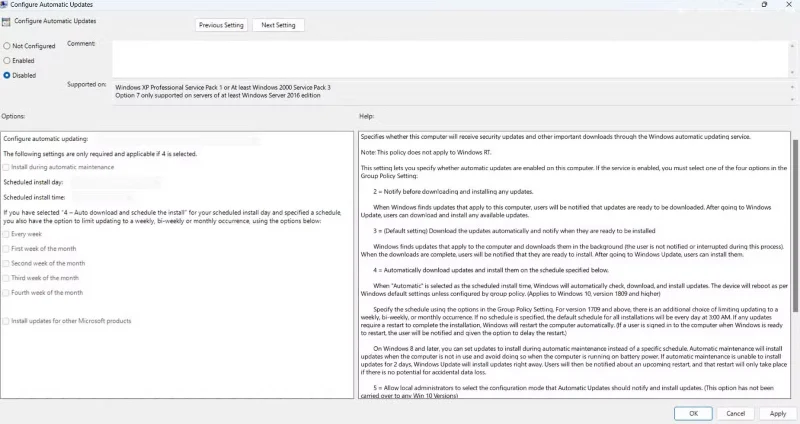
Press Win + R , type "gpedit.msc", then navigate to Computer Configuration > Administrative Templates > Windows Components > Windows Update > Manage end user experience . Find the Configure Automatic Updates entry and double-click it.
Disable updates using Group Policy Editor
Select Disable and apply the changes. This tells Windows to stop automatically checking for, downloading, and installing updates. Unlike other methods, Group Policy changes are more permanent and harder for Windows to override.
What makes Group Policy stand out is its integration with core Windows systems. Instead of trying to work around Windows' update mechanisms, you're using Microsoft's administrative tools to change system behavior at a fundamental level.