Basically, the difference between 2.4GHz and 5GHz WiFi is speed and range. 2.4GHz WiFi will support the highest connection speed of 450Mbps or 600Mbps, while 5GHz WiFi will support connection speed up to 1300Mbps. However, not all laptops support the 5GHz band, or cannot detect the 5GHz band and will automatically use the 2.4GHz band. The following article will guide you how to switch the 5GHz WiFi band on Windows 10.
How to check if your computer supports 5GHz
The first step in the process is to make sure your computer supports 5GHz. To do this, you can execute a quick and easy command using Command Prompt :
Step 1:
On the computer interface, enter the keyword in the cmd search bar and select Run as administrator .
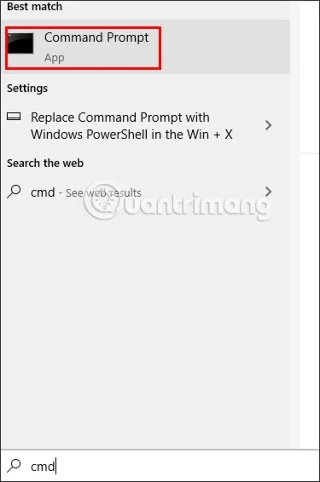
Step 2:
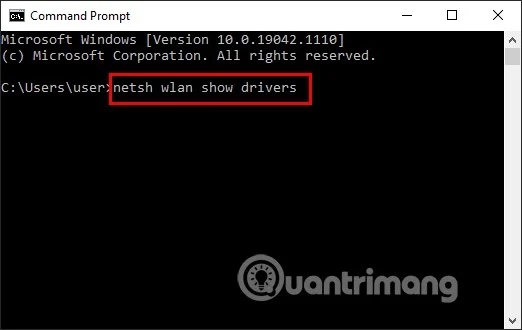
Switch to the new interface, the user enters the command netsh wlan show drivers and presses Enter.

Step 3:
Now you will see the interface running the information lines. When finished running, find the information line Radio types supported and see the WiFi connection standards, if:
- 802.11g and 802.11n means your system only supports 2.4GHz.
- 802.11n, 802.11g and 802.11b means your system only supports 2.4GHz
- If you have both of the above connection standards and 802.11a or 802.11ac, your computer supports both 2.4GHz and 5GHz bands.

Note : Before making any changes to the network adapter properties, make a note of the default settings in case anything goes wrong.
How to switch 2.4Ghz to 5Ghz band
Normally, your computer should have no problem using 2.4GHz or 5GHz. But if you've compared 2.4GHz and 5GHz frequencies and then decide you want to change the network band to 5GHz, here's how you can do it.
Step 1:
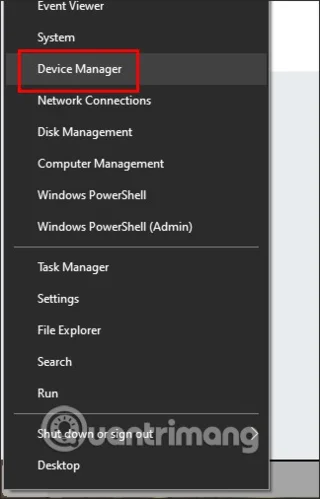
On the computer interface, right-click on the start menu icon and select Device Manager .

Step 2:
Select View > Show hidden devices to ensure Windows 10 displays all drivers.
Step 3:
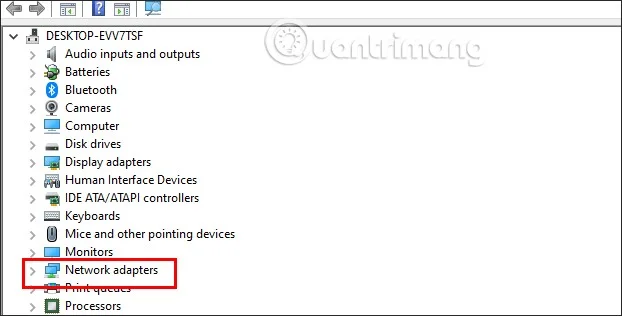
Switch to the new interface, click on Network Adapters .

Next in the expanded list , right-click on the WiFi adapter you are using on your computer and select Properties .

Step 3:
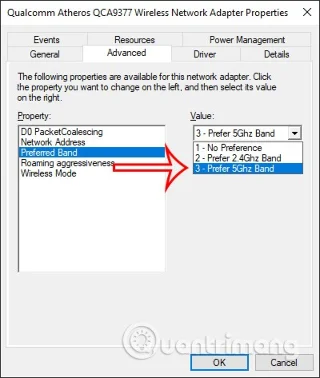
In this list interface, click on the Advanced tab . Next, look down at the Property column , click on Preferred Band or Band .
Look next to the Value column , click on the drop-down triangle to switch the 2.4Ghz band to 5Ghz, click Prefer 5GHz band and then click OK to save.

Besides switching to 5GHz, you can try changing your router's WiFi channel to improve overall network performance.
How to force Windows 10 to use 5GHz
If there is no Band or Preferred Band option in the wireless adapter properties, you will need to force the change. Search the Property list for an option called VHT 2.4G . If VHT 2.4G is available, set the Value to Disable to disable the 2.4GHz option and force your wireless adapter to switch to 5GHz.
If you can't find any of these options, your wireless adapter only supports 2.4GHz. As a last resort, you can try manually connecting to a 5GHz wireless network or changing the frequency of your WiFi router, but this will affect every device connected to that network.