Home
» How to
»
How to use Microsoft PC Manager to improve productivity on Windows
How to use Microsoft PC Manager to improve productivity on Windows
Want a faster, smoother PC without having to dig through settings? Try Microsoft PC Manager , a free Windows app that cleans up junk files, manages startup programs, and frees up RAM with just one click.
Improve performance easily with Microsoft PC Manager
Windows 10 and 11 include built-in tools for disk cleanup, startup management, and malware protection. However, Microsoft PC Manager consolidates these features into a single, easy-to-use application that helps improve system performance.
PC Manager also features a handy on-screen toolbar that provides quick access to one-click performance boosts, real-time system memory and data usage statistics, and shortcuts to commonly used apps like Snipping Tool, Notepad, and Microsoft Edge .
Using Microsoft PC Manager
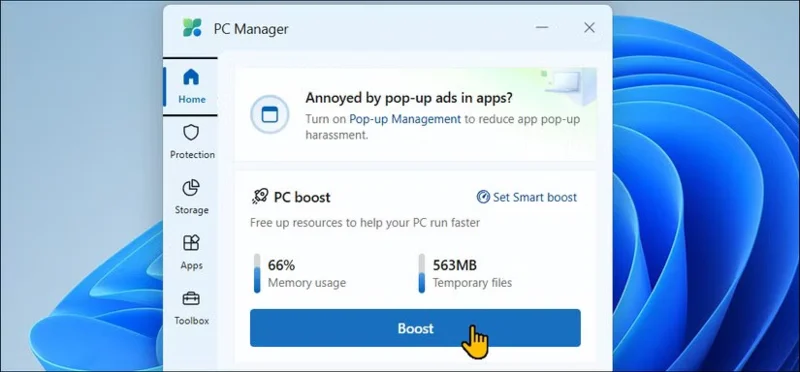
You can download and install Microsoft PC Manager from the Microsoft Store. Once installed, launch the app from the Start menu. The main interface of the app has a large blue Boost button. Click it once to delete temporary files and free up system memory.
Microsoft PC Manager main screen on Windows 11
For automatic optimization, you can enable Smart Boost in the Settings tab . This feature allows PC Manager to automatically free up memory and delete temporary files when usage is high or exceeds 1GB.
Clean up memory
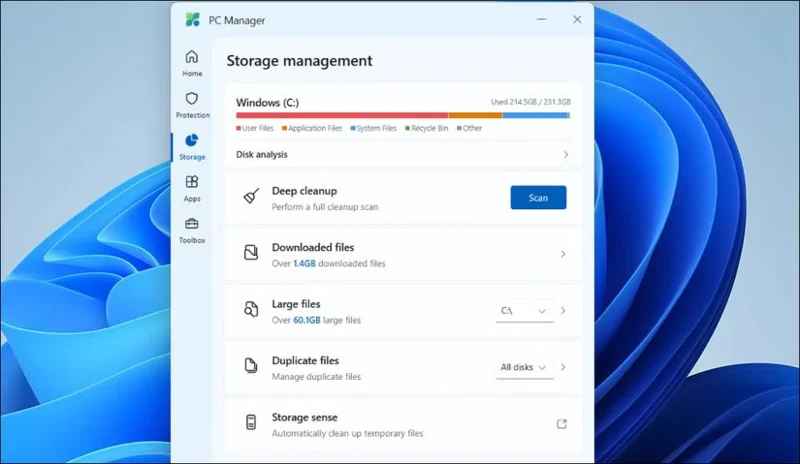
The built-in memory management tool in PC Manager lets you scan your system drive to free up space.
In the Storage tab , click Disk analysis to see your total available and used space. To free up space, use the Download files , Large files , and Duplicate files options to find and delete unwanted files taking up space.
Microsoft PC Manager memory management interface
If you need more space, click Deep cleanup to delete web browser and system caches that the general cleanup might not have removed. Review the items you selected and click Proceed to delete them. Note that deleted files cannot be recovered, so double check before continuing.
Manage applications and startup processes
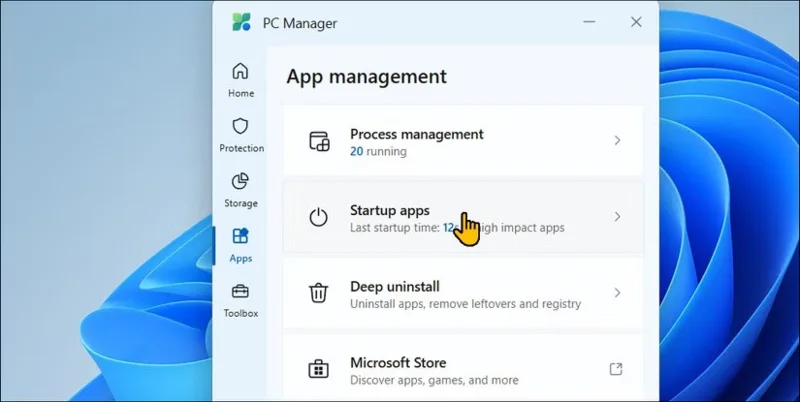
PC Manager also provides an easy way to force close applications without Task Manager. Click Process management in the Apps tab to see running applications.
You can then force close any application by selecting it and clicking End . This provides a cleaner, more user-friendly alternative to Task Manager's cluttered Processes tab, albeit with fewer advanced features.
Apps tab opens in Microsoft PC Manager on Windows 11
Disabling unnecessary startup applications is one way to make Windows less annoying, and PC Manager provides an easy way to do this. Open the Startup apps tab to enable or disable startup applications.
PC Manager also adds Suggest turn on/off notifications below each application based on their impact on startup - except for Microsoft applications, which always show a Suggest turn on notification .
Deep uninstall is a quick and easy way to remove installed applications from your PC. Open Deep uninstall , review the list, and click the Trash bin icon to delete anything you haven't used much in the past few months.
The System Protection section provides quick access to Windows Security's Virus & threat protection tools.
Additionally, you can scan and install pending Windows updates directly from the interface, change default browser settings, restore the Taskbar to its default state, and block pop-ups in applications.
Using PC Manager Toolbox
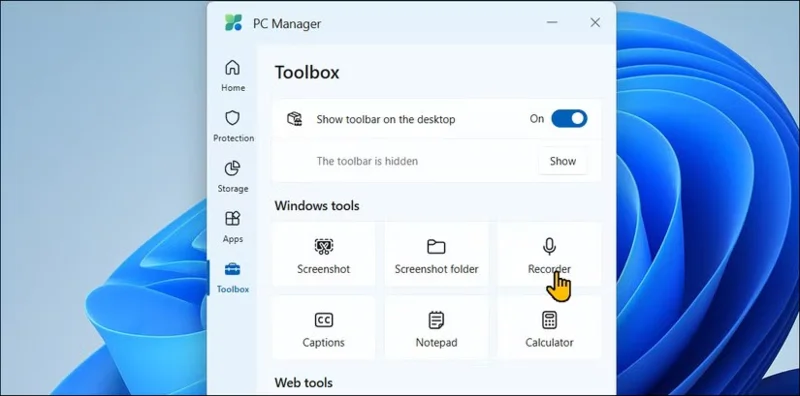
Toolbox includes commonly used Windows tools and shortcuts, such as Snipping Tool, Recorder app, Captions, Notepad, Calculator , and shortcut to the screenshots folder.
In Web tools , you can find access to Edge Quick Links , Bing translator , currency converter , and image search . You can also edit the toolbar to add or remove tools from the Toolbox.
Toolbox tab opens in Microsoft PC Manager on Windows 11
Click the Show toolbar on the desktop option to pin a small toolbar to your screen for quick access. If you find it distracting, you can drag and drop it to the edge of the screen to hide it. Hovering over the edge will make it reappear when needed.
Microsoft PC Manager is the only system booster you'll ever need.
Many people are skeptical of system tweaking utilities, as many tend to cause more problems than they solve. In most cases, it’s best to avoid them altogether. However, Microsoft PC Manager is a solid option for non-technical users.
It provides a simple, clutter-free way to uninstall apps, clean up disk and system caches, force close unresponsive apps, and free up system memory – all from one place.
Its storage and application management features are much more intuitive than Windows' built-in tools for quick cleanups. Plus, since it's a Microsoft product, you don't have to worry about accidentally damaging your system with a cleanup.