Home
» How to
»
How to use Sharp air conditioner - Part 1
How to use Sharp air conditioner - Part 1
Using air conditioning today is not too strange to many people. However, if you first come into contact with the air conditioner, this is a difficult problem. The following article will guide you how to use Sharp air-conditioner .
This article is based on the usage of Sharp Air Conditioner SHW and SEW, remote illustrations of Sharp AH-X12SEW AC
1 Basic operation
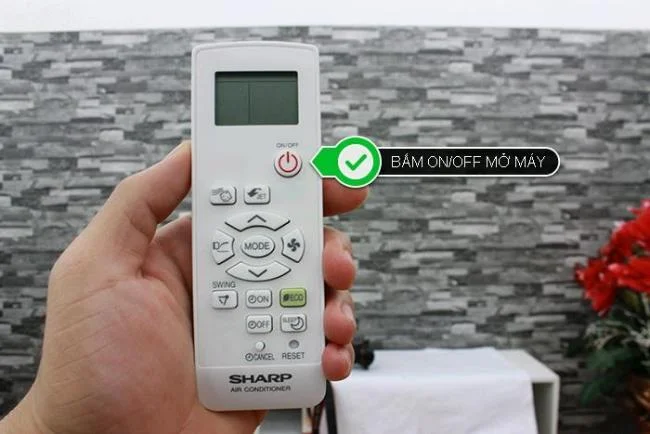
Press the ON / OFF button to start the machine. Looking up at the air conditioner, there will be a red indicator light (When the machine is turned off, press the ON / OFF button again, the operation light will turn off).
Click the ON / OFF button
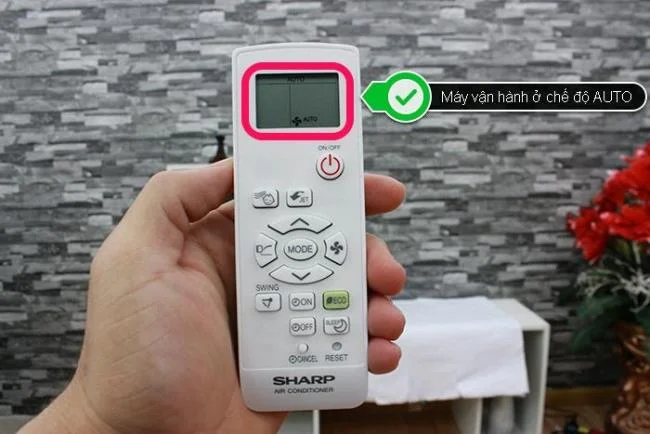
Auto mode: When the machine is turned on, the machine will be operated in AUTO mode: The machine temperature and operation mode will be automatically set to suit the room mode when the machine is turned on.
The machine will operate in auto mode when the machine is turned on for the first time
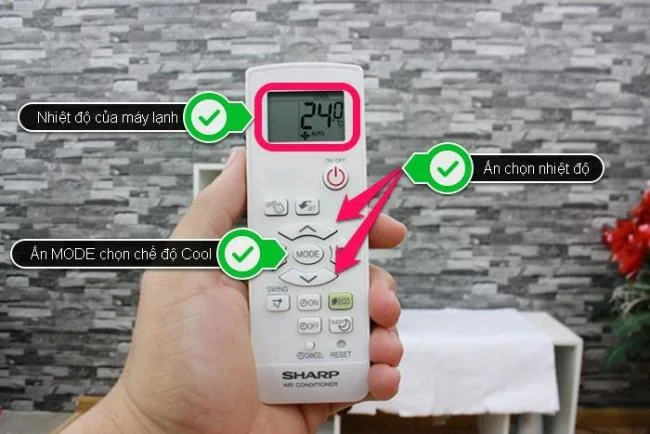
Cooling mode: Press the MODE button once to select Cool operation mode. Now, click on the THERMOSTAT button (up and down button) to select the desired temperature. The temperature can be set between 16.0 and 30.0 degrees Celsius.
Choose the right temperature
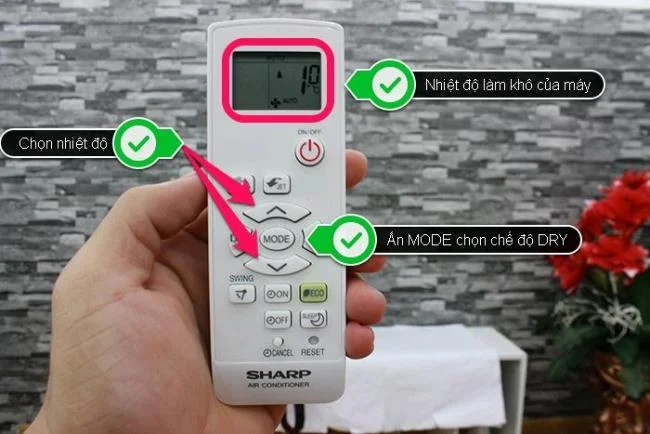
Drying mode: Press the MODE button once again to select the dehumidifying (drying) mode. At that time, the temperature can be adjusted up or down within ± 2.0 degrees Celsius.
Choose the drying temperature
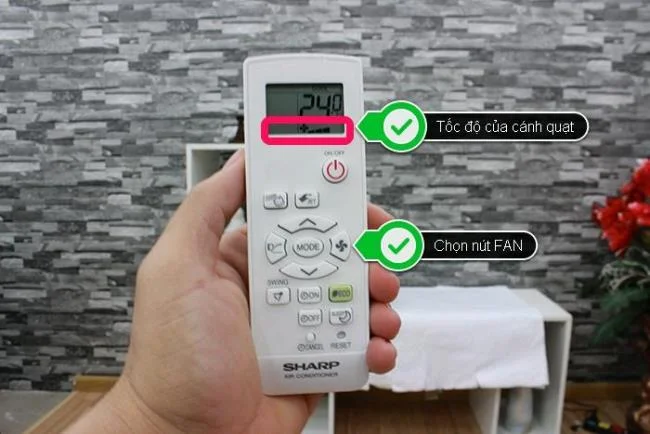
Adjust fan speed: Press the FAN button (the button with the fan shape) to customize the fan speed as desired, for the best possible cooling.
Select FAN to adjust propeller speed
Press 1 time the speed of Softness
Press 2 times with light speed
Press 3 times Low speed
Press 4 times High speed
Press 5 times of automatic speed
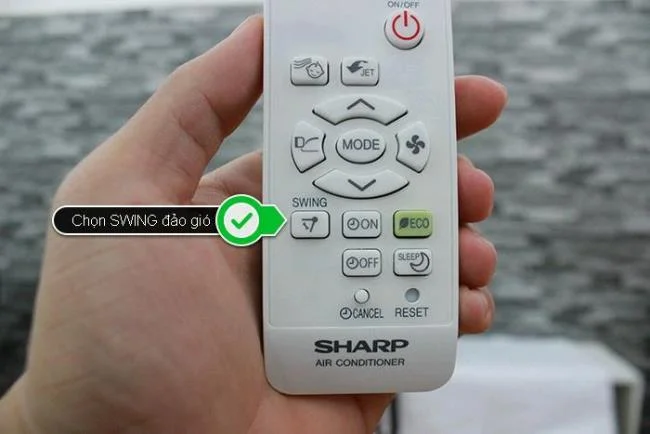
Adjust the wind direction: Click the SWING button for the flap to work, press the SWING button again so that the flap stops at the desired position.
Press SWING to reverse the wind
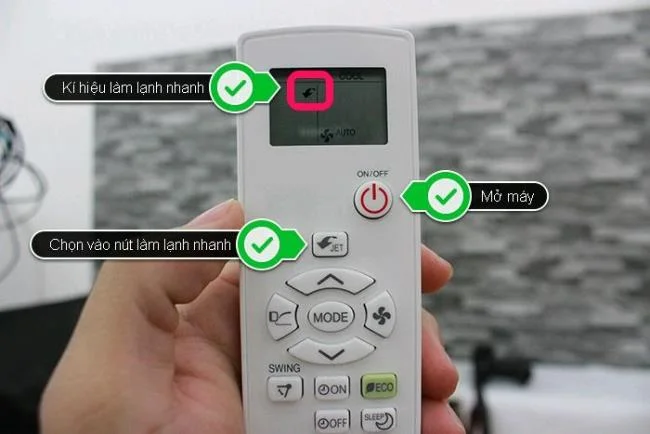
Extreme cooling mode : This mode will operate at maximum capacity for the room to be cooled with the shortest time.
Step 1: Press ON / OFF to turn on the device
Step 2: Click on the JET button (with the down arrow symbol) to cool quickly
To cancel this mode, click the JET button again .
Select the JET button with quick cooling function
Note: When operating in this mode, you will not be able to adjust the temperature or fan speed.
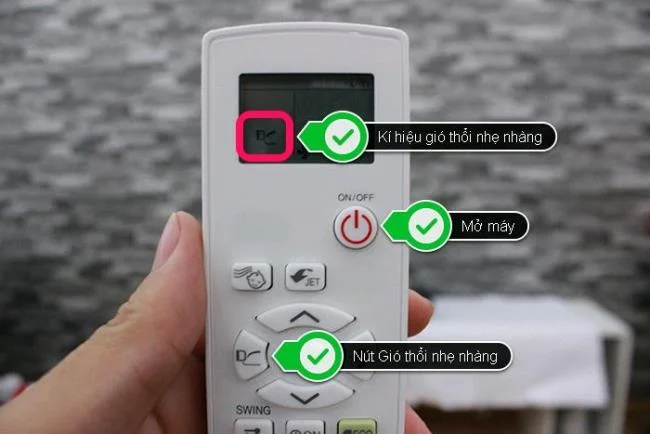
Gentle air-blowing mode : This mode will push cold air upwards on the ceiling, to prevent cold air blowing directly into the body.
Step 1: Press ON / OFF to turn on the device
Step 2: Click the button Blowing gently (with the symbol of air conditioner and 2 directions of wind - located opposite the FAN button)
To cancel this mode, click the Wind gently blow button again.
Select the button to gently blow air for gentle cooling
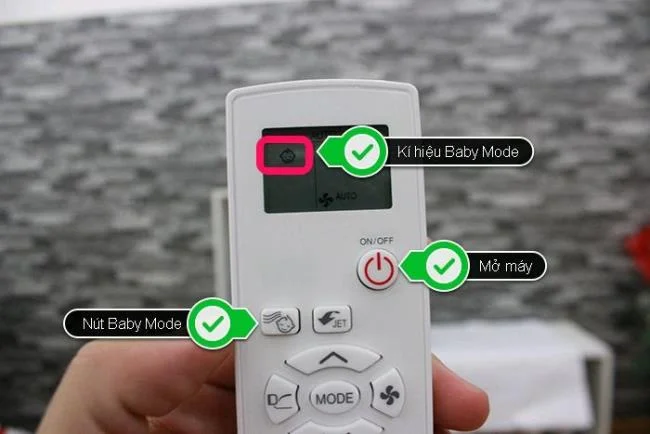
Operation mode for children: Baby MODE mode will help the air in the room become smooth, cool and comfortable.
Step 1: Press ON / OFF to turn on the device
Step 2: Click on the Baby mode button (baby's first picture)
To cancel press the Baby mode button again.
Baby Mode
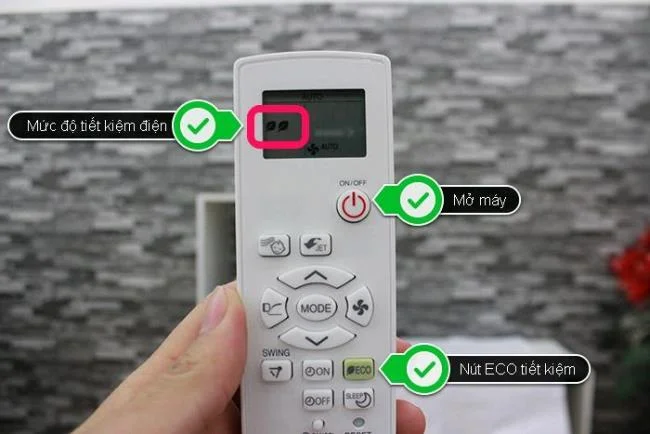
Power saving operation mode (ECO MODE): This mode helps the air conditioner operate with lower power consumption than usual.
Step 1: Press ON / OFF to turn on the device
Step 2: Press the ECO button once, there will be 1 leaf (low consumption ~ 2 to 4%) Click the ECO button again, 2 leaves appear (low consumption ~ 4 to 8%).
To deselect the ECO MODE button again while in step 2 of the power save mode.
ECO mode saves energy
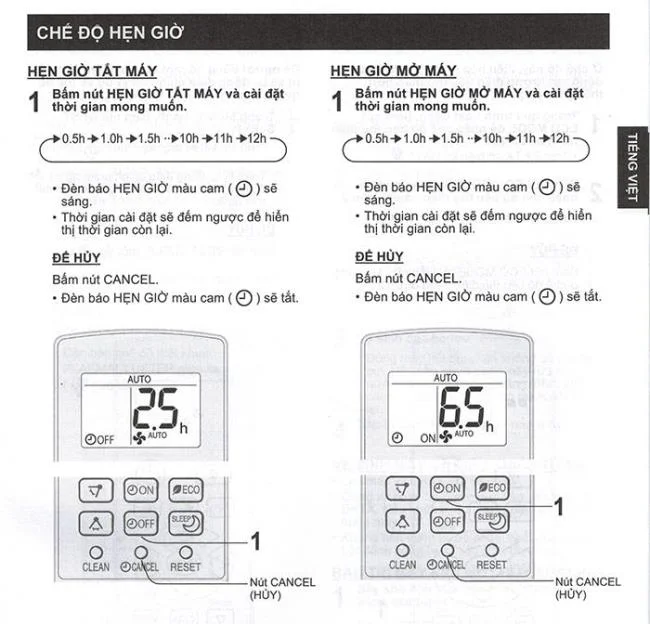
2 How to use the switch off timer
How to use the timer on / off air conditioning
Note:
Setup time can be from 30 minutes to 12 hours minimum.
Off and on timer cannot be set at the same time.
If power is lost, all timers will be CANCELED when power is restored.
Machine will operate before the set time to open the machine to get the desired temperature according to the set time.