Pooling multiple drives with Storage Spaces in Windows 11 allows users to protect files from disk failures while consolidating storage into a single, easy-to-manage virtual drive. By configuring Storage Spaces, you can create redundancy, optimize performance, and expand storage as needed. Here's how to use Storage Spaces to protect your Windows 11 data.
Instructions for creating Storage Pool and Storage Space
Step 1:
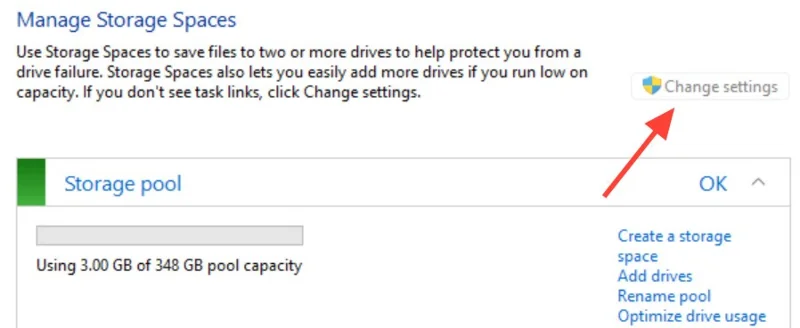
Connect at least two additional drives to your computer. Storage Spaces is compatible with USB, SATA, and SAS drives. Then type Storage Spaces into the search box and click on the result.
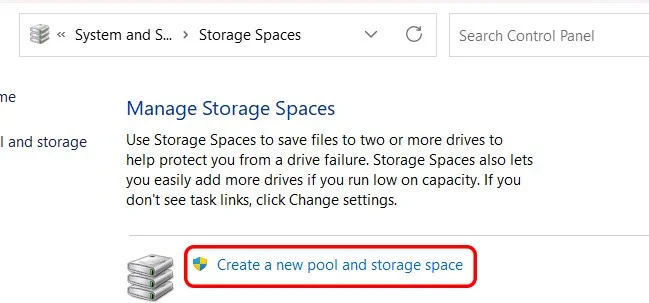
Click Create a new pool and storage space , then select the drives you want to include in the pool, then select Create pool. This will delete all existing data on the selected drives.
Step 2:
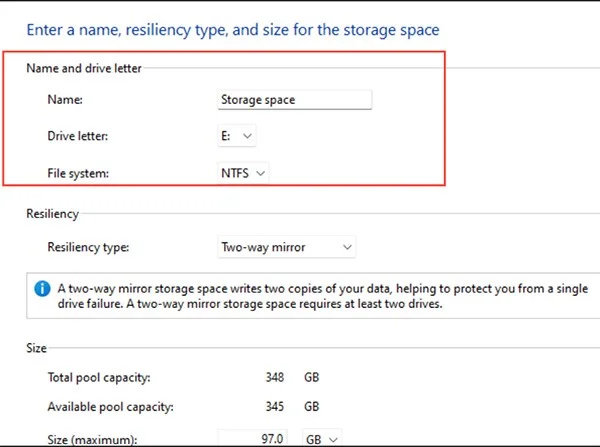
Assign a name, drive letter, and file system (NTFS or ReFS) to the new storage space.
Resiliency type you choose:
- Simple: Storage pools increase performance but do not protect against disk failures. Suitable for temporary or non-critical data.
- Two-way mirror: Stores two copies of data on multiple drives, tolerating single drive failure. Suitable for shared file storage.
- Three-way mirror: Stores three copies and can withstand two drive failures at the same time. Requires at least five drives.
- Parity: Use parity information to protect data, creating a balance between storage efficiency and fault tolerance. At least three drives are required to tolerate a single drive failure.

Step 3:
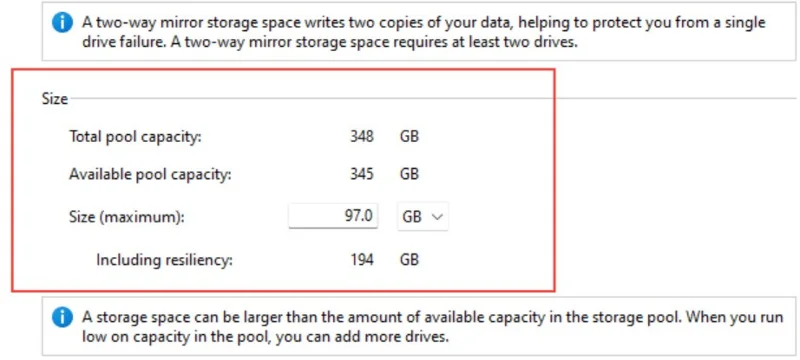
Set the maximum size for the storage space. You can specify a size larger than the current physical capacity.
Finally click Create storage space and the new virtual drive will appear in File Explorer and can be used like any other drive.

Expand storage by adding drives
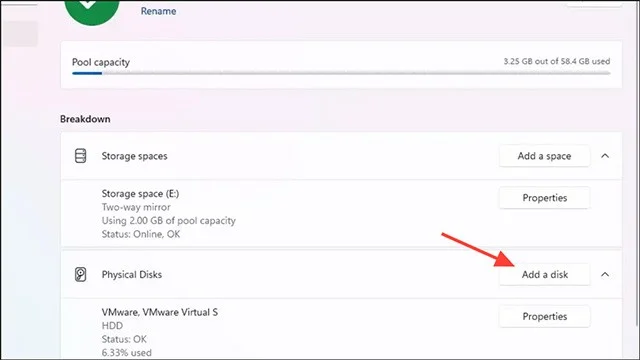
Connect the drive to your computer, then also open Storage Spaces . Then you select the existing storage pool and click Add a disk under Physical Disks .

Check Optimize to ensure data is balanced and storage is used efficiently. Click Add to proceed.
Optimize disk usage in Storage Pools
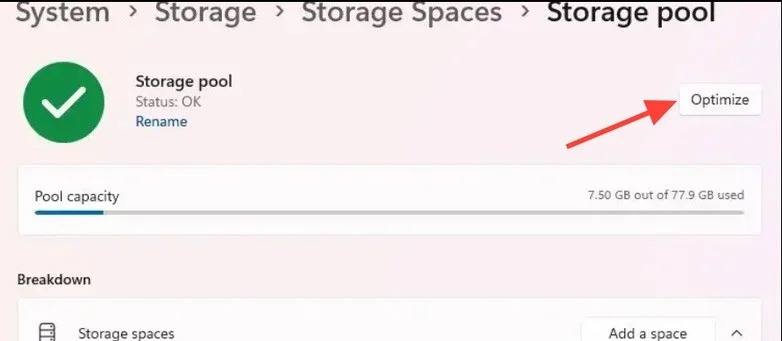
When you add new drives or remove storage, pool optimization ensures even data distribution and maximizes capacity and performance.
Open Storage Spaces and select the storage pool you want to optimize. Click Optimize below to do so.

Remove a drive from a storage pool
When you replace or reuse a drive, you can remove it from the storage pool without losing data, as long as there is enough free space in the pool.
Click Storage Spaces and then click Change settings > Physical drives .

Locate the drive you want to remove and select Prepare for removal . The computer will need to run until the process is complete. When the drive status shows Ready to remove, click Remove drive and disconnect the drive from the system.