To make Word documents more professional, it is necessary to adjust the page layout as well as reformat the content. For example, you should create a table of contents in Word so that viewers can easily follow the content, including a list of photos, tables in Word , and add captions to images. When you add captions to images, it will help the image become clearer and the content more professional. The following article will guide you how to insert captions for images in Word.
How to insert caption in image in Word
Step 1:
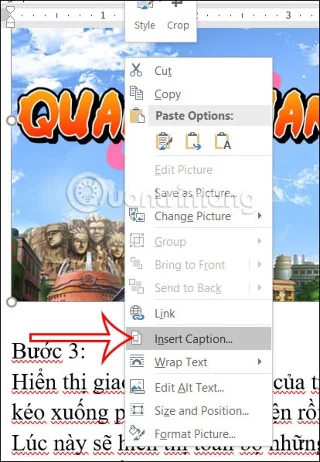
In the Word document interface, the user clicks on the image. Next, right-click on the image and select Insert Caption from the displayed list.
Step 2:
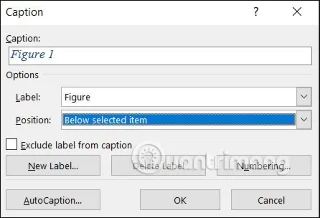
Now display the interface for users to enter caption for the image. At Label you click Figure , at Position you choose the position to display caption for the image.
If you want to remove the Figure label from the image, we check the Exclude label from caption box.

Step 3:
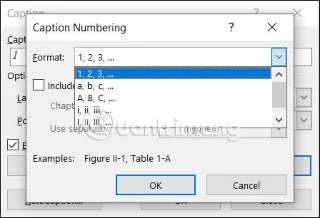
If you want to change the display order for the caption , click Numbering to change. Then click Format to change the display order format for the caption to text or number.

Step 4:
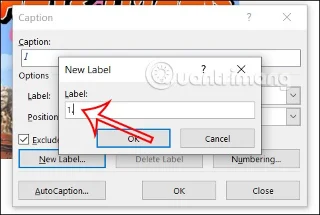
We can also change the caption display style by clicking on New Label below as shown.

Then you enter the new caption display style you want to use, then press Ok to save. We can create many different caption display styles with the above method.

In case you don't want to use that label style anymore, in the Label section, click on the label you want to delete and then click Delete Label below.

Step 5:
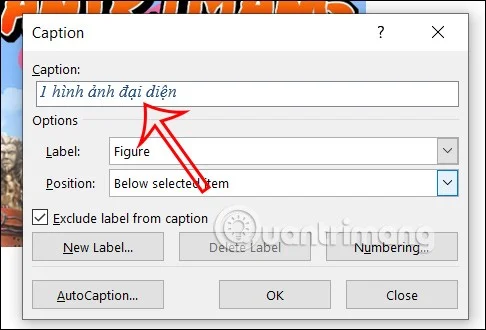
Finally, you fill in the caption for the image and click OK to save.

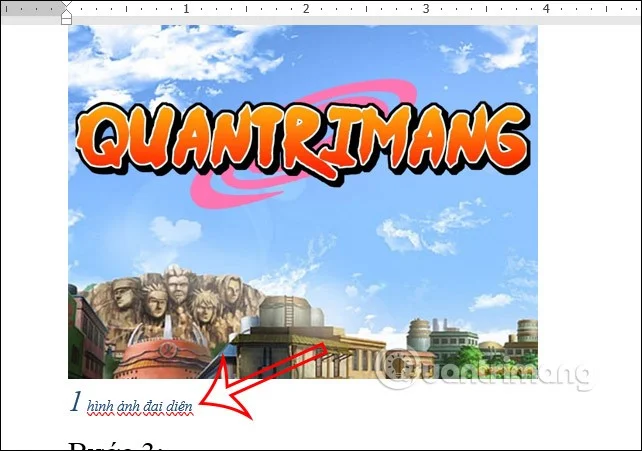
The resulting image has been captioned as shown below.

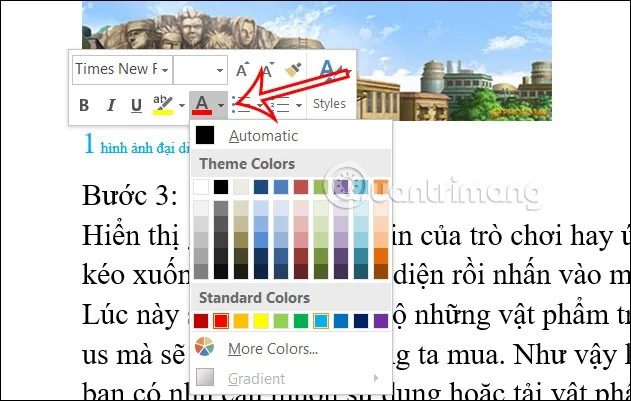
You can also highlight the caption content to change the format if you want.

Video tutorial on inserting captions for images in Word