Trump’s 60 Minutes Interview: What He Said After the Midterms, November 9, 2026
Trump discussed the midterm losses, deportations, Iran and more with Ross Douthat on 60 Minutes. Here are the key takeaways and where to watch.
Information checked: November 9, 2026, at 7:07 a.m. Eastern Standard Time (UTC−05:00; 12:07 UTC).
A near-death experience (NDE) is a vivid subjective experience that some people remember after a life-threatening crisis or resuscitation. People may describe profound peace, a sense of leaving the body, moving through darkness toward light, meeting people or beings, or reviewing moments from their lives. No single feature is required, and not every account is positive.
Researchers have not established one explanation that accounts for every report. Changes in brain activity, perception, sleep-wake processes, memory, and the body’s response to extreme stress may interact. NDEs are meaningful experiences for many people, but a personal account by itself does not prove that consciousness left the body or that an afterlife exists.
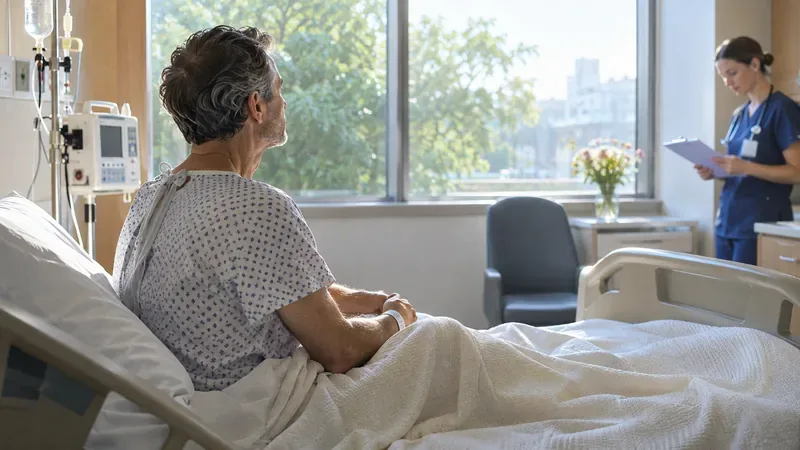
An NDE is a person’s recollection of an unusually vivid mental experience during or around a severe medical crisis, such as cardiac arrest, major trauma, or another event perceived as life-threatening. The term describes what someone reports; it is not a diagnosis that determines what happened to the brain or what the experience means.
Cardiac arrest is a medical emergency in which the heart stops pumping blood effectively. Resuscitation can restore circulation, so survival after cardiac arrest is not the same as returning from irreversible death. Some researchers use the phrase “recalled experience of death” for reports connected with cardiac arrest because it avoids assuming exactly when the experience occurred. A 2024 scoping review of NDEs after cardiac arrest notes that definitions, measurement tools, and study methods differ.
Across interviews and research scales, recurring themes include an intense feeling of calm or joy; a sense of floating or seeing one’s body from another perspective; a passage through darkness or toward a bright light; a review of memories; and encounters with deceased relatives, spiritual figures, or other presences. Some people describe altered time, unusually vivid senses, or reaching a boundary and choosing or being told to return.
These are patterns, not a checklist. A person may report only one feature or none of the familiar ones. Some accounts are frightening, confusing, or isolating rather than peaceful. A systematic analysis of published case reports and qualitative studies found emotional, cognitive, religious, and out-of-body themes, while also noting that people interpret similar-feeling experiences in different ways.
No mechanism has been proven to explain the full range of NDE reports. Researchers are studying several possibilities, and more than one process may contribute during a crisis and recovery.
During cardiac arrest, severe illness, or resuscitation, blood flow, oxygen and carbon-dioxide levels, medication exposure, and brain activity can change. Each may affect attention, perception, emotion, and memory. These factors are difficult to measure at the moment an experience is formed, and findings from one patient or one type of emergency may not apply to everyone.
A 2025 review in Nature Reviews Neurology proposes an integrated model involving interacting neurophysiological and psychological processes, including changes in brain networks and neurotransmitter activity. It is a research model, not a settled explanation: evidence that a mechanism can produce a similar sensation does not show that it caused a particular person’s NDE.
The brain normally combines signals from vision, touch, balance, and body position to create a sense of where “I” am. Research on out-of-body sensations has implicated the temporoparietal junction, a region involved in combining some of these signals. In a small neurological study, stimulation and brain recordings linked this region to imagined shifts in body perspective and to an out-of-body sensation in one patient. That helps explain how a particular feeling might arise; it does not explain every element of an NDE.
Some researchers examine whether dream-like activity or rapid-eye-movement (REM) sleep features can intrude into other states of consciousness. Others study dissociation, the brain’s response to trauma, expectations, and how memories are organized while someone regains awareness. Similarities to dreams or altered states do not mean a person is pretending. They do mean that a vivid memory may be difficult to date precisely, especially when a patient cannot communicate during CPR or anesthesia.
The 2023 AWARE II study followed 567 in-hospital cardiac-arrest cases across 25 sites. Fifty-three people survived, and 28 completed interviews. Of those interviewed, 11 reported memories or perceptions suggestive of consciousness; six described a “transcendent recalled experience of death.” The study also monitored brain activity during CPR. Its authors reported some EEG patterns compatible with organized activity, but an EEG signal alone cannot establish what a person was consciously experiencing or when a later memory formed.
In the study’s perception tests, nobody identified the hidden visual image and one of 28 interviewees identified the auditory stimulus. The small number of interviewed survivors and the circumstances of resuscitation limit what can be concluded. The findings support continued study of awareness and memory during cardiac arrest; they do not show that a person perceived events from outside the body or that consciousness continued after irreversible brain death. Read the AWARE II study in Resuscitation.
No scientific study has established that an NDE proves life after death. Research can document what survivors remember, compare reports, monitor physiology, and test whether specific perceptions can be verified. It cannot settle a metaphysical question from a vivid subjective account alone. People may draw spiritual or personal meaning from an NDE, but that interpretation is separate from what the evidence demonstrates.
A systematic review of reported NDE aftereffects describes both lasting positive changes and difficult adjustments. Some people may feel distressed or have trouble making sense of what they remember. If the experience is affecting sleep, mood, or daily life, discussing it with a healthcare professional can help; a clinician can also consider the medical circumstances surrounding the event. Listening without dismissing the person or treating their interpretation as established fact can make that conversation easier.
No. Many survivors report no remembered experience, and research findings vary with the population studied, interview timing, and measurement method.
No. Peace is a common theme, but some people report fear, confusion, or distressing imagery.
Usually not. A memory may be formed during a crisis, during resuscitation, or as awareness returns, and current monitoring cannot reliably assign every reported experience to one moment.
Trump discussed the midterm losses, deportations, Iran and more with Ross Douthat on 60 Minutes. Here are the key takeaways and where to watch.
Gordon Brothers controls Poundland through 1903 Peach Bidco and financed its turnaround. Here’s what the 2025 deal and the administration notice mean.
Ryanair’s airport bag-drop cutoff changes to 60 minutes before departure on Nov. 10, 2026. See which flights are affected and how to verify your deadline.
Find official M40 incident updates, planned closures, and roadworks. Current closure status was not confirmed at 1:10 p.m. GMT; check again before traveling.
Oscar Piastri finished sixth at the 2026 São Paulo Grand Prix. See what happened, the Australian race times and what comes next.
Learn what a quantum state means, how measurement and superposition work, and why quantum states matter for computing and physics.
Former Qantas pilot Richard de Crespigny’s advice on going barefoot prompts a practical guide to reclining, armrests, luggage and cabin safety.
J.J. McCarthy left the Giants’ Nov. 8 game with a hip injury, returned after evaluation and said he felt good. Here’s what is confirmed—and what remains unknown—before Thursday vs. Washington.
Practical Canadian winter heating tips for thermostat settings, draft sealing, heat pumps, bill tracking, safety and current retrofit support.
Learn what a near-death experience is, what people commonly report, what AWARE II found, and why science has no single confirmed explanation.