Trump’s 60 Minutes Interview: What He Said After the Midterms, November 9, 2026
Trump discussed the midterm losses, deportations, Iran and more with Ross Douthat on 60 Minutes. Here are the key takeaways and where to watch.
Verified Monday, November 9, 2026, at 03:14 UTC. This report was checked before the Nasdaq regular session opened for Monday.
Nvidia’s board has opened an independent investigation into reports that CEO Jensen Huang was targeted by a foreign intelligence effort. Separately, Huang acknowledged that he had been unfaithful to his wife in a message to employees. The board says it currently has no reason to believe that company secrets or U.S. national security were compromised, and it expressed confidence in Huang. The public record reviewed here does not establish that he passed information to Beijing. (NVIDIA board statement; Huang’s message to employees.)
The episode puts two different questions together: personal conduct and a still-unresolved national-security concern. It could sharpen scrutiny of executive oversight, customer access and controls on advanced-chip sales. But early market signals are mixed, and the regular U.S. stock session had not begun at the time of this check. Calling the episode a confirmed market panic would go beyond the available evidence.
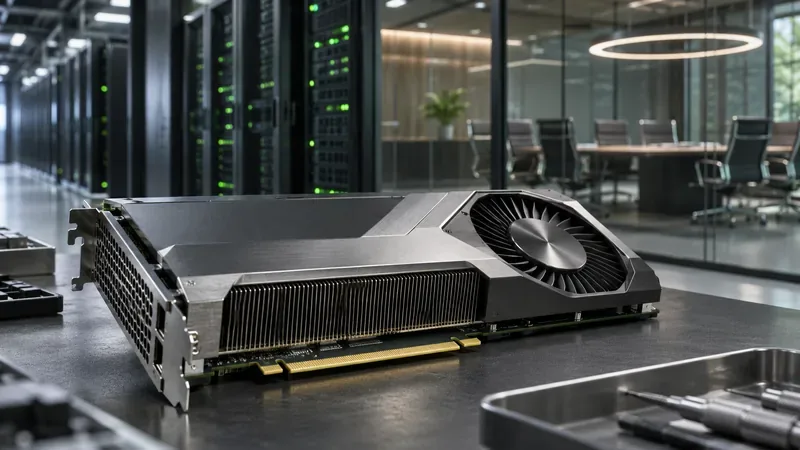
On November 8, Nvidia said an independent committee of directors, assisted by outside counsel, would examine recent reporting that Huang had been the target of a foreign-intelligence effort. The board said it would review all available information. It also stated that it had no reason to believe either national security or Nvidia’s secrets had been compromised, while expressing confidence in Huang and his leadership team. That is the board’s position at the start of the inquiry, not a final finding.
In a separate company message, Huang apologized to his family and colleagues, said he had been unfaithful, and accepted responsibility for the harm he caused. He said he supported the investigation and would cooperate. The message did not name the other person or describe any transfer of company or government information. Nvidia said he was committed to continuing as CEO without interruption, according to Reuters’ report on the board review.
Reuters reported that The New York Times had described a relationship between Huang and Alice Huang, an unrelated former executive of Singapore-based data-center company Megaspeed. The Times report said U.S. authorities had investigated her and concluded that she was a Chinese intelligence asset. Reuters also reported that authorities had scrutinized Megaspeed over suspicions it helped China obtain advanced Nvidia chips restricted from shipment there. These are reported allegations and suspicions; they are not evidence, on their own, that Huang knowingly disclosed secrets or that restricted chips were transferred unlawfully.
The issue has already reached Congress. Three Republican House committee chairs requested a closed-door briefing from Huang about his reported interactions with Alice Huang and Nvidia’s safeguards against foreign espionage. They asked him to accept November 18, 2026, or propose another date by November 11. The request signals political and security scrutiny; it is not a finding of wrongdoing. The House committee announcement describes the proposed briefing and its scope.
Investors, cloud providers and AI developers depend on Nvidia’s product roadmap, leadership decisions and supply of advanced accelerators. That concentration makes a question about the CEO’s future a potential key-person risk, even before any change in company operations. Reuters cited analysts who said the investigation could weigh on the stock if it threatened Huang’s position; the board, by contrast, said it has confidence in him. Neither outcome is settled.
The governance question is broader than one executive. Boards across the technology sector may face renewed questions about how they document conflicts, vet high-risk business relationships, limit access to nonpublic technical information and escalate security concerns. Those are areas companies could review; the public evidence does not show that Nvidia’s controls failed. The investigation’s eventual scope and findings matter more than the existence of a personal scandal alone.
The case also intersects with export controls. Advanced AI chips are already a strategic technology in U.S.–China policy, and the House request specifically asks about Nvidia’s security protocols. More scrutiny could mean tougher customer checks or additional questions from regulators and governments if investigators find a control gap. If the review finds no compromise, the lasting effect may instead center on executive reputation and investor confidence. Both are conditional possibilities, not confirmed outcomes.
No. Early trading showed caution but not a single market-wide direction. Monday’s Asian market coverage reported the MSCI Asia-Pacific index up 0.7% after Friday’s gains, while Nasdaq-100 futures fell as much as 1% following the Nvidia news. Those figures describe different markets and instruments, not a final verdict on Nvidia’s shares. The Business Times’ market report characterized the reaction as a concern for risk appetite, alongside other market factors.
At 03:14 UTC on Monday, November 9, the Nasdaq regular cash session had not opened. Nasdaq lists regular hours as 9:30 a.m. to 4:00 p.m. Eastern Time. On November 9, Eastern Time is Eastern Standard Time (EST, UTC−05:00), so the session was scheduled to begin at 9:30 a.m. EST (14:30 UTC). Early futures can move before then, but they are not the same as a full regular-session price response. Nasdaq’s trading-hours page gives the regular-session schedule.
There is another reason to avoid assigning every Nvidia price move to this story: Reuters reported that Nvidia shares had already surrendered their year-to-date gains during a broader technology selloff driven by investor concerns about the pace and durability of AI spending. The new investigation may add a separate governance risk, but the pre-existing decline cannot be attributed to the affair.
There is no verified report of a broad delivery halt. On Monday, South Korea’s vice science minister said 10,000 Nvidia GPUs funded through a 2025 budget were already in use and that contracted deliveries planned for 2026 were expected to proceed on schedule. The ministry said it was monitoring developments and discussing prices and schedules with Nvidia Korea. A visit and some public events involving Nvidia executives were canceled or reassigned, while the company’s Seoul AI event and a business agreement were expected to continue, Reuters reported. This is a useful signal from one market, not proof that every customer or country is unaffected. See Reuters’ account of South Korea’s response.
The next substantive evidence should come from the independent board inquiry: its scope, whether it finds any access or disclosure failure, and what controls Nvidia changes, if any. The congressional briefing request is another milestone, but Huang’s appearance has not been confirmed publicly. For business fundamentals, Nvidia has scheduled its fiscal 2027 third-quarter results call for Tuesday, November 17, at 2:00 p.m. Pacific Standard Time (PST, UTC−08:00) / 5:00 p.m. Eastern Standard Time (EST, UTC−05:00), which is 22:00 UTC. The company’s earnings-call notice says its results cover the quarter that ended October 25.
For the wider AI industry, watch for evidence rather than reaction alone: confirmed findings about information access, customer due-diligence changes, official export-control actions, and any changes to Nvidia’s leadership or contracted deliveries. Without such findings, the story is a serious governance and geopolitical risk, not proof that AI systems, chip designs or supply networks were compromised.
No. He admitted infidelity and said he would cooperate with the board inquiry. The public materials reviewed do not establish that he passed confidential information to Beijing.
No. The board said it currently has no reason to believe secrets or U.S. national security were compromised, and it is investigating the reports.
That could not be determined at the 03:14 UTC check: Monday’s Nasdaq regular session was scheduled to open at 14:30 UTC. Early Asian trading and futures showed mixed signals, not a complete regular-session response.
Trump discussed the midterm losses, deportations, Iran and more with Ross Douthat on 60 Minutes. Here are the key takeaways and where to watch.
Gordon Brothers controls Poundland through 1903 Peach Bidco and financed its turnaround. Here’s what the 2025 deal and the administration notice mean.
Ryanair’s airport bag-drop cutoff changes to 60 minutes before departure on Nov. 10, 2026. See which flights are affected and how to verify your deadline.
Find official M40 incident updates, planned closures, and roadworks. Current closure status was not confirmed at 1:10 p.m. GMT; check again before traveling.
Oscar Piastri finished sixth at the 2026 São Paulo Grand Prix. See what happened, the Australian race times and what comes next.
Learn what a quantum state means, how measurement and superposition work, and why quantum states matter for computing and physics.
Former Qantas pilot Richard de Crespigny’s advice on going barefoot prompts a practical guide to reclining, armrests, luggage and cabin safety.
J.J. McCarthy left the Giants’ Nov. 8 game with a hip injury, returned after evaluation and said he felt good. Here’s what is confirmed—and what remains unknown—before Thursday vs. Washington.
Practical Canadian winter heating tips for thermostat settings, draft sealing, heat pumps, bill tracking, safety and current retrofit support.
Learn what a near-death experience is, what people commonly report, what AWARE II found, and why science has no single confirmed explanation.