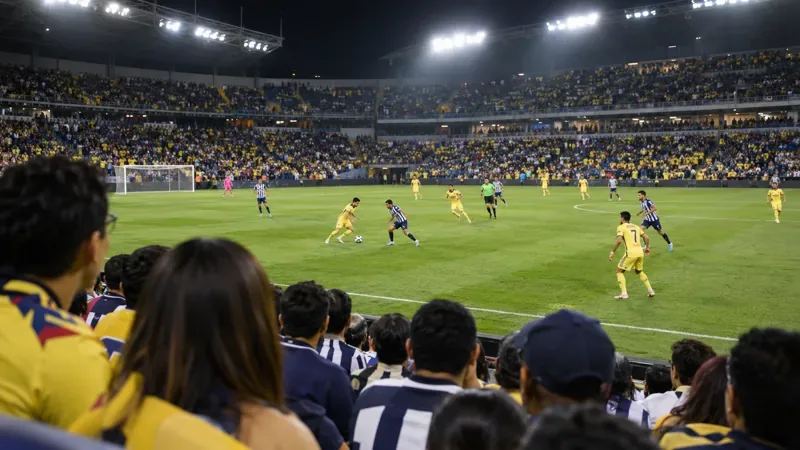
América 0–2 Monterrey: Final Score and Where to Follow | Nov. 29, 2026
Monterrey beat América 2–0 to advance from the Liga MX Apertura quarterfinal. Check the final score, match timeline, and U.S. viewing options.
Last verified: November 27, 2026 at 20:01 UTC (3:01 PM EST)
Quebec’s Act respecting the laicity of the State, widely known as Bill 21, stands as one of the most consequential and controversial pieces of legislation in modern Canadian legal history. Enacted by Quebec’s National Assembly in June 2019, the law prohibits public-sector employees in positions of coercive authority—including public school teachers, police officers, prosecutors, and judges—from wearing visible religious symbols while exercising their official functions. To shield the measure from constitutional invalidation under the Canadian Charter of Rights and Freedoms, Quebec invoked Section 33, known as the “notwithstanding clause.” As constitutional challenges moved through the Canadian judicial system to the Supreme Court of Canada, the case elevated long-standing debates regarding the balance between provincial legislative sovereignty, state secularism, and individual constitutional protections.
Bill 21 affirms the secular status of the province of Quebec through four statutory principles: the separation of state and religion, the religious neutrality of the state, the equality of all citizens, and freedom of conscience and religion. In practical application, the law directly affects individuals employed within the provincial public service who wear visible religious garments or items, such as the Muslim hijab, Jewish kippah, Sikh turban, or Christian crucifix.
The statute applies to specific categories of civil servants categorized as exercising authority on behalf of the state:
Bill 21 included a grandfather clause (acquired rights) protecting public servants hired prior to March 27, 2019, provided they remain in the same institution and fulfill identical job functions. However, promotions, department transfers, or entering the teaching workforce after that date trigger the full prohibitions of the law.
Section 33 of the Canadian Charter of Rights and Freedoms, formally adopted during the patriation of Canada’s Constitution in 1982, allows federal or provincial parliaments to pass legislation that operates notwithstanding specific provisions of the Charter. It represents a constitutional compromise designed to preserve parliamentary supremacy over judicial rulings on certain matters of social and public policy.
Key mechanics of Section 33 include:
Opponents of the secularism law—comprising civil liberties coalitions, affected educators, religious freedom organizations, and the English Montreal School Board (EMSB)—pursued multi-pronged litigation to bypass the Section 33 shield:
Because Section 23 cannot be overridden by the notwithstanding clause, the English Montreal School Board argued that Section 23 grants English-language minority school boards exclusive constitutional jurisdiction over their management and staffing policies. The EMSB maintained that imposing hiring bans on teachers wearing religious symbols unconstitutionally impairs its ability to recruit qualified personnel and reflect community diversity.
Litigants argued that Bill 21 disproportionately excludes Muslim women who wear head coverings from public-sector teaching positions. Because Section 28 states that rights and freedoms referred to in the Charter are “guaranteed equally to male and female persons,” challengers contended that Section 28 operates as an independent constraint that cannot be neutralized by Section 33.
Advocacy groups argued before the appellate courts and the Supreme Court of Canada that Canada’s constitutional order contains unwritten structural norms, such as the rule of law and the protection of vulnerable minorities, that limit the arbitrary invocation of preemptive override clauses.
The judicial pathway of Bill 21 produced significant rulings across multiple levels of the Canadian justice system:
| Judicial Forum | Key Ruling & Findings |
|---|---|
| Superior Court of Quebec (2021) | Upheld the broad validity of Bill 21 due to Section 33, but carved out an exemption for English-language school boards under Section 23, and struck down face-covering rules for members of the National Assembly. |
| Quebec Court of Appeal (2024) | Overturned the Section 23 exemption for English school boards, affirming that Bill 21 applies uniformly across Quebec's public schools, and ruled that Section 28 cannot independently dismantle a valid Section 33 override. |
| Supreme Court of Canada | Heard comprehensive arguments regarding the constitutional limits of Section 33, examining whether courts retain jurisdiction to issue non-binding declarations of Charter violations when Section 33 is enacted preemptively. |
The constitutional debate surrounding Bill 21 extends beyond the borders of Quebec and touches the fundamental architecture of Canadian federalism and civil liberties:
Yes. Bill 21 specifically applies to the public education sector and state institutions. Private schools and non-subsidized independent educational institutions are not subject to the secular clothing ban mandated by the law.
No. Under Canada’s division of powers in the Constitution Act, 1867, education and provincial public administration fall under exclusive provincial jurisdiction. The federal government cannot unilaterally repeal a provincial statute; its involvement is limited to legal intervention and submissions in constitutional court proceedings.
No. Section 33 contains an automatic five-year sunset provision. Every five years, the Quebec National Assembly must vote to formally renew the notwithstanding clause for the legislation to maintain its immunity from court invalidation under Sections 2 and 7–15 of the Charter.
Monterrey beat América 2–0 to advance from the Liga MX Apertura quarterfinal. Check the final score, match timeline, and U.S. viewing options.
Learn how UK pharmacy prescription substitution rules, generic dispensing, and Serious Shortage Protocols (SSPs) protect patients when medicines are out of stock.
Prescription substituted at the pharmacy counter? Here is your essential checklist of label details to inspect and critical questions to ask your pharmacist.

A clear guide to Prince Harry and King Charles’s strained relationship, key events in the rift, and the signs of renewed contact and reconciliation.
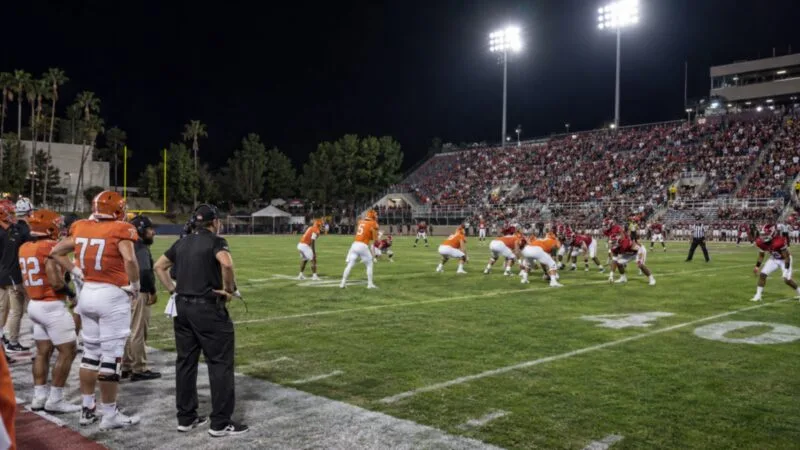
Final score and postgame recap for Oregon State vs. Fresno State on Nov. 28, 2026. The Beavers defeated the Bulldogs 38–10 at Valley Children’s Stadium.
Learn how to follow Arizona State vs. Arizona live, find the latest scores, and stream the rivalry game across official team portals, TV, and radio networks.
Baylor upsets No. 18 Houston 27-20 in their regular-season finale. Get the verified final score, stats leaders, and guide to checking official highlights.

The Flames–Rangers game has ended. See where Canadian fans can check the official recap, game report and NHL viewing options for future matchups.

The Nov. 28 Senators–Hurricanes game is final. See the score, find the official recap and game centre, and check Canadian broadcast options for their next meeting.

Learn how Starlink uses a dish, low-Earth-orbit satellites and ground links to deliver internet, and what Canadian households should know about setup and coverage.