Home
» PC Tips
»
Simple changes to help your Windows computer boot faster
Simple changes to help your Windows computer boot faster
A slow computer startup can quickly become frustrating. The culprit is often an ever-growing list of applications that run at startup. Turning off applications you don't need is the most effective way to help your Windows computer boot faster.
Turn off unnecessary startup applications
As you install apps and programs, many of them are automatically added to the startup list, meaning they launch every time your computer turns on. As the list gets longer, it takes longer for Windows to load everything before you get to the desktop.
Disabling unnecessary startup applications will reduce the load on the CPU and drive during boot, allowing Windows to focus on loading only the essential applications and services. This difference can be quite noticeable, especially on older computers or computers without SSDs .
Not only do these apps slow down your boot time, they also continue to run in the background. So even when you're not using them, they continue to consume system resources and can slow down performance. Disabling them at startup doesn't affect their functionality; it simply prevents them from launching automatically.
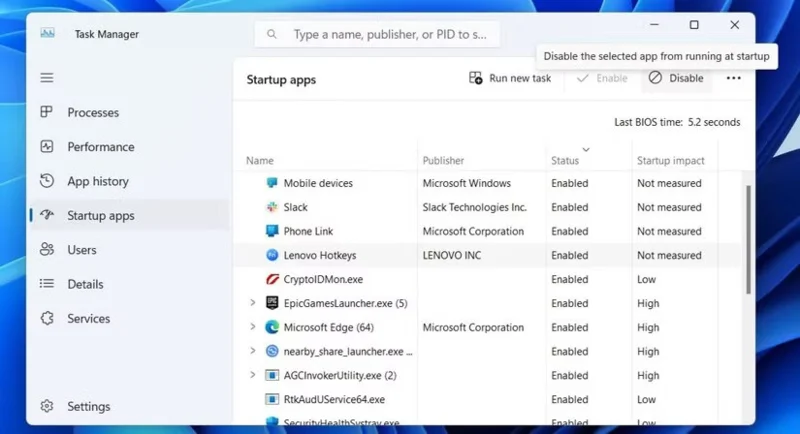
To manage startup applications on your PC, open Task Manager ( Ctrl + Shift + Esc ) and go to the Startup apps tab . Review the startup status of each item and decide whether it is necessary or not. For any application that does not need to run immediately, select it and click the Disable option in the upper right corner. Repeat this for all the non-critical applications in the list.
Startup apps tab in Task Manager Windows 11
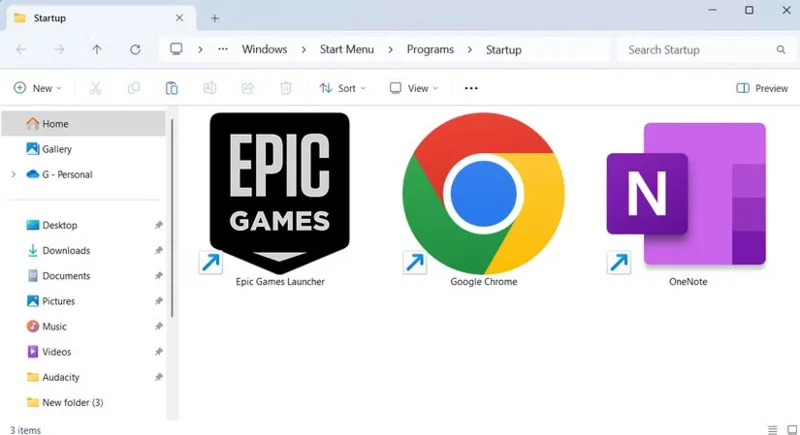
There's also a second item to check: the Startup folder. To open this folder, press Win + R to open the Run dialog box , type shell:startup , and press Enter . In the Startup folder, look for any application shortcuts, programs, websites, or scripts that you don't need to run at startup and delete them.
This will disable most startup applications, but if you previously used Task Scheduler to run applications at startup, check that entry as well to make sure no unwanted tasks are set to run at startup.
Just because disabling startup applications helps your computer boot faster doesn't mean you should disable them all. Also, not all applications or programs have the same impact when configured to run at startup.
Some applications are essential for both security and functionality. For example, your antivirus program should always start with your system to provide real-time protection. Similarly, cloud storage tools like OneDrive or Google Drive may need to start immediately to back up or sync your files. It’s easy to forget to manually launch these applications when you turn on your computer, meaning your files don’t sync when you edit them.
Background utilities such as Microsoft PowerToys also rely on startup access to automatically enable their features. Disabling these programs may reduce security, reduce productivity, or disrupt essential system functions.
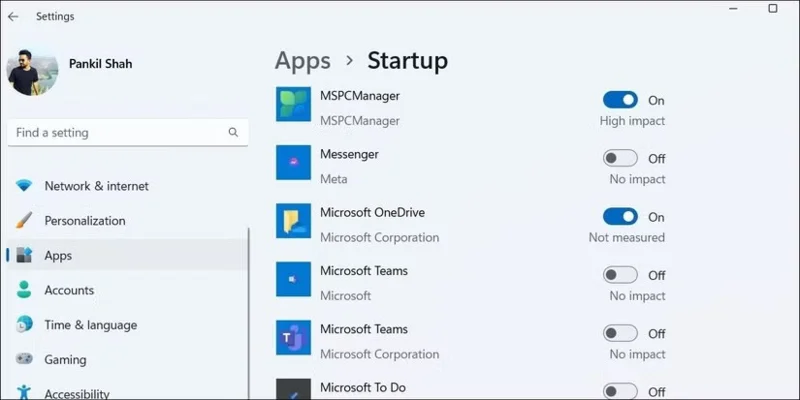
Disable OneDrive startup using Settings app
However, some apps don’t need to start until the system is fully loaded. Apps like Spotify , Steam , WhatsApp , and even browsers like Microsoft Edge can be opened manually when needed, rather than slowing down the boot process. Messaging apps, game launchers, and file sharing tools often fall into this category, and you can safely disable them at startup without affecting your day-to-day use.
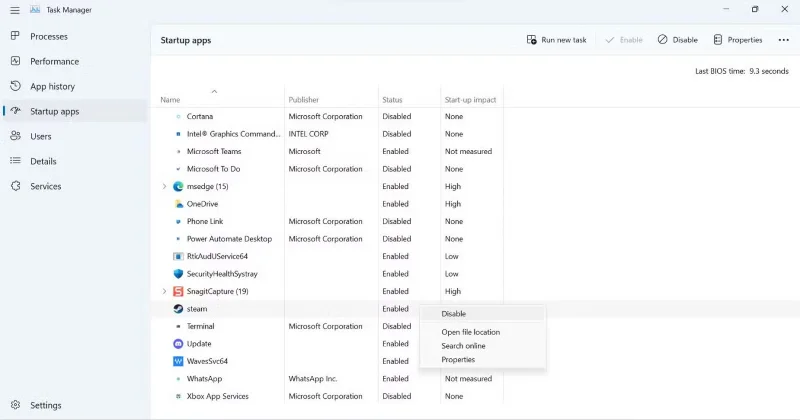
If you're unsure about disabling certain apps, Windows will show you how much each app impacts startup performance (though it's not perfect). In the Startup apps tab of Task Manager, look at the Startup impact column , where apps are labeled High , Medium , Low , or Not measured . You can sort apps by their impact to easily identify which programs have the biggest impact on startup time.
Turn off unnecessary tasks in the Startup apps tab of Windows Task Manager
Note : If you come across a startup application or program that you don't recognize, don't disable it immediately. Instead, right-click it and select Search online . This quick check can help avoid accidentally disabling an application that is important to the stability or security of your system.
Get alerts when new apps add themselves to the startup list
While disabling unnecessary startup applications is a great way to speed up your boot time, your work isn't done. Newly installed programs—or even existing ones after an update—often automatically reconfigure themselves to start with Windows. Sometimes this happens because you accidentally accept a prompt without realizing it; other times, an update simply enables the setting without asking.
An easy way to control this is to enable startup application notifications in Windows. When this feature is enabled, Windows will alert you whenever a program adds itself to the startup list. This way, you can review the change immediately and disable it before it has a chance to slow down your next startup.
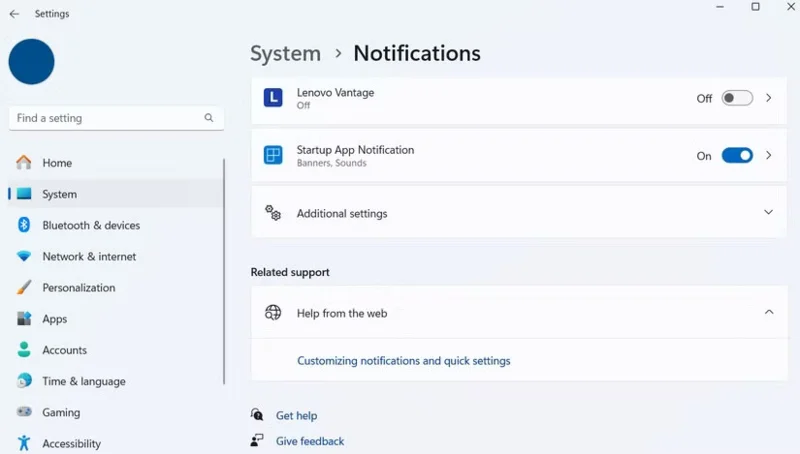
To enable this feature, go to Settings > System > Notifications and make sure notifications are turned on. Then, scroll down and turn on Startup App Notification .
Windows 11 Settings app shows startup app notification toggle
Windows will now notify you whenever an application is added to the startup list. However, you should regularly review your startup applications manually to make sure you don't miss any unnecessary applications.
When you’re ready to start working or playing a game, sitting around waiting for your computer to load can be frustrating. Adjusting your startup applications can help eliminate that delay, but that’s only one step. There are plenty of other ways to speed up your Windows PC’s boot time, from enabling Fast Startup and updating your graphics drivers to checking for corrupted system files.