Home
» PC Tips
»
Some ways to fix Start Menu on Windows 10 stopped working
Some ways to fix Start Menu on Windows 10 stopped working
The Start Menu is probably the most popular feature of Windows 10. However, for some PC versions, this feature may be faulty. In this article, WebTech360 will guide you how to fix Start Menu errors on Windows 10. Below are some fixes you can apply.
Re-logging into your computer user account is one of the easiest solutions to try. If your Start menu is only intermittently not working, try this solution, it's incredibly simple and effective.
Step 1: On your keyboard, press the + key combination and Ctrlclick Sign out.AltDelete
Step 2: Enter your password and log in again.
Step 3: Check if the Start menu is working properly.
If the problem is not resolved, try the solutions below.
2. Restart Windows Explorer
This is also one of the simple solutions to help restore the Start menu to work properly. To restart Windows Explorer, follow the steps below:
Step 1: Press the + key combination to open Task Manager.CtrlShiftEsc
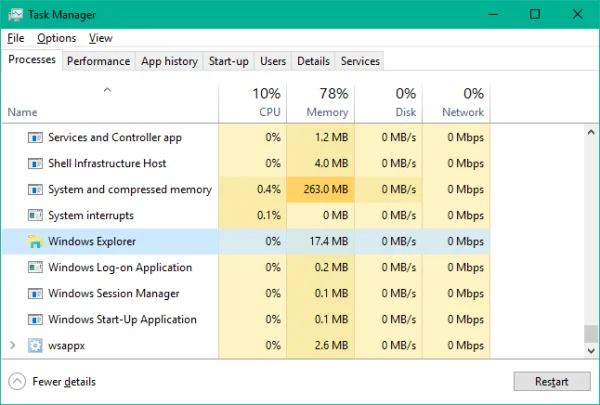
Step 2: Next, on the Task Manager window, in the Process tab, scroll down to find the Windows Explorer option .
Step 3: Click on Windows Explorer, then click Restart in the bottom right corner of the screen.
The solution is simply to kill the Windows Explorer process and restart Windows Explorer.
Once Windows Explorer restarts, the problem should be gone and your Start Menu should work again. However, this is only a temporary solution, so you will have to repeat this if the problem reappears.
3. Create a new user account
Another easy solution is to create a new account. And if all functions including the Start menu work fine in this new account, then you can transfer your data to this side to work and delete the faulty account.
After creating a new account, restart your computer and check the Start menu's operation.
4. Fix corrupted files
Step 1: If the Search bar is still working, search for powershell. Then right-click on Windows PowerShell in the search results and select Run as administrator .
However, if the Search bar doesn't work, press the Windows+R key , type the following keyword, and press Enter.
powershell
Right-click the PowerShell icon on the taskbar and select Pin to taskbar . Close the PowerShell program. Hold down the Shift+Ctrl key while right-clicking the PowerShell icon again. Select Run as administrator .
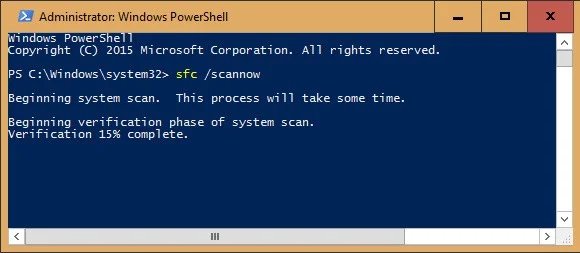
Step 2: Once you are in the Powershell command line environment, type the following command and press Enter. Then wait for a few minutes.
sfc /scannow
Step 3: If you see the message Windows Resource Protection found corrupt files but was unable to fix some (or all) of them appear after the scan process is finished, enter the following command and press Enter:
DISM /Online /Cleanup-Image /RestoreHealth
This command will take a while to run, wait and restart your computer after it finishes.
Step 4: Check if the Start menu is working properly.
5. Delete and reinstall Metro or Modern apps
Don't worry, this isn't as bad as it sounds. It only affects Metro or Modern apps that you get through the Microsoft store. Older Windows programs won't be affected.
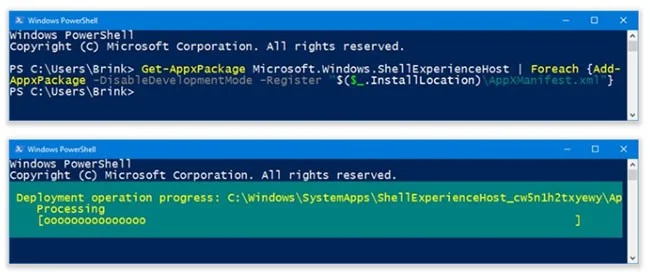
Open PowerShell as administrator as described above. Enter the following command:
Once it has completed its task, restart your computer to complete the repair process.
6. Re-register the Start menu in Windows 10
All your apps, settings, and files can be found on the Start menu. If the Start menu isn't working, re-registering the Start menu can help fix the problem.
This part of the guide will show you how to re-enable the Start menu for just your account (current user) or all users in Windows 10.
Re-register the Start menu for the current user only
Step 3: When done, you can close PowerShell if you want.
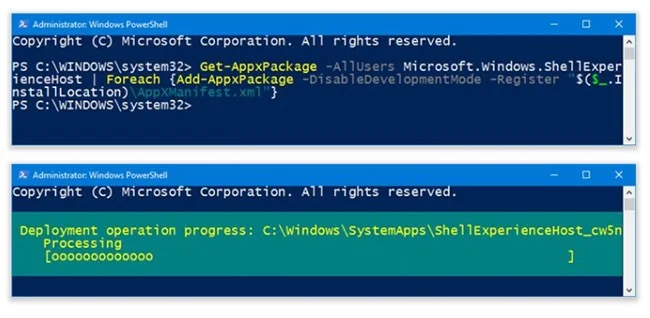
Re-register the Start menu for all users
7. Reset Windows 10 to its original state
If none of the above fixes the problem, you may need to reinstall Windows 10 from scratch to fix the problem. Rest assured that this solution will not cause any data loss on your computer. However, to be on the safe side, you should still copy the contents of the folders and transfer them to an external hard drive.
This process will reset all PC settings, it's like a factory reset except it will keep your files.
Step 1: Open the Settings application by clicking the Settings icon on the Start menu or pressing the + key combination .WindowsI
Click the Settings icon in the Start Menu
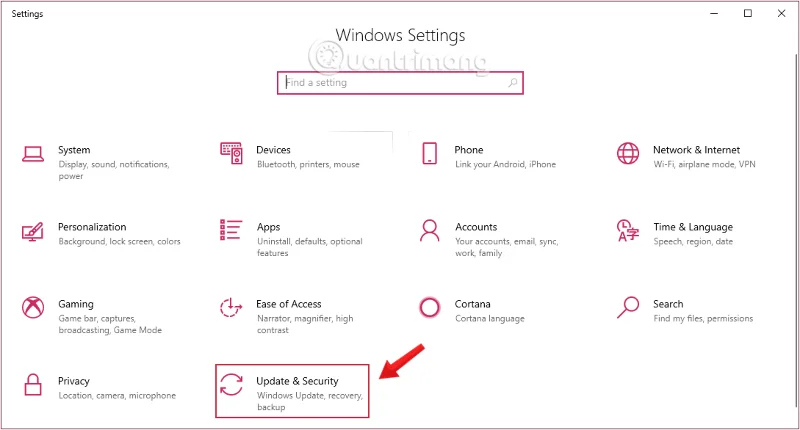
Step 2: On the Settings interface , click Update & security.
Click Update & security in Windows Settings
Step 3: Under Update & security, click Recovery from the left pane of the window.
Click Recovery from the Settings window
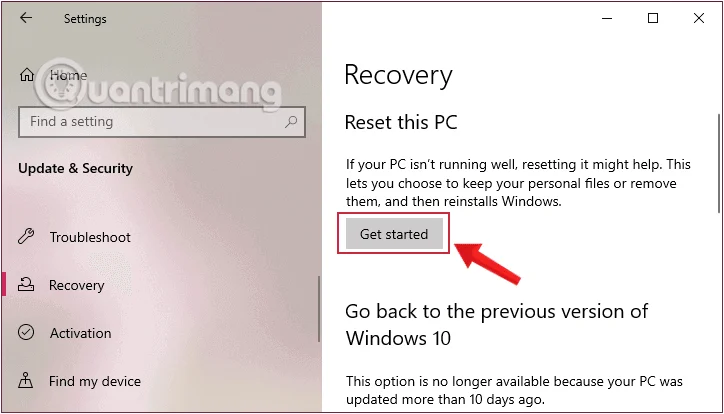
Step 4 : Next, in the right pane of the window, click Get Started under Reset this PC.
Select Get Started under Reset this PC
Step 5: In the Choose an option dialog box that appears, you will have two options:
Keep my files : Deletes the apps and settings you've set up but keeps your personal files.
Remove everything : Delete the entire Windows installation drive to its original state or delete the entire machine, including data on other hard drive partitions (applicable in case of selling, exchanging and no longer using the machine ).
Depending on your needs, you can choose the appropriate option, but no matter which option you choose, all your settings will return to default and the applications will be removed.
Choose an option dialog box
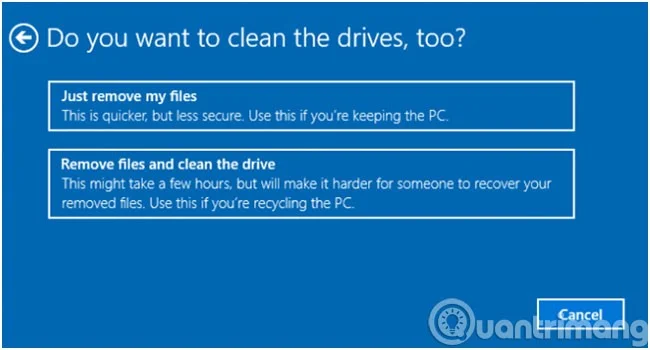
Step 6: If the above option is Remove everything , you will have the next 2 options:
Just remove my files: If you are still using the computer, just select Just remove my files to delete only your personal files.
Remove files and clean the drive: This option will delete all data so it will take more time, but it is definitely a good way if you want to sell, give away, or donate your device because it is difficult for others to recover deleted files through this option.
Clean the drives option
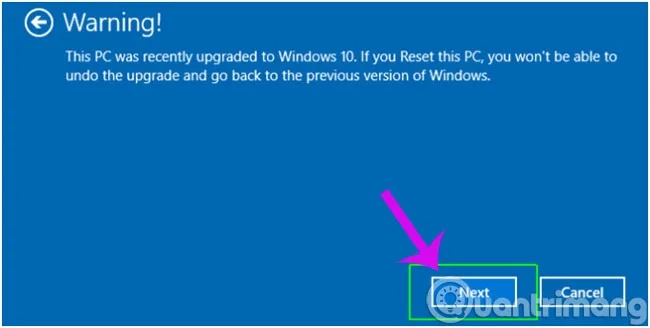
Step 7: Click the Next button if Windows warns that you will not be able to go back to the previous version of the operating system.
Warning you will not be able to revert to a previous version of the operating system
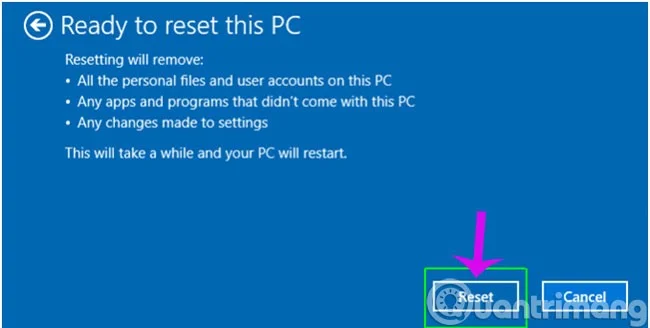
Step 8: Click the Reset button again to confirm. Windows will restart and take a few minutes to reset the system.
Click Reset in the pop-up message to confirm reinstalling Windows.
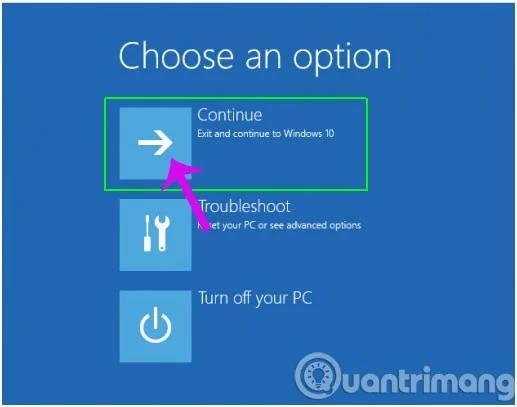
Step 9: In the Choose an option dialog box that appears, click Continue to complete the steps .
When finished, you will have to reinstall all programs that did not come with Windows.
Hopefully the above methods will help you fix the Start Menu not working error on your Win 10 device!