Home
» How to
»
The technology inside the Toshiba Inverter refrigerator
The technology inside the Toshiba Inverter refrigerator
Not only launching refrigerators with many eye-catching and unique designs, but Toshiba also offers consumers outstanding technology with many advanced utilities. In the article below, WebTech360 would like to introduce an overview of the Toshiba Inverter refrigerator line .
Toshiba Inverter refrigerators are divided into two smaller lines, Steel Collection and Glass Collection, and each line is equipped with different antibacterial and deodorizing technologies. Toshiba Inverter Steel Collection refrigerators include Toshiba refrigerators equipped with inverter compressors and high-quality metal outer shells.
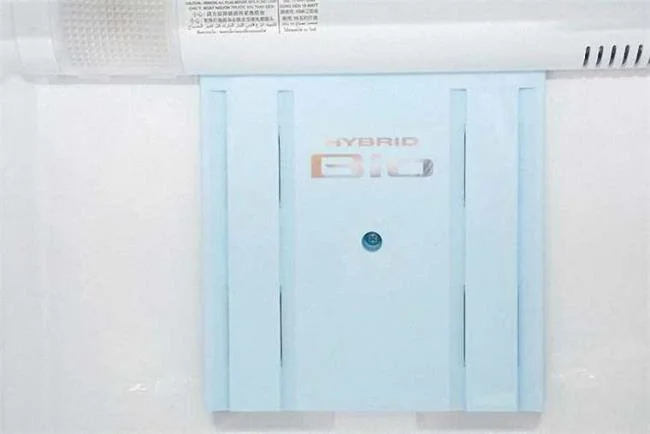
This refrigerator line is equipped with Hybrid Bio technology. Installed behind the quick-cooling compartment, the deodorizer includes 2 different catalysts: type SN + Ag and type A, with the ability to deodorize and kill bacteria, combined with a cold air arc to help food always fresh. Along with that, the cabinet is also equipped with enhanced deodorizer in the freezer to help limit and eliminate food odors in the freezer.
Modern hybrid Bio technology
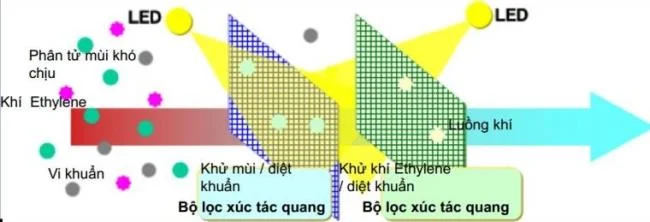
The Toshiba Inverter Glass Collection refrigerator line is an Inverter refrigerator with a luxurious mirror exterior. This refrigerator line is equipped with Hybrid LED deodorizer consisting of two different photocatalytic sets with two LEDs equipped to provide the photocatalytic energy. Not only does this powerful destroyer, this LED Hybrid deodorizer also has an effective deodorizing ability to help preserve the true taste of food, while thoroughly degassing Ethylene to keep the full freshness of the food. Vegetables.
LED Hybrid deodorizing effective technology
In addition, some high-end mirror-face Toshiba Inverter refrigerators are also equipped with unique UV-sterilization technology. UV light works continuously to remove bacteria on meat, fish, ... stored in the refrigerator's food tray and keep it fresh for longer. At the same time, the vegetable compartment is supported with Silver Ag + compost with optimal antibacterial ability, preventing the growth of bacteria, helping to keep food fresh for longer.
2 Optimal power saving
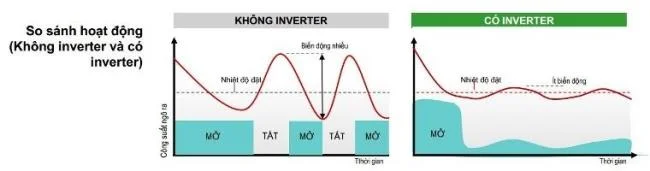
In traditional refrigerator models, the compressor operates in an "on-off" fashion. So the output capacity is almost unchanged. This also causes a big change in the internal temperature, which leads to a lot of energy consumption.
The compressor inside the refrigerator is Toshiba inverter with more stable temperature
Meanwhile, for inverter compressors, the output capacity varies according to different usage needs (day / night) or the amount of food in the refrigerator. This way you can maximize your energy use. The temperature is also more stable due to less variation. As a result, Toshiba's Inverter refrigerator saves up to 50% of energy consumption compared to the same capacity Toshiba non-inverter refrigerator. In addition, the energy efficiency of Toshiba Inverter refrigerators are at grade 5 (the best grade) under the energy labeling program of the Ministry of Industry and Trade.
Toshiba inverter refrigerators with significantly reduced power consumption
Not only that, the Toshiba Inverter refrigerator also uses the new R600a refrigerant that is 5% more efficient in performance, and at the same time, this refrigerant is also environmentally friendly, unable to degrade the ozone layer. . In addition, the refrigerator is also equipped with ECO mode that increases the freezer temperature by 1-2 degrees C, so it can reduce energy consumption by about 5% for metal refrigerators and increase 1.5 degrees. C for mirror refrigerators, which reduces energy consumption by 7%.
3Quick Freezing ice making mode
The metal Toshiba Inverter refrigerator with Quick Freezing, keeps the fan running at maximum speed for 150 minutes with a target temperature of -24 degrees Celsius, so the refrigerator will get ice quickly. Meanwhile, the mirror-faced Toshiba Inverter refrigerator will run continuously for 150 minutes with the target temperature of -27 degrees Celsius, so the refrigerator can make ice or freeze food quickly.
Quickly get ice to use
4 Multi-purpose box on the door
The new refrigerator has a special compartment with a lid not only for storing food, but also for storing other things such as cosmetics, medicine, etc. and plastic box with Ag + antibacterial.
5Double Cooling Zone Dual Cooling Zone
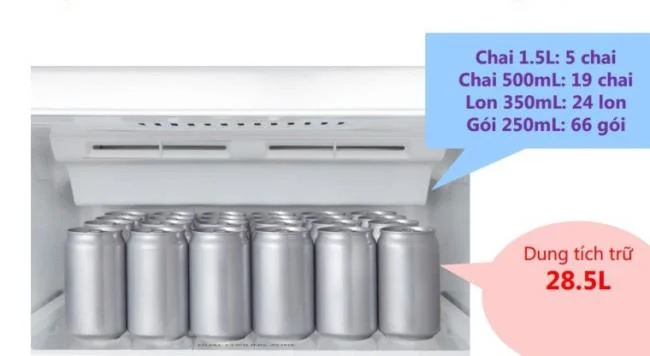
Quick cooling compartment on Toshiba inverter refrigerator
Toshiba refrigerators are equipped with a fast cooling compartment with large capacity to help store more bottles and cans of water. At the same time, with dual cold airflow from 2 outputs for faster cooling, the cooling time is only half the time compared to the original.
Not only that, the fast freezer compartment is also suitable for storing meat and fish. Because the quick-freezer compartment is cold enough to preserve fresh food and the LED Hybrid / Hybrid Bio deodorizer is capable of deodorizing and disinfecting in cold air.
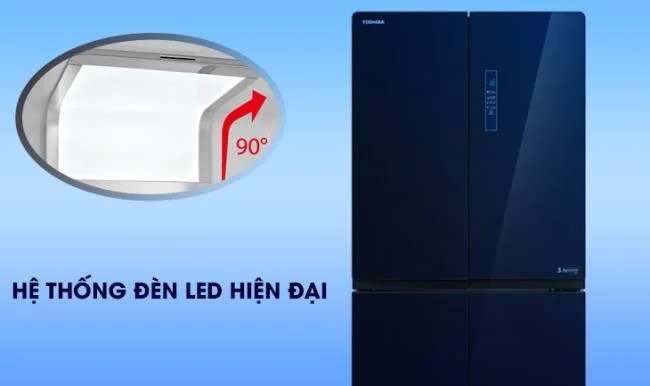
6LED light
Toshiba refrigerators use LED lights to illuminate the cabinets, which saves significant electricity by not generating heat inside the refrigerator. At the same time, the lamp has a long, maintenance-free life and has a soft and beautiful light.
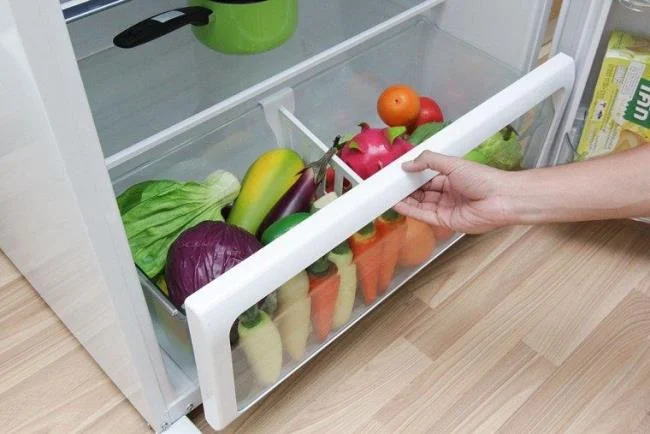
7Large vegetables and fruits
The capacity of the vegetable compartment is increased by about 60% compared to previous refrigerators with a capacity of up to 49 liters. At the same time, you can easily open and close with just a light force thanks to the wheel support below, even when the compartment is full of vegetables and heavy.
Vegetable compartment with significantly larger capacity
In addition, some Inverter models are equipped with small baskets to separate soft fruits or vegetables from others and to find them quickly and easily.
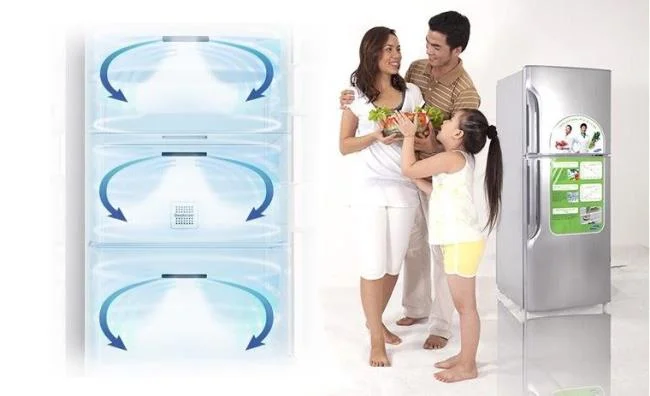
8 Cold air arc
Toshiba refrigerators use an arc cold air-flow system that helps to circulate cold air from the back of the refrigerator to every corner of the refrigerator. The cold air is blown evenly to make the interior space cool and comfortable quickly, helping the food to be preserved evenly and strongly.
The cold air is distributed evenly in Toshiba refrigerators
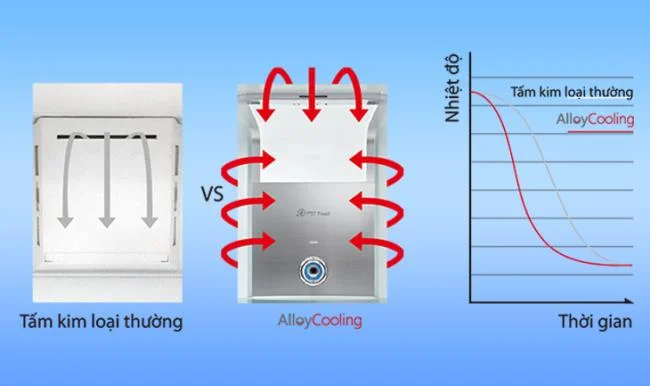
9Heat-retaining AlloyCooling alloy sheet
The heat-retaining AlloyCooling alloy sheet located on the back of the refrigerator helps to dispel heat and cool down faster. In addition, it also helps the refrigerator to maintain the cold air if a power failure occurs.
Above are some of the outstanding features inside the Toshiba Inverter refrigerator. If you have any questions or share anything, please feel free to comment below to get the fastest response!