Home
» Discover
»
Vinyl Is Back: A Practical Guide to the Resurgence of Physical Media
Vinyl Is Back: A Practical Guide to the Resurgence of Physical Media
Streaming remains the default way most people access music and movies, but physical media has not disappeared. In music, it has moved back into meaningful growth; in home video, the broad market is smaller, yet premium collector formats still have a committed audience. The practical takeaway is simple: physical media now works best as a deliberate complement to streaming rather than a universal replacement for it.
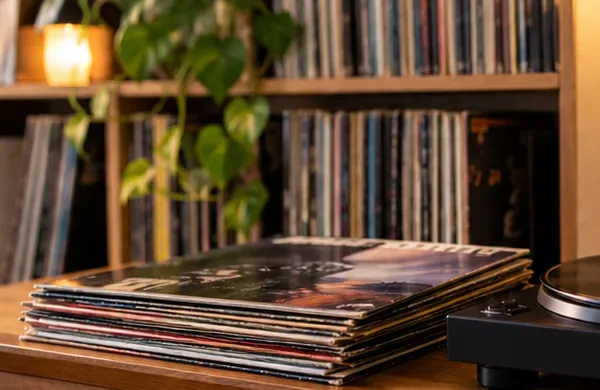
A stack of vinyl records sits beside a turntable in a home listening space, highlighting the tactile appeal and storage demands of physical music.
Physical media in 2026: the quick reference
The strongest comeback is in recorded music. The Recording Industry Association of America reported that U.S. vinyl wholesale revenue reached about $1.04 billion in 2025, up 9.3% from 2024, while total U.S. physical music revenue rose 5.0%. RIAA also counted 19 consecutive years of vinyl revenue growth. Its 2025 report is available in the RIAA year-end recorded music revenue report.
The pattern is global, but it is not identical in every market. IFPI reported that worldwide physical music revenue grew 8.0% in 2025 to $5.3 billion. Vinyl revenue rose 13.7%, and CD and music-video revenue also increased globally. At the same time, RIAA's U.S. data showed CD revenue falling 7.8% in 2025. That contrast matters: a “physical media comeback” is real, but the winning format depends on country, audience, artist, and use case. See the IFPI Global Music Report 2026 summary.
Movies tell a different story. DEG: The Digital Entertainment Group reported that U.S. spending on DVD, Blu-ray, and 4K UHD physical products declined by less than 10% in 2025, while the much smaller premium 4K UHD category finished the year up 12%. In other words, physical video is not broadly returning to its old scale, but premium discs are showing collector resilience. The figures are in DEG's Year-End 2025 Digital Media Entertainment Report.
Which physical format fits your goal?
Format
Best for
Main strengths
Main trade-offs
Vinyl LP
Album-focused listening, artwork, collecting
Large packaging, tactile ritual, active new-release market
Higher hardware and storage needs; condition and setup affect playback
CD
Affordable ownership, compact storage, easy ripping where lawful
Consistent digital playback, small footprint, large used market
Smaller artwork; some new releases are easier to find on vinyl than CD
High-bitrate video and audio, often includes extras
Requires compatible player and display; releases can be expensive or limited
Blu-ray / DVD
Building a movie library economically
Large catalog, used copies widely available, offline playback
Lower resolution than 4K UHD; some editions have fewer extras or older transfers
If you mainly want better music ownership
Choose vinyl when the object is part of the experience
Vinyl makes the most sense when you value album art, liner notes, sequencing, and the act of listening to a whole side. It is also the format receiving the strongest growth in the current music market. That does not mean vinyl is automatically the highest-fidelity option. Sound quality depends on the mastering, pressing quality, cartridge, tonearm setup, phono stage, speakers, room, and record condition. A well-mastered CD can outperform a poor pressing, and vice versa.
Before buying a turntable, check the complete signal chain. Some turntables have a built-in phono preamp; others need an external one or an amplifier with a phono input. Budget for a stylus, a stable surface, and vertical record storage rather than spending everything on the player itself.
Choose CD when value and reliability matter more than ritual
CD remains one of the most practical ownership formats. Used discs can be inexpensive, storage density is high, and playback does not involve a stylus touching a groove. A CD collection can also make sense for people who want a stable personal library without depending on whether an album stays available on a subscription service.
The main limitation is availability: some artists now emphasize vinyl or digital releases, and region-specific editions vary. If you buy used, inspect the playing surface under angled light, check that the center hub is intact, and confirm that multi-disc sets actually contain every disc.
Choose cassette only when its limitations are part of the appeal
Cassettes have returned as a niche collectible, especially for limited runs and independent releases. They are not the most convenient format for a new general-purpose library. Tape can stretch or degrade, decks require mechanical maintenance, and replacement hardware is less standardized than CD or vinyl equipment. Treat cassette buying as a specific collecting choice, not a default recommendation.
If your goal is a movie library you can keep
Physical film and TV media has a different value proposition from physical music. The strongest reason to buy is control over a specific edition: a disc can preserve access to a particular transfer, commentary track, documentary, subtitle set, or cut even if streaming catalogs change. That does not make every disc edition definitive. Transfers, audio mixes, region coding, HDR formats, subtitle options, and bonus features differ by release.
For a home theater, 4K UHD is the premium choice when the title has a strong transfer and your player, display, receiver, and cabling support the necessary standards. For a broad library, standard Blu-ray is often the better balance of quality, price, and catalog depth. DVD still has value for titles that never received a newer disc release or when price matters more than resolution.
Before buying a movie disc, verify these five things
Edition: Confirm the exact release year and publisher; multiple discs with the same cover title can contain different masters or extras.
Region compatibility: Blu-ray and DVD region restrictions can prevent playback on some players.
Disc count: Collector sets may include a movie disc, bonus disc, soundtrack, or packaging components that are missing in used copies.
Playback requirements: 4K UHD needs a compatible 4K UHD player; a standard Blu-ray player is not enough.
Digital-code expectations: Treat bundled digital codes as a bonus, not the core product. Codes can expire or depend on third-party services.
Why people are buying physical media again
1. Ownership is easier to understand
A disc or record on your shelf is a specific copy you possess. Streaming access, by contrast, depends on licensing, subscriptions, accounts, internet service, and platform availability. Physical ownership does not eliminate every risk—hardware fails and media can be damaged—but it gives the buyer a different kind of control.
2. Packaging has become part of the product
Colored vinyl, box sets, gatefold jackets, books, Steelbooks, and restored catalog editions turn media into display objects and gifts. This helps explain why premium physical products can grow even while mass-market disc sales shrink. Collectibility is a feature, but it can also create pressure to overspend on variants that offer little functional difference.
3. Physical formats slow down consumption
Putting on an LP, loading a disc, reading liner notes, or choosing a movie from a shelf creates friction. For some people, that friction is useful: it encourages intentional listening or viewing instead of endless browsing. For others, it is simply inconvenient. Streaming remains better when instant access and portability are the priority.
4. A collection can preserve context
Physical editions often keep credits, artwork, essays, bonus features, or release-specific mastering information together with the work. For music and film enthusiasts, that context can be as important as the audio or video itself.
A practical buying checklist
Decide whether you are buying for listening/viewing, collecting, or both.
Check whether the exact edition adds something you care about: mastering, pressing, artwork, extras, packaging, subtitles, or a preferred cut.
Confirm hardware compatibility before buying the media.
Compare the total cost, including storage, sleeves, replacement stylus, player maintenance, or shelving.
For used media, ask about warping, scratches, mold, water damage, playback testing, and missing inserts.
Buy expensive limited editions because you want the item, not because you assume it will appreciate in value.
Keep receipts or order records until you have tested playback.
How to store a collection without damaging it
Good storage matters more than elaborate accessories. The Library of Congress recommends a cool, relatively dry, clean, stable environment for home audio collections and advises keeping recorded media away from direct or intense light, radiators, vents, food, and drink. It also recommends storing most formats upright and handling discs by the edges or label areas. See the Library of Congress care, handling, and storage guidance.
Vinyl storage
Keep records vertical rather than stacked flat.
Support shelves well; a row of records is much heavier than it looks.
Handle records by the edge and label area, not the grooved playing surface.
Keep the turntable, stylus, and records free of loose dust.
CD, DVD, and Blu-ray storage
Hold optical discs by the edge and center hole.
Return discs to cases after use.
Avoid heat, direct sunlight, and damp storage areas such as risky basements or attics.
Keep players clean and maintained according to the manufacturer's instructions.
Common mistakes to avoid
Assuming vinyl automatically sounds better
Vinyl has a distinctive playback process, but “better” is not a universal technical result. Mastering and equipment matter. Buy vinyl because you like the edition and experience, not because the format guarantees superior sound.
Treating every limited edition as an investment
Scarcity, reissues, artist popularity, condition, and collector demand can all change. A limited pressing may rise in resale value, stay flat, or become difficult to sell. Collect for enjoyment first unless you are prepared to research the secondary market in depth.
Buying before checking the hardware
A 4K disc without a 4K UHD player, a turntable without the necessary phono stage, or a region-locked disc on an incompatible player turns a fun purchase into a return problem. Compatibility is the least glamorous part of collecting and one of the most important.
Building the collection faster than the storage
Physical media occupies real space and adds real weight. Start with a defined shelf or cabinet, then let the collection grow within that boundary. This makes buying more selective and protects the media better.
Bottom line
The resurgence of physical media is not a simple return to the pre-streaming era. It is a shift toward selective ownership. Vinyl is the clearest growth story in music, CDs remain practical for many listeners, cassettes serve a niche collector audience, and premium 4K UHD shows that some movie buyers still value high-quality physical editions even as overall disc spending declines.
If you are starting today, choose the format that solves a real need: vinyl for the album experience, CD for compact and affordable ownership, Blu-ray or 4K UHD for a curated film library, and cassette for a deliberate niche collection. Then buy slowly, verify editions, store everything properly, and let streaming handle the content you do not need to own.