Why WTI Fell While Natural Gas Rose Today — November 9, 2026
WTI futures fell 4.9% as hopes for fewer U.S. strikes on Iran eased oil risk premiums; Henry Hub gas rose 6.9% on colder forecasts and short covering.
Checked: November 9, 2026, 10:45:19 p.m. UTC (5:45:19 p.m. New York EST, UTC−05:00). Session covered: November 9, 2026.
WTI crude oil and U.S. natural gas moved sharply in opposite directions on November 9. In the supplied Yahoo Finance delayed quote snapshot, the December WTI futures proxy CL=F stood at $86.38, down 4.90% from $90.83, while the December Henry Hub natural gas proxy NG=F was $3.205 per million British thermal units (MMBtu), up 6.90% from $2.998. The central split was geopolitical: a lower perceived chance of fresh U.S. strikes on Iran weighed on oil’s disruption premium, while a short-lived U.S. cold-weather outlook helped lift gas through demand expectations and short covering.
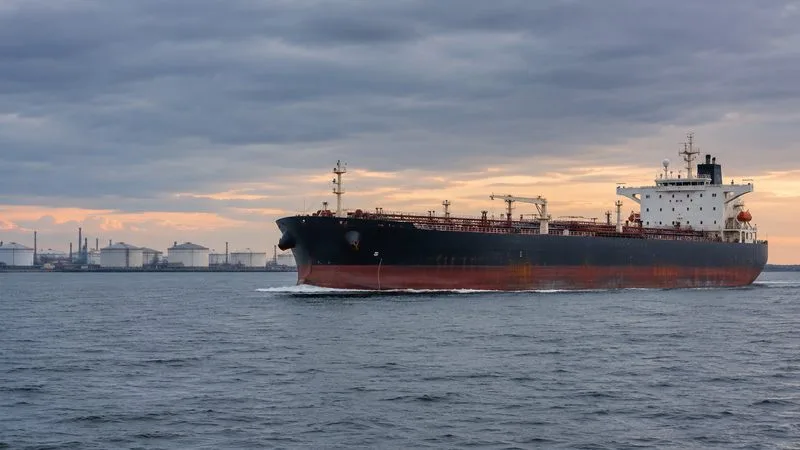
The clearest immediate catalyst was a change in perceived geopolitical risk, not confirmation that the Iran conflict had ended. Reuters said Trump’s November 8 comments reduced expectations for another round of U.S. strikes if talks kept moving. That encouraged selling in oil futures, even as the same report noted that both sides had reported shipping being hit in or near the Strait of Hormuz. The report also described the U.S. and Gulf officials’ doubts about an imminent deal. In other words, traders marked down the probability of a near-term supply shock, but the shipping risk remained unresolved.
Supply conditions added pressure. Reuters cited strong oil volumes through Hormuz and reported that Dated Brent, a physical cargo benchmark, had weakened to a discount to nearby futures. It also relayed analyst estimates of a roughly 1.4 million-barrel-a-day global surplus in October and a Reuters survey showing OPEC output up 1.38 million barrels a day month over month to 22.87 million barrels a day. These are reported estimates and survey findings, not a single proven cause for the day’s move. They help explain why a reduction in the perceived disruption premium could translate into a large futures decline.
Risks were still visible in the news flow: Reuters reported tanker incidents, an attack claim involving Saudi Aramco’s offices, and a strike on the East-West pipeline, while saying pipeline operations were not affected. That contrast helps explain why oil fell rather than collapsing on a peace headline alone: diplomacy softened one risk premium, but traders still had to price possible interruptions.
U.S. gas has a different short-term driver mix. The December NYMEX Henry Hub contract settled at $3.2180/MMBtu, up 7.3%, according to the Wall Street Journal’s November 9 market report. The report attributed the rally to forecasts of a coming cold spell that was expected to be short-lived, which raised near-term heating-demand expectations and prompted short covering. Reuters’ gas-market report likewise cited colder forecasts and lower production as supportive factors. Weather expectations can move Henry Hub quickly because the market must reprice heating demand before actual consumption is recorded.
Positioning made the weather signal more potent. The Commodity Futures Trading Commission’s November 3 report showed managed money in NYMEX natural gas futures with 198,985 long contracts and 424,344 short contracts, a net short of 225,359. That weekly snapshot predates November 9 and cannot prove which traders bought that day. It does, however, show that there was room for short-covering if the weather outlook challenged a crowded bearish position.
There was also a supply-side counterweight to the cold-weather story. The U.S. Energy Information Administration’s latest storage report showed 3,801 billion cubic feet (Bcf) of working gas for the week ending October 30, a 77 Bcf weekly injection. Stocks were 54 Bcf above the five-year average, although 109 Bcf below the year-earlier level. That is not an acute shortage signal. It means continued injections or milder weather could quickly temper a weather-driven rally.
A later official forecast is another check on how durable the cold narrative may be. NOAA’s Climate Prediction Center issued its six-to-ten-day outlook at 3:00 p.m. New York EST (UTC−05:00) on November 9, after the NYMEX settlement window. For November 15–19 it favored above-normal temperatures across much of the interior and northern United States, with the highest odds over the Northern Plains and Upper Mississippi Valley; it said the coldest weather was more likely before that forecast period, followed by a shift toward warmer conditions. Because it was issued after the settlement window, this outlook is a later countercheck, not a cause of the settlement move.
The figures in the opening use the supplied delayed quote snapshots, not the exchange’s official settlement prices. The snapshots were stamped November 9 at 21:59:59 UTC for CL=F and 21:59:58 UTC for NG=F. That is 4:59:59 p.m. and 4:59:58 p.m. in New York EST (UTC−05:00), just before the 22:00 UTC session cutoff. Yahoo’s indexed history rows show slightly different November 9 daily-bar values, $86.51 for CL=F and $3.212 for NG=F; the available feed does not explain the small discrepancy, so these should not be conflated with the exchange settlement.
| Contract / proxy | Supplied late snapshot | Official settlement reported for Nov. 9 |
|---|---|---|
| December 2026 WTI, CL=F | $86.38; down 4.90% from $90.83 | $86.85; down $3.98, or 4.38% |
| December 2026 Henry Hub gas, NG=F | $3.205/MMBtu; up 6.90% from $2.998 | $3.2180/MMBtu; up 7.3% |
CME’s published procedure says the first six contract months in NYMEX WTI and natural gas are settled using CME Globex activity during the 2:28–2:30 p.m. Eastern closing period. On November 9, 2026, New York was on Eastern Standard Time, UTC−05:00, so that window was 7:28–7:30 p.m. UTC. The supplied Yahoo snapshots arrived nearly two and a half hours later. The symbols identify December 2026 contracts, rather than expiring November contracts; the displayed price differences are not evidence of a split or contract rollover.
Base case: Both contracts remain headline-sensitive, with no reliable one-way signal from the November 9 divergence. WTI could stay under pressure if traders continue to see a lower probability of new strikes and physical supply remains ample, but renewed tanker or infrastructure disruption could restore an oil risk premium. Gas could consolidate or give back part of its jump if the cold spell remains brief; updated forecasts will matter more than the headline temperature alone.
Bullish conditions: For WTI, the risk would shift upward if talks stalled and shipping through Hormuz became materially less reliable. For gas, a colder forecast that lasts longer, continued production weakness, or a tighter-than-expected storage update could extend demand-driven buying. None of these conditions is confirmed by the November 9 close.
Bearish conditions: For WTI, credible diplomatic progress alongside steady exports and ample supply could keep the disruption premium compressed. For gas, warmer forecast revisions, a return of production, or a larger-than-expected inventory build could unwind some short covering. These are scenarios, not price predictions.
The next scheduled U.S. data points are important but do not guarantee a move. EIA lists the Weekly Petroleum Status Report for Thursday, November 12, at noon New York EST (UTC−05:00; 5:00 p.m. UTC), shifted for the Veterans Day federal closure on Wednesday, November 11. The EIA’s natural-gas storage schedule lists Friday, November 13, at 10:30 a.m. New York EST (UTC−05:00; 3:30 p.m. UTC) as the next release. For gas, the market will compare the reported injection or withdrawal with expectations and the weather models then in force. For oil, inventory data will compete with Iran and Hormuz headlines.
No. In the supplied snapshots, WTI fell while U.S. natural gas rose. Their different short-term drivers produced opposite moves.
No. Reuters reported a NYMEX WTI settlement of $86.85. The $86.38 figure is a later delayed quote snapshot.
For oil, renewed disruption around Iran or Hormuz could reverse part of the risk-premium decline. For gas, the main swing factors are updated U.S. weather forecasts and storage expectations.
This is a market explainer, not investment advice.
Sources checked: Reuters on oil, Iran and Hormuz; The Wall Street Journal on natural gas; Yahoo Finance CL=F history and NG=F history; CME settlement procedures; NOAA Climate Prediction Center; EIA petroleum release schedule; EIA natural-gas storage holiday schedule; and NIST daylight-saving rules.
WTI futures fell 4.9% as hopes for fewer U.S. strikes on Iran eased oil risk premiums; Henry Hub gas rose 6.9% on colder forecasts and short covering.
Brent fell on Nov. 9 as traders repriced the Iran-war premium. See what the ICE settlement and Yahoo BZ=F snapshot show, plus the next-session risks.
Tesla and Meta rose about 5% on Nov. 9 as U.S. stocks rebounded. See the verified market backdrop, possible company catalysts, and what to watch in the next session.
US stocks rallied on November 9 as oil prices fell. See the Russell 2000, Nasdaq, S&P 500 and VIX moves and what could shape the next session.
Broadcom rallied on November 9, 2026, amid a rebound in AI-related stocks. Explore the evidence, unconfirmed close and scenarios for the next session.
Fall Out Boy will play Glasgow, Manchester and London in 2027. Check the announced dates, UK ticket sale times and official sources.
Find official Plymouth Parkway and Berkhamsted fixtures, follow their FA Cup meeting, and check scores, postponements, and match details.
The 2026–27 FA Cup second-round draw has taken place. See selected ties, where to find the full draw and what happens next.
Starbucks Bearista Surprise Boxes arrive November 10. See the $39.95 price, five possible characters, purchase limits and practical shopping tips.
Starbucks plans to launch three Snowcap Marshmallow drinks on December 1. See what is in the mocha, matcha and hot chocolate.