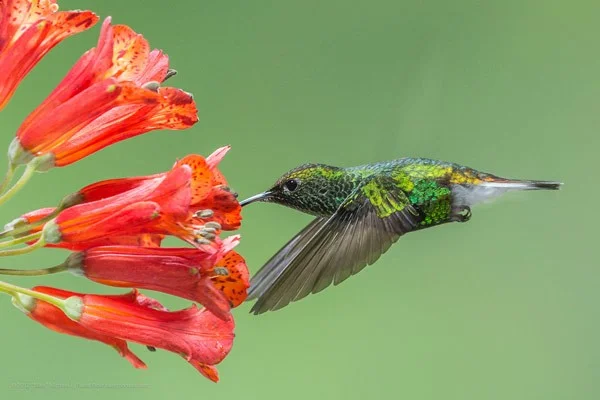
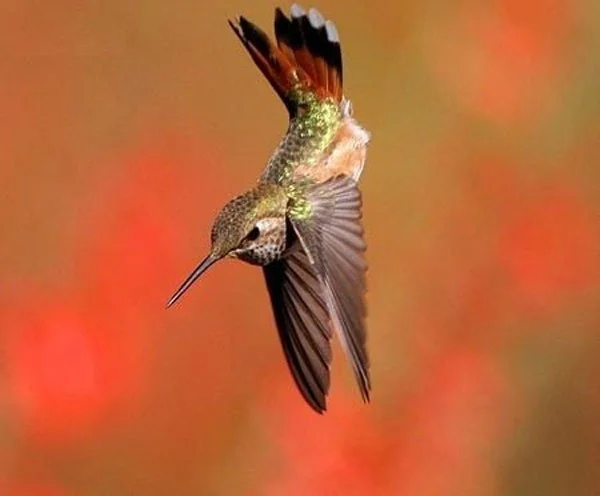
What does a hummingbird look like? How big is a hummingbird? Let's find out interesting information about this bird!
Few animals are as fascinating as hummingbirds, if only because they seem so different from all the others. You may be used to seeing sparrows and pigeons, but seeing a hummingbird is always a remarkable experience. They are mysterious, rare, and hard to track. Who wouldn’t want to know more about one?
Yet, despite their popularity, few homeowners seem to know much about hummingbirds. You may know that they are small and hover around flowers, but that’s about it. The good news is: learning more about hummingbirds doesn’t ruin their mystery. In fact, they actually become more fascinating the more you know about them! Here ’s everything you need to know about these unique birds, including some fun facts about them .
Small but fast. Small but fierce. Small body, big appetite. Studying hummingbirds has really given people a surprising amount of contrast in such a small bird. They are the lightest bird in North America. Most are super light, weighing in at 3 to 4 grams. They have the fastest wings and heart rate, the most efficient metabolism, and the smallest eggs. The list of hummingbird superlatives could go on and on.
When you look at these little wonders at a feeder, it's hard not to wonder how hummingbirds fly so fast or keep their feathers so shiny. Hummingbirds are resilient survivors. Many of the things that help them persevere also make them fascinating.
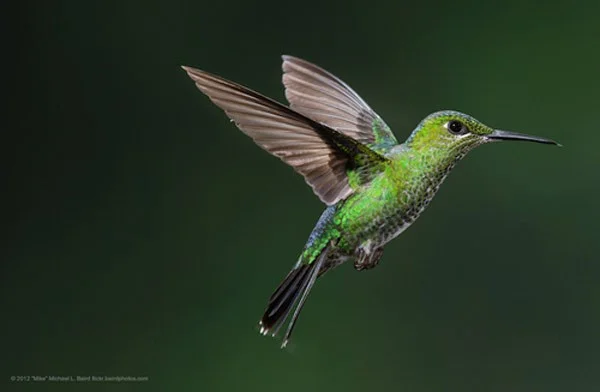
1. Hummingbirds are the only birds that can fly backward because their wings can move freely in the direction of the shoulders. This special structure also allows hummingbirds to fly stationary and keep their heads fixed.
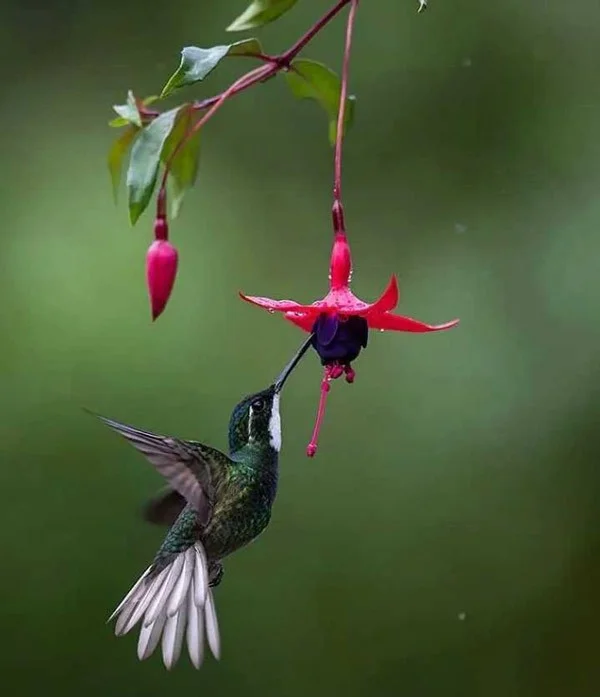
2. Hummingbirds are famous for their ability to flap their wings extremely fast at a frequency of 70-80 times per second.
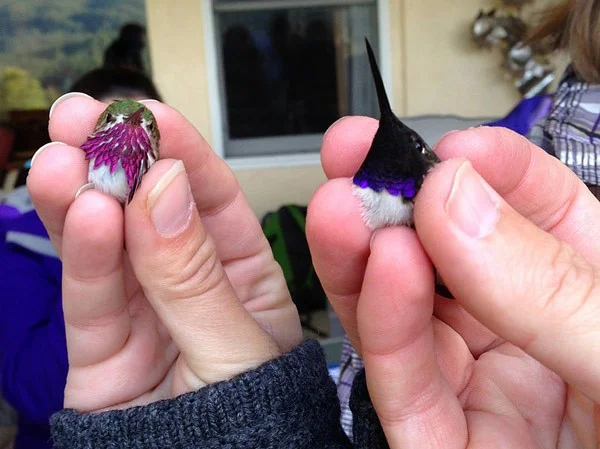
3. With a length of about 8cm and a weight of 2 - 20 grams, the hummingbird is the smallest bird on Earth.

4. According to hummingbird experts, these tiny birds have excellent eyesight, allowing them to spot food up to 1.3km away.
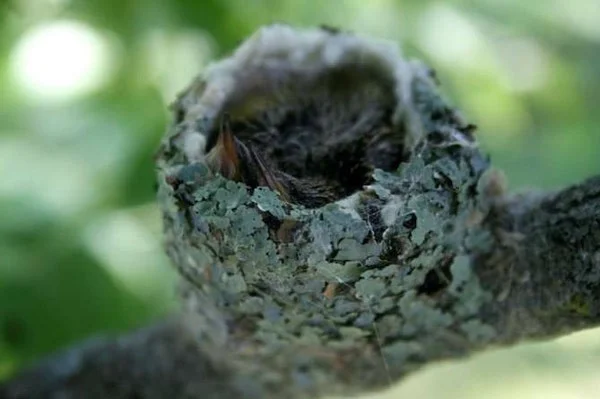
5. Hummingbird nests are very small, about the size of an English walnut.

6. There are about 400 species of hummingbirds, they live mainly in the tropics, near the equator.
7. Hummingbirds have brains the size of a grain of rice, but they have amazing memories when it comes to foraging. Hummingbirds can remember which flowers they have nectared from and how long it takes for a flower to produce nectar again.

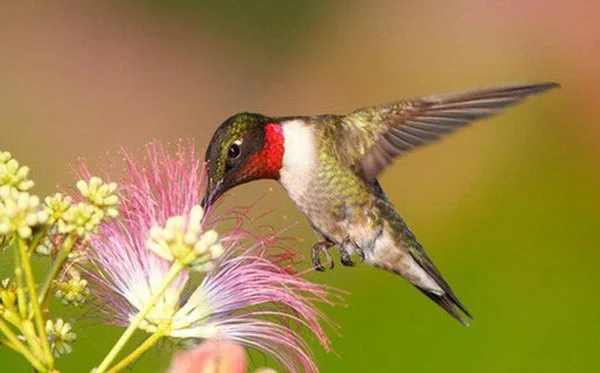
8. The ruby-throated hummingbird is about 7-9 cm long, weighs about 2.83 grams and can migrate more than 600 miles (about 965km).
9. Only male ruby-throated hummingbirds have red throats. As adults, male ruby-throated hummingbirds are smaller than females.
10. Female hummingbirds do everything without any help from males, from building nests, laying eggs to caring for young.

11. The Cuban bee hummingbird is the smallest bird in the hummingbird family, about the size of a bee.
12. During migration season, hummingbirds may fly across the Gulf of Mexico in search of new food sources.
13. Hummingbirds have less feathers than other birds, the average hummingbird has about 900 feathers.

14. Hummingbirds feed on nectar and they prefer brightly colored, tubular flowers such as honeysuckle, cosmos, capsicum, mint, morning glory, etc. Hummingbirds suck nectar 5-8 times at a time, each time lasting 30-60 seconds.

15. Hummingbirds have long tongues that are forked at the tip to help them suck nectar from inside flowers.
16. In addition to nectar, hummingbirds also enjoy eating soft-bodied flying insects.
17. The normal flying speed of a hummingbird is 20 miles per hour. When diving from a height of 30 meters to impress a female, a male hummingbird can reach a speed of 92.8 km/h.

18. A hummingbird's heart rate can reach 1200 beats per minute, and their breathing rate is 250 times per minute.
19. Hummingbirds can be active in the rain, so if you are lucky you can see hummingbirds flying in the rain.