Desk Decorating Ideas for a Spooky Office Cubicle
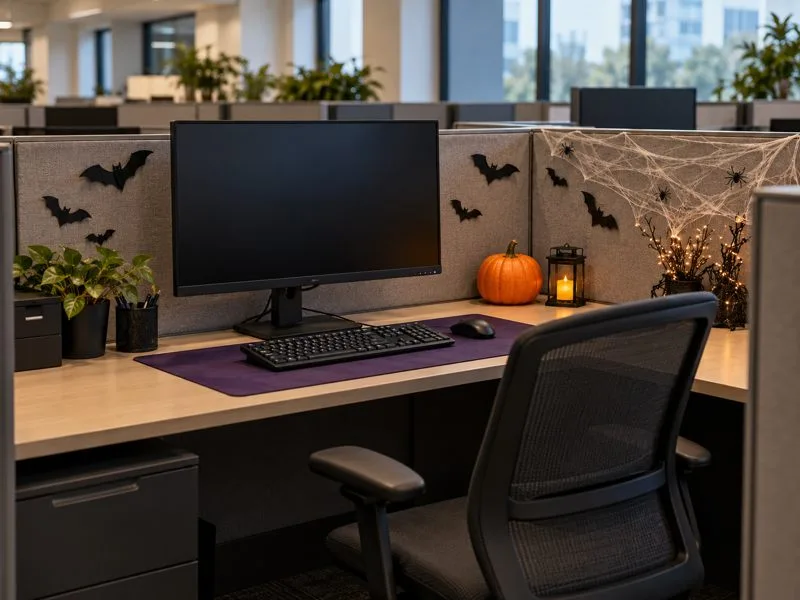
Create a spooky office cubicle with Halloween desk decor ideas that keep your workspace usable, tidy, and mindful of workplace safety.
Is your iPhone or Android screen flickering? If so, there's no need to panic or feel hopeless just yet. Here are some tips you can try to stop your phone screen from flickering.
Restart your phone
Restarting your phone may sound simple, but it's often effective in fixing any temporary issues. Doing so will stop any third-party background services and processes that are running that are causing the display issue.
In either case, after the device turns off, press and hold the power button again to turn it back on.
Turn off Auto-Brightness (Adaptive Brightness)
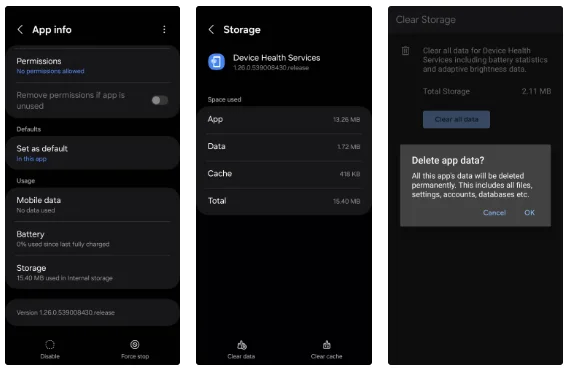
The Auto-Brightness (Adaptive Brightness) feature on your phone automatically adjusts the brightness of your screen based on light sensor data. However, sometimes, problems with this feature can cause unwanted issues, such as screen flickering.
You can try turning off Auto-Brightness to see if that fixes the problem. It's located in Settings > Display > Adaptive brightness on Android and Settings > Display & Brightness on iOS.
On Android, you can also try resetting Adaptive Brightness. To do so, follow these steps:
Turn off Night Light or blue light filter
Do you have Night Light turned on on your Android or iPhone? If it is, your screen may flicker from time to time. You can temporarily turn it off to see if that helps.
On Android, you can go to Settings > Display and turn off the Night Light toggle . Note that this feature is called differently on different phones. For example, if you have a Samsung Galaxy phone, it will be labeled Eye Comfort Shield in the Display settings.
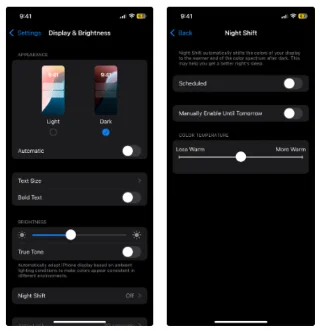
If you have an iPhone, go to Settings > Display & Brightness > Night Shift and turn off the Scheduled toggle . Also, if you're using any third-party Blue Light filtering apps on your phone, make sure to disable or uninstall them.
Turn off Hardware Overlays (Android only)
When rendering graphics, your phone automatically determines whether the CPU or GPU is handling the task. While this transition is usually seamless, damaged or older phones may have trouble compositing (layering images).
There may be a slight delay between tasks when the phone has nothing to display, which can cause flickering. To avoid this, you can try disabling Hardware Overlays on your phone. To do this, you first need to enable Developer Options using the following steps:
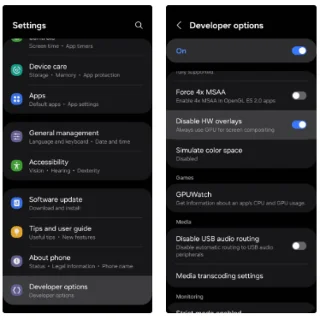
Now, go back to your phone settings and scroll down to the bottom to tap on Developer options . Then scroll down to find Disable HW overlays and enable it. Note that this will consume more power because disabling overlays will force your phone to use GPU rendering.
Check for software updates
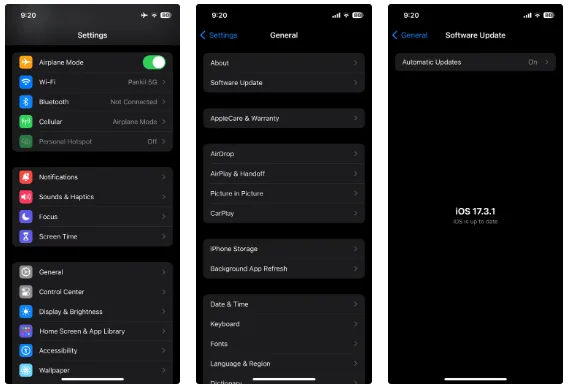
Your display issue could be due to a messy or outdated software build. If that's the case, updating your phone to the latest version might help.
Boot into Safe Mode (Android only)
Safe Mode is a useful feature on Android that allows you to use your phone without third-party apps and services. Booting your phone into Safe Mode can help you determine if a third-party app or process is causing your screen to flicker. To boot your Android phone into Safe Mode , follow this guide.
Note that booting into Safe Mode may vary across different Android skins. If your phone's screen doesn't flicker in Safe Mode, it's likely that one of your third-party apps is causing the problem. In that case, consider uninstalling any recently installed apps one by one and then restarting your phone to exit Safe Mode.
Restore phone to factory settings
If your phone's screen is still flickering even in Safe Mode, you can perform a factory reset on your smartphone. This will erase all data and restore your phone to its original factory settings, leaving it as good as new. Before you proceed, however, back up your Android or iPhone.
Have your phone checked by an expert
A malfunctioning phone screen could be due to a hardware fault, so if none of the previous solutions work, consider taking your phone manufacturer's service center to have your device checked. Depending on the problem, it could cost a significant amount of money to repair or replace.
Phones play a huge role in our daily lives, so it’s important that they’re working perfectly. Hopefully one of the tips above has helped you solve the underlying problem and get things back to normal.
Create a spooky office cubicle with Halloween desk decor ideas that keep your workspace usable, tidy, and mindful of workplace safety.
Plan a recognizable Halloween 2026 look with pop culture costumes inspired by Spider-Man, Supergirl, Toy Story 5, Moana, Mario, and Wednesday.
Sort leftover Halloween candy safely, share or repurpose sealed treats, and choose food use or compost for pumpkins based on their condition.
Compare workplace Halloween costume choices by respect, dress code, mobility, and safety—and learn when a subtle accessory or a policy check is the better option.
Find a couples costume that fits your style, budget, and comfort level, from Addams Family classics to original inside-joke duos.
Need a last-minute high school Halloween costume? Compare 10 easy closet-based ideas by prep time, comfort, school-day practicality, and simple safety checks.
Use a simple 2026 Halloween decorating timeline for indoor décor, outdoor displays, and fresh pumpkins, with practical adjustments for weather and events.
Mix five vivid, approachable Halloween cocktails with measured recipes, simple prep tips, and an alcohol-free option for your party guests.
Find 15 office-friendly Halloween costume ideas for 2026, with practical checks for dress codes, respectful themes, comfort, and workplace safety.
Plan a fun elementary school Halloween party with easy crafts, games, inclusive treats, costume tips, and a sample 75-minute classroom schedule.