Home
» Today
»
AI Boom Hits New Milestones: Chips, Data Centers and Power to Watch | Nov. 21, 2026
AI Boom Hits New Milestones: Chips, Data Centers and Power to Watch | Nov. 21, 2026
Checked: November 21, 2026, 9:13:09 a.m. UTC (UTC+00:00), or 8:13:09 p.m. AEDT in Sydney (UTC+11:00).
The AI boom is reaching a new phase: investment is moving beyond model releases into chips, cloud capacity, and power-hungry data centres. Two fresh signals stand out. NVIDIA reported third-quarter fiscal 2027 revenue of US$115.8 billion, including US$107.6 billion from its data-centre business, and said its Vera Rubin NVL72 systems had begun shipping. In Australia, a new Reserve Bank of Australia (RBA) analysis estimates data-centre investment has grown about tenfold in three years.
For Australians, the next test is whether this enormous build-out can turn into durable productivity and commercial returns while meeting electricity, water, and infrastructure limits. The RBA estimates another A$115 billion in real data-centre investment between mid-2026 and the end of 2028, but stresses that the forecast is uncertain and the domestic economic payoff is smaller than headline spending because much of the equipment is imported.
Destaques
NVIDIA’s latest quarterly report put data-centre revenue at US$107.6 billion, up 110% year over year.
The company says its Vera Rubin NVL72 systems have started shipping, signalling another step in AI computing infrastructure.
The RBA estimates Australian data-centre investment rose about tenfold over three years and projects A$115 billion more through 2028, subject to substantial uncertainty.
Australia’s Office of AI is developing proposed standards for large AI data centres, including energy, water and copyright issues; these are work in progress, not final rules.
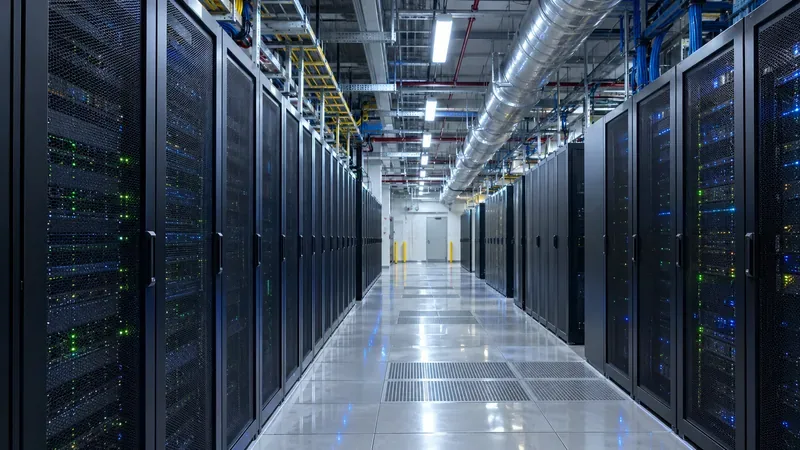
A modern server facility illustrates the computing infrastructure supporting AI development; this is not a specific Australian data centre.
What are the latest milestones in the AI boom?
The clearest recent milestone is the scale of demand for computing hardware. NVIDIA’s results for the quarter ended October 25, released November 17, showed total revenue of US$115.8 billion, 103% higher than a year earlier. Its data-centre segment generated US$107.6 billion, up 110% year over year. Those are company-reported results, not a measure of the whole AI economy, but they show how strongly spending is concentrated in the equipment and systems used to train and run AI models.
NVIDIA also reported that production had ramped and its Vera Rubin NVL72 platform had begun shipping. The announcement marks a product availability milestone, not proof that every customer can immediately deploy it at scale. The company forecast fourth-quarter revenue of US$130 billion, plus or minus 3%; that is company guidance, not a guaranteed outcome.
The broader shift is from stand-alone models toward integrated systems: accelerators, networking, cloud platforms, software, and data centres designed to work together. For customers, that could expand available computing capacity, but real-world benefits depend on access, operating costs, reliability, and whether organisations can turn AI use into valuable services.
How large is Australia’s AI infrastructure build-out?
The RBA’s November analysis estimates that investment in Australian data centres has increased around tenfold over the past three years. It expects a further A$115 billion in real investment between mid-2026 and the end of 2028, excluding supporting infrastructure. That is a central assessment, not a confirmed list of projects: the Bank notes that announced developments may be delayed or cancelled and estimates vary with assumptions about demand, construction capacity, and electricity connections.
The distinction between spending and local economic benefit matters. The RBA estimates about 70% of the machinery and equipment is imported, which reduces the direct contribution to Australian production. It calculates data-centre investment contributed up to around 0.2 percentage points to annual GDP growth over the past year after accounting for imports. Construction, electrical work, cooling systems, and grid upgrades can create local demand, but the Bank says the benefits also depend on ownership and whether facilities serve Australian users or export computing services.
Why are power, water, and AI standards part of the story?
Data centres need continuous electricity and cooling. The RBA cites Australian Energy Market Operator estimates that data centres accounted for about 3% of operational electricity consumption in the National Electricity Market in 2025–26. An Oxford Economics analysis prepared for AEMO projects a possible 7.5% to 17.1% share by 2035–36. That range is a forecast, not a settled outcome; the RBA notes grid access, renewable generation, water infrastructure, and project timing could constrain growth.
Policy is developing alongside investment. The Australian Government’s Office of AI, established in July 2026, says it is coordinating work on proposed AI standards, including requirements for large data centres addressing energy and water, as well as copyright protections for Australian creators. The government’s November 13 update said standards are being shaped by Australians. These measures remain under development; they should not be described as enacted obligations.
What should businesses and readers watch next?
Three indicators will show whether the boom is becoming sustainable: whether demand for AI services supports continued spending; whether new facilities can secure power and connections without raising costs or delaying other projects; and whether businesses can demonstrate productivity or revenue gains that justify the investment. These are questions to watch, not conclusions already established by the latest results.
For Australia, the RBA’s outlook points to strong investment over the next two years, while its analysis also cautions against equating gross construction announcements with domestic output. In the near term, look for project commitments to turn into completed facilities, clearer rules from the Office of AI, and evidence about actual electricity use. Globally, NVIDIA’s new platform and revenue outlook provide a high-profile signal of supply and demand, but one company’s results cannot establish the return on investment across the broader AI industry.
Recent milestones include NVIDIA’s reported US$107.6 billion data-centre revenue for its third fiscal quarter and the start of shipments for its Vera Rubin NVL72 systems.
How much is Australia investing in data centres?
The RBA estimates A$115 billion in real investment between mid-2026 and the end of 2028, excluding supporting infrastructure; it is a forecast with significant uncertainty.
Are Australia’s proposed AI data-centre standards already law?
No. The Office of AI says the standards are being developed, with energy, water, and copyright among the planned topics.