Verified and updated: 21 November 2026, 09:08 UTC (09:08 GMT).
The Met Office’s UK warning page showed no warnings for Saturday 21 or Sunday 22 November when checked. That is not a guarantee of clear roads: conditions can vary locally, and ice may form even without a snow warning. Before travelling, check your route and your specific train or bus service for current disruption. This guide focuses on practical journey decisions and safety, rather than forecasting where snow will fall.
Destaques- No Met Office warning was listed for 21–22 November at the time checked.
- Check live road information and your operator’s journey updates before leaving.
- On snow or ice, allow much more room to stop and make every control input gently.
- If conditions make a journey unsafe, delay it or choose another option.
Is snow affecting UK travel today?
At the time of this check, the Met Office listed no UK weather warnings for 21–22 November. No new snow-related national warning was confirmed in the sources checked. Local road conditions and operator-specific service changes can still arise, so treat the warning page as one part of your decision—not as a live road-clearance report.
For roads in England, use National Highways travel updates for motorways and major A roads, and check your local council for other roads. In Scotland, Traffic Scotland’s live traffic information provides trunk-road updates. Check the relevant national or local service for Wales and Northern Ireland.
For trains, look up the exact departure on National Rail and the train operator’s own alerts. For buses, check the local operator or journey planner: snow, icy roads, and diversions can affect routes differently. Recheck shortly before departure and during a connection, since a service shown as running can still be delayed or altered.
Should you drive in snow or icy conditions?
Ask whether the journey is essential. The Highway Code says not to drive in icy or snowy conditions unless necessary. If you must go, check the forecast and route, allow extra time, and favour treated main roads where practical. Smaller roads, steep hills, bridges, and exposed stretches may be more difficult. Never assume a road has been gritted.
Before setting off, clear snow and ice from every window, mirror, light, and number plate, and remove snow from the roof so it cannot slide onto your windscreen or another vehicle. Check fuel or battery charge, tyres, screen wash, and wipers. Carry warm clothing, boots, a torch, phone charger, food, water, and an ice scraper; a blanket and shovel can also help if you are delayed.
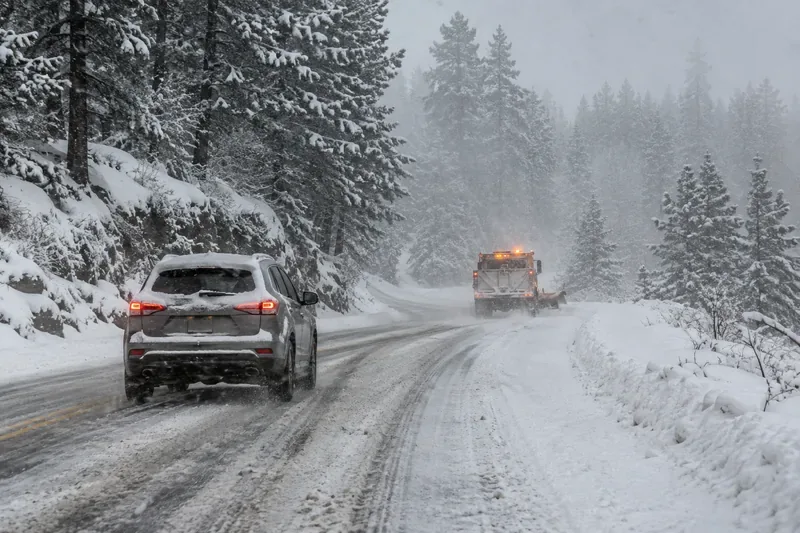
Drive slowly and smoothly. Leave a much larger gap: the Highway Code says stopping distances can be up to ten times greater on snow or ice than on dry roads. Accelerate and brake gently, use a higher gear where appropriate, and slow before bends. Give gritters and snowploughs room; do not overtake unless the lane ahead is clear. If you begin to skid, ease off the accelerator and avoid sudden braking or steering.
What should public transport passengers check?
Check the full journey, including connecting trains and buses, not just the first departure. Look for cancellations, amended timetables, replacement buses, platform changes, and warnings that a connection may not be held. Save the operator’s alerts or live board on your phone, and allow extra time to reach the station or stop—pavements may be slippery even when the main road looks clear.
If a service is disrupted, follow operator instructions and check before switching modes: a bus replacement may use a different stop, while a road diversion can make a taxi or lift slower than expected. Keep your phone charged and share a revised arrival time with anyone meeting you.
What if conditions worsen during the journey?
Forecasts and warnings can change. If snow begins to settle, visibility drops, or untreated roads become icy, stop somewhere safe and reassess. Do not stop in a live traffic lane to check your phone. If you become stranded, stay with the vehicle where it is safe to do so, make yourself visible, and contact roadside assistance or emergency services as appropriate. The Met Office advises avoiding travel during snow or ice where possible and carrying essentials if travel is necessary.
Check the Met Office warning page again before leaving. Its heavy snow and ice travel guidance and the Highway Code rules for adverse weather provide the core safety advice. These are general precautions; actual impacts depend on the route and conditions when you travel.
Frequently asked questions
Is there a UK snow warning today?
No. The Met Office page showed no warnings for 21–22 November when checked at 09:08 GMT on 21 November 2026. Recheck for updates before travelling.
Where can I check whether my train is running?
Search your exact journey on National Rail and confirm it with the train operator’s live alerts or departure board.
How much extra distance should I leave when driving on ice?
The Highway Code says stopping distances can be up to ten times greater than on dry roads. Slow down and leave a much larger gap.