Home
» Today
»
Alaska Winter Storm Warning: How to Prepare for Snow and Hazardous Conditions
Alaska Winter Storm Warning: How to Prepare for Snow and Hazardous Conditions
A winter storm warning can sound statewide, but an Alaska alert applies to the specific zones named by the National Weather Service (NWS). Check your community and route before changing plans. As of the NWS Fairbanks alert issued at 11:51 a.m. Alaska Daylight Time (AKDT) on Sunday, October 25, 2026, a Winter Storm Warning covered parts of northern Alaska. Heavy snow and gusty winds could make travel very difficult. Conditions and alert areas can change, so recheck the current NWS notice before acting.
Start by checking whether your location is included
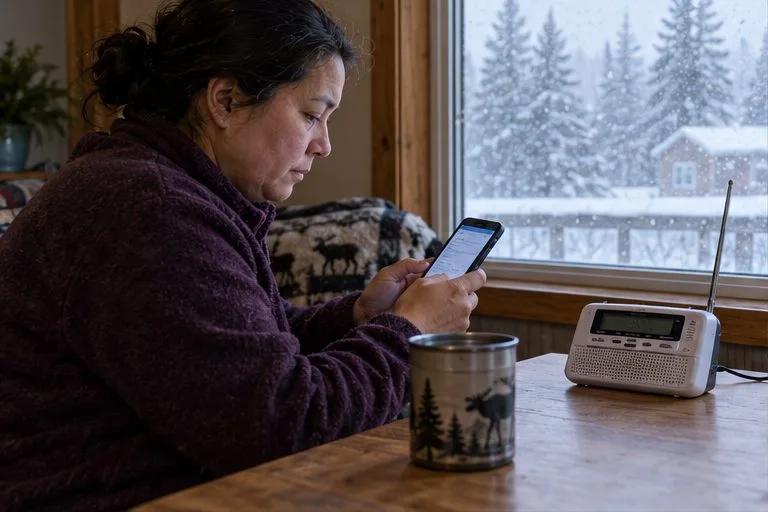
A resident checks a phone and weather radio while snow falls outside the window.
A Winter Storm Warning means significant winter weather is occurring or expected soon; the NWS advises people in the affected area to take protective action. A watch signals that hazardous conditions are possible, while an advisory describes less severe conditions that can still disrupt travel. These terms do not mean the same thing. Start with the NWS Fairbanks watches, warnings, and advisories, then compare the named zone with your town, village, highway segment, or destination. Alaska is large, and weather can differ sharply between regions.
Area in the NWS warning
Forecast hazard
Warning end time
South Slopes of the Central Brooks Range, including Coldfoot, Wiseman, and the Dalton Highway from milepost 165 to 232
8 to 16 inches of snow; wind gusts up to 35 mph; very difficult travel possible
10 p.m. AKDT Monday, October 26
Upper Koyukuk Valley, including Bettles, Allakaket, Alatna, and Evansville
8 to 12 inches of snow; wind gusts up to 30 mph; very difficult travel possible
1. Build a household kit before roads or power become a problem
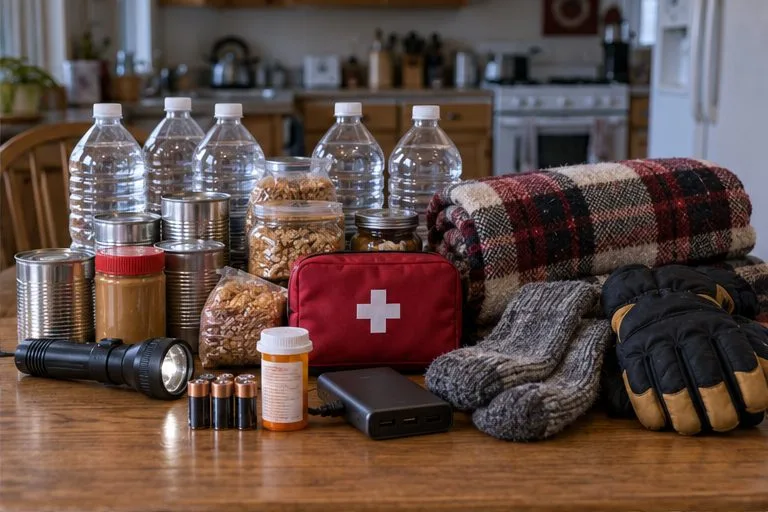
Water, shelf-stable food, a flashlight, batteries, first-aid supplies, warm layers, and a power bank are gathered for an outage.
Heavy snow can slow deliveries, isolate homes, and interrupt electricity or phone service. Put essential supplies together while it is still easy to move around. Alaska’s Division of Homeland Security and Emergency Management recommends at least one gallon of water per person per day and a minimum three-day supply in its Alaska basic emergency kit. Include nonperishable, high-calorie food and a manual can opener; prescription medicines; first-aid supplies; a flashlight with spare batteries; and a battery-powered or hand-crank NOAA weather radio.
Charge phones and backup batteries, download important contact details, and keep IDs and medical information in a waterproof bag. Add warm layers, wool socks, gloves, blankets, hand warmers, and supplies for babies, older adults, and pets in your household. The state also provides an Alaska 7-Day Emergency Kit resource. Consider your community’s distance from services and the likelihood of extended isolation when deciding how much to store.
2. Plan for safe heat and a possible outage
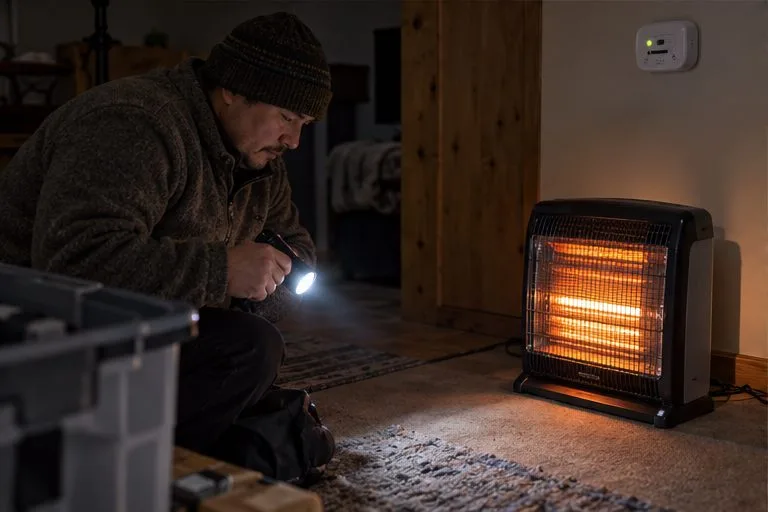
A resident checks a dark room with a flashlight while a space heater and carbon monoxide alarm are visible.
Before snowfall intensifies, identify the safest warm room, locate extra blankets, and confirm that smoke and carbon monoxide alarms work. Use a fireplace, wood stove, or space heater only as its manufacturer directs. Keep portable electric heaters at least three feet from curtains, bedding, furniture, and other items that can burn. Do not heat a home with a kitchen stove or oven.
If you use a generator during a power outage, place it outdoors at least 20 feet from doors, windows, and vents, where exhaust cannot enter the home. Never operate a generator, grill, camp stove, or fuel-burning heater inside a home, basement, or garage. Keep a battery-operated CO detector working and clear snow from outdoor exhaust and ventilation openings. These steps follow the CDC’s winter storm safety guidance. If your home becomes too cold to stay in safely, contact local emergency management or arrange another safe place before conditions worsen.
3. Delay optional travel and prepare the vehicle if a trip is essential
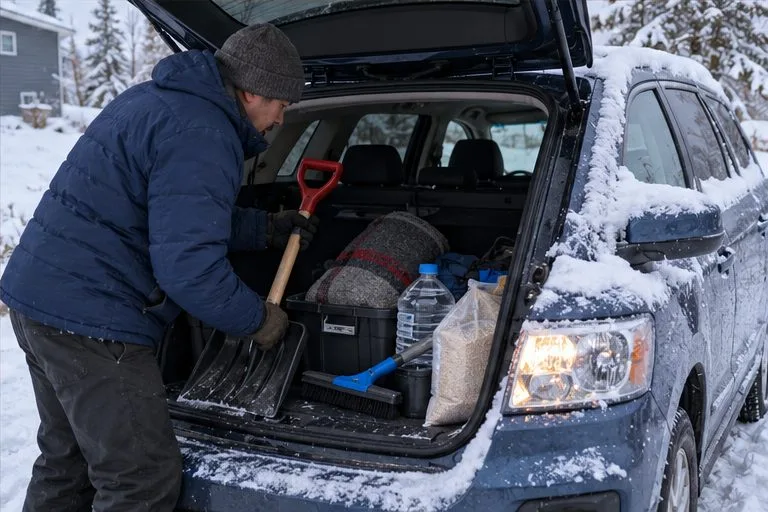
A driver places a shovel, blanket, water, and snow brush in a vehicle before a winter trip.
When a warning forecasts heavy snow or blowing snow, postponing nonessential travel is the safer choice. If travel cannot wait, check Alaska’s 511 road conditions and the Alaska Department of Transportation’s winter driving guidance immediately before leaving. A road that was passable earlier can deteriorate quickly. Tell someone your route and expected arrival time, keep your phone charged, and make sure your fuel, lights, heater, and wipers are ready.
Pack a vehicle kit with a snow shovel, ice scraper and brush, traction sand or cat litter, jumper cables, a tow strap, a flashlight, warm clothing, blankets, food, water, and a first-aid kit. Clear snow and ice from the windshield, windows, lights, mirrors, and roof before driving. Slow down, leave extra following distance, and turn back or stop in a safe place if visibility becomes poor. Alaska DOT explains on its winter maintenance priority map that lower-priority local routes can take longer to clear after a storm.
If you become stranded, call for help and stay with the vehicle unless an immediate danger makes that unsafe. Keep the exhaust pipe clear of snow. The CDC advises running the engine and heater for about 10 minutes per hour, opening a window slightly for fresh air, and moving your arms and legs to help stay warm. Use your vehicle’s hazard lights or another visible signal when it is safe to do so.
Self-check before the storm arrives
Can you find your exact location in the current NWS alert, and do you know its start and end time?
Do you have water, food, needed medicines, a working flashlight, charged phones, and a way to receive updates?
Can you keep everyone warm without using a stove, indoor generator, or other unsafe heat source?
Have you postponed optional travel, checked 511, and packed a winter vehicle kit if a trip is unavoidable?
If any answer is no, address that item before conditions deteriorate. Recheck the NWS alert and Alaska 511 before travel, and follow local instructions if the warning changes or emergency officials ask residents to take additional action.