Home
» Today
»
Lloyds Banking Group Branch Reductions: What UK Customers Should Check
Lloyds Banking Group Branch Reductions: What UK Customers Should Check
When a bank branch closes, the important question is not only where the next branch is. Customers also need to know which services are changing, when the change takes effect, and whether the proposed alternative works for their account and circumstances. As of October 26, 2026, Lloyds Bank’s official branch pages list upcoming permanent closures for Wallsend on November 3, Wakefield on November 10, and Harrogate on November 19. These are examples of Lloyds-branded locations, not a complete list of changes across Lloyds Banking Group. Confirm your own branch through the group’s official branch-closure information and its current branch page. (Wallsend, Wakefield, and Harrogate.)
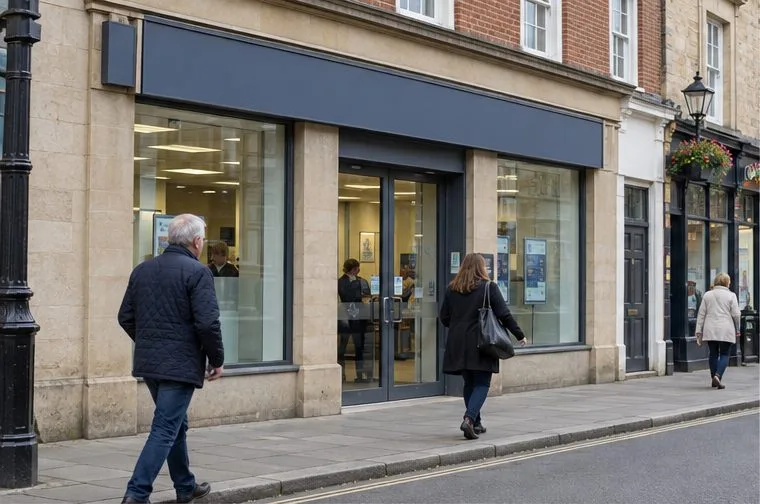
An unbranded bank branch on a British high street; compare the address with Lloyds’ current closure information.
Start by confirming exactly what is changing
A branch closure means the site will stop operating as a branch on a stated date. It is different from an ATM, also called a cashpoint, being removed, a reduction in opening hours, or a change in which services are available at the counter. Check the full branch address and postcode, the final service date, and whether the notice names a replacement location. Do not rely on a general headline or an old search result: closure dates and local arrangements can change.
Lloyds publishes two Closing Branch Review documents for locations on its closure list. Part 1 explains the decision and is available when the closure is announced. Part 2 summarizes feedback from conversations with the local community and is posted two weeks before the branch closes. Read both when available. Look for the bank’s explanation, services currently used at the location, nearby alternatives, and any planned Community Banker visits, Banking Hub, or deposit service. The group says these options may be introduced following its review; the wording “may” matters, so verify whether an alternative is confirmed and operating.
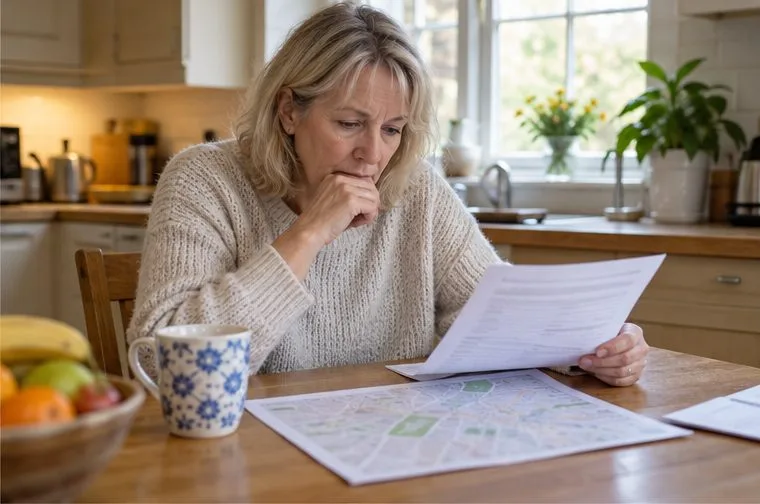
A customer checks a bank notice against a local map before choosing an alternative branch or service.
Make a list of the branch tasks you actually use
Before choosing an alternative, write down the tasks you handle in person and how often you need each one. Examples include withdrawing or paying in cash, depositing a check, arranging a large cash withdrawal, getting help with account access, discussing a mortgage or loan, or asking for support that is difficult to manage by phone. Small businesses should also identify cash deposits, change orders, and the days they need funds credited.
Then check each task against the exact alternative. A cash machine is useful for withdrawing cash, but it is not a staffed counter. A shared Banking Hub can provide cash services and may host a Community Banker from your bank on specific days. A nearby Lloyds Banking Group branch may be under another brand. Lloyds says customers can use a Lloyds, Halifax, or Bank of Scotland branch to manage their account, but customers should still confirm that the particular location offers the service they need.
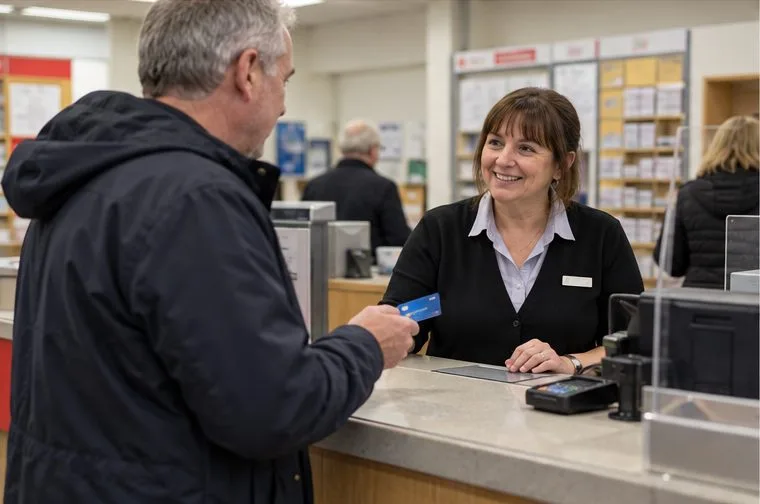
A customer speaks with a counter clerk; ask which everyday banking tasks the nearby service can handle.
Check what Post Office and cash alternatives cover
Post Office counters provide several everyday services for Lloyds personal customers: cash withdrawals and balance enquiries with a card and PIN, cash deposits with a card and PIN, and check deposits using a personalized paying-in slip and a Lloyds deposit envelope. Business banking services have their own requirements, including different ways to deposit cash and checks. Review the Post Office’s current Lloyds service list and confirm the nearest counter offers the service before traveling. A Post Office is not automatically a full replacement for branch appointments or complex account discussions.
For a Banking Hub, check the location, opening hours, counter services, and the schedule for your bank’s Community Banker. The counter may be available on days when a representative from your bank is not there. The Post Office Banking Hub information explains that representatives from participating banks attend on different days; confirm the local schedule before planning a visit.
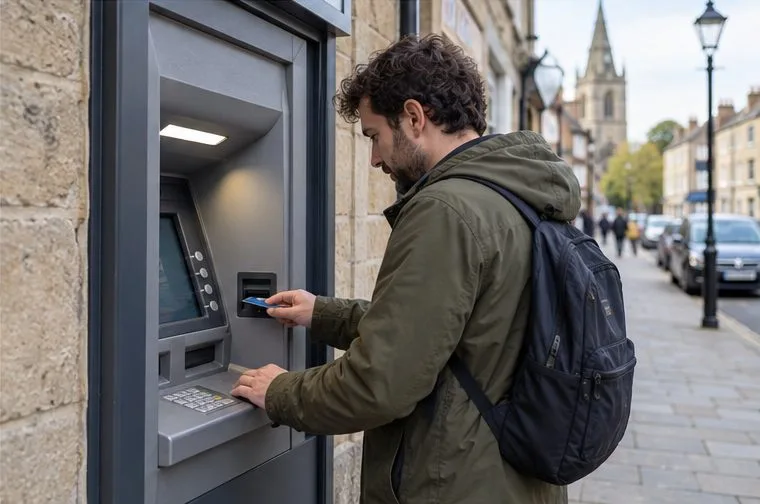
A customer withdraws cash from a street-side machine; check fees, access, and whether deposits or staffed help are also available nearby.
Cash access has a separate regulatory process from the bank’s decision to close a branch. Since September 18, 2024, FCA rules require designated firms to assess local cash provision and address significant gaps. The rules focus on cash deposits and withdrawals; they do not promise that a replacement service will provide every branch function. LINK assesses cash access when a participating facility closes and publishes its findings and any recommendations. Anyone concerned about local access can ask LINK for a review, but LINK does not decide whether a bank branch closes. Review the FCA access-to-cash rules, LINK’s assessment results, and its instructions for requesting an assessment.
A practical customer checklist
Verify the location and date. Match the closure notice to the branch address and postcode. If you bank with Halifax or Bank of Scotland, check the notice for that brand as well.
Read the review documents. Compare the decision summary with the later community-feedback document and note unanswered questions.
Map the replacement. Check travel time, public transit, opening hours, accessibility, appointment availability, and whether the site supports your specific tasks.
Test digital or phone access in advance. If you plan to use online or mobile banking, make sure you can sign in and complete the tasks you depend on. Update contact details and ask Lloyds for another way to get help if a smartphone or app is not practical for you.
Raise a cash-access concern with evidence. Check LINK’s existing assessment first, then describe the cash services your community needs, nearby facilities, and any practical access barriers if you request a review.
Mistakes to avoid before the last day
Do not assume that a nearby ATM, Post Office, or recommended hub is already open or offers every service you use. Do not wait until the branch’s final week to test a new route, especially if you depend on in-person assistance, accessible facilities, or regular business cash deposits. And do not treat a LINK cash assessment as a review of every banking service: it concerns local access to cash, while the bank’s branch review addresses the closure decision and customer impact.
The most useful response to a Lloyds Banking Group branch reduction is a service-by-service check: confirm the exact location and closure date, read the bank’s review, and test a specific alternative for each task that matters to you. That gives customers time to ask Lloyds for clarification, identify a suitable group branch or community service, and flag access problems before the local counter closes.