Would Europe Be Drawn into a Hypothetical U.S.-Israel-Iran Nuclear War? NATO Rules Explained

A guide to NATO Articles 4 and 5, UN self-defense rules, and why consultation does not mean automatic European entry into war.
After a long wait and countless rumors, AMD has finally revealed the launch date of its brand new Ryzen 9000 processor line with stacked 3D V-Cache. Details are still limited at this time. Just know that if you want to get your hands on the latest Ryzen 9000X3D chip, mark November 7th on your calendar.
AMD's teaser doesn't provide much information about the new processor, except for the official launch date, general information about the AM5 platform and Zen5 architecture, such as PCIe Gen 5.0 and DDR5 memory support. However, according to rumors from many reputable sources, AMD will most likely mark the launch of its next-generation X3D processor with the Ryzen 7 9800X3D series.
The Ryzen 7 9800X3D is said to feature eight cores and 104MB of L3 cache, with a maximum clock speed of up to 5.2GHz. The chip is expected to address some of the criticism the original Ryzen 9000 series faced, especially after some reviewers found that the previous-generation Ryzen 7000X3D models offered better gaming performance. However, according to the content of recently leaked MSI slides, the gaming performance increase over the previous-generation X3D models won't be that shocking.
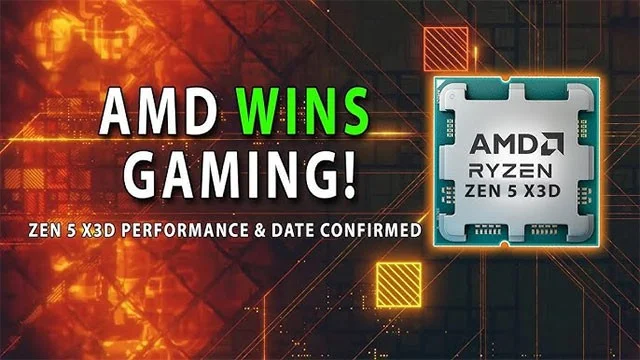
News about the Ryzen 9000X3D processor launch hasn’t been as plentiful as the news about Intel’s Core Ultra 200S chip, which is due to launch on October 24. Interestingly, Intel has confirmed that its latest processor is slightly slower than AMD’s Ryzen 7000X3D, so it’s likely that for many people, sticking with the more affordable Ryzen 7000X3D models will be a better financial choice.
If you’re not interested in the Ryzen 9000X3D processor, AMD’s latest Ryzen 9000 chipset line is now discounted by up to $50. The discounts apply to the Ryzen 9 9950X ($50 off) and the Ryzen 9 9900X, Ryzen 7 9700X, and Ryzen 5 9600X ($30 off).
A guide to NATO Articles 4 and 5, UN self-defense rules, and why consultation does not mean automatic European entry into war.
Assess claims about Iran in six steps, distinguishing uranium enrichment, weapons development and verified possession.
Understand nuclear decision authority in six steps, including US civilian control and the limits of public information about Israel.
A guide to official 2026 evidence on Hormuz shipping disruption, Iran-related claims, confirmed incidents, and what remains uncertain.
A source-based guide to nuclear escalation risks, UN Charter rules and NATO Article 5 in a strictly hypothetical Iran scenario.
Use five steps to prepare for an outage; nuclear and EMP scenarios are hypothetical, and official shelter instructions come first.
Use 5 defensive steps to verify a cyber disruption, protect household accounts, and avoid mistaking an outage for war.
Use these 5 steps to assess climate effects from a hypothetical Iran strike, compare model assumptions, and avoid unsupported predictions.
Explore six steps for reading research on climate, food and ecosystem recovery after a hypothetical nuclear conflict.
Build a practical fallout preparedness kit in six steps, with sealed food and water, a radio, medical supplies and shelter guidance.