Home
» Today
»
Bank Outages and Payment Security: How to Protect Your Cards and Money | November 20, 2026
Bank Outages and Payment Security: How to Protect Your Cards and Money | November 20, 2026
Information checked: November 20, 2026, 5:07 a.m. London GMT (UTC+00:00; 05:07 UTC).
When online banking fails or a payment card is declined, the most useful first move is to establish what failed before trying the transaction again. Check your bank’s verified service updates, preserve transaction references, and use a separate, trusted payment method if the bill is urgent. Repeatedly submitting a transfer while its status is unknown can create confusion or duplicate payments.
Recent cyberattack headlines add to the concern, but the events must not be conflated. November 19 reporting said third-party vendors associated with JPMorgan Chase, Visa, and Mastercard experienced cybersecurity incidents. Visa said its own systems and payment-card data were unaffected; Mastercard said its payment network and card use were unaffected. Separately, JPMorgan attributed earlier banking-service disruption to a software problem, not the vendor incident. These reports do not establish a current, widespread UK Visa payment outage. See Reuters reporting published November 19, 2026.
Destaques
Check the official bank status page or telephone number before assuming a declined card means funds were stolen.
Do not repeat an uncertain transfer until your bank confirms whether it was received, pending, or rejected.
Protect login codes and never move money to a supposed “safe account” on the instructions of an unexpected caller.
Document missed bills, extra charges, and conversations so you can request correction or compensation when appropriate.
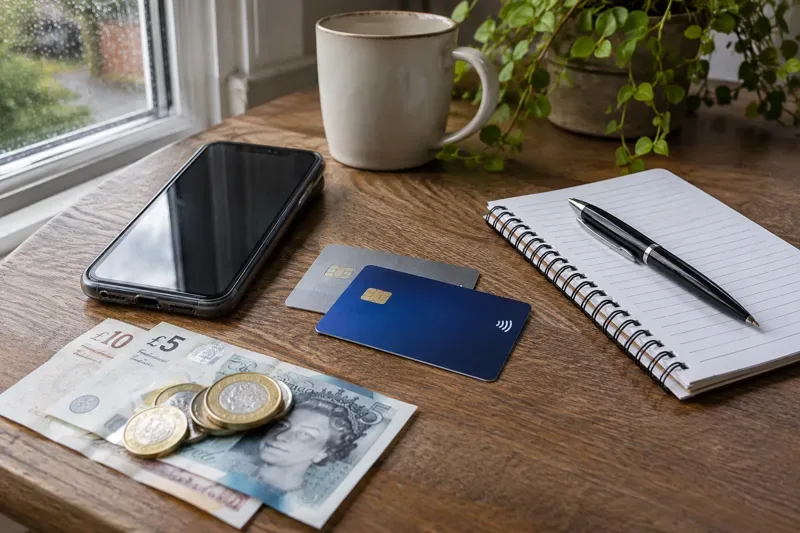
Illustrative photograph: keeping a backup payment option and written transaction notes can help during banking disruptions.
What should you do first if your bank app or card stops working?
Start by checking the bank’s website or official status channel, accessed through a saved bookmark or by typing its established address. If your app cannot load, try the bank’s telephone service using a number printed on your card or statement. A failed app login, a card authorization decline, a delayed bank transfer, and an unavailable cash machine may have different causes and may not all be affected at once.
Identify the exact failure. Note the attempted payment amount, merchant or recipient, time, and any reference or error message; never share account credentials in a public post.
Check whether money moved. If your balance is unavailable, ask the bank or merchant to verify the transaction before retrying.
Use a backup safely. If available, use a card issued by another bank, an accepted alternative payment channel, or modest cash for essentials. No alternative is guaranteed to work during a broad network disruption.
Contact urgent payees. Tell a landlord, utility, or lender promptly if an outage threatens a due date; ask whether they can extend the deadline and keep the reply.
Should you freeze your debit or credit card?
Not merely because an app is unavailable. A card freeze may prevent legitimate purchases and will not resolve a bank’s technical fault. Freeze or block the card using a verified bank channel if it is lost, you spot transactions you did not authorize, or the bank recommends it for a specific security risk. Report unauthorized use immediately to the card issuer, consistent with Visa’s cardholder support guidance.
Why can payments fail even when a bank account has money?
Payment processing has several separate stages: the merchant terminal or website submits a request, card-network and issuer systems may authorize it, and final posting and settlement can follow later. A temporary problem at any stage can produce a decline, delay, or a transaction that appears pending. Some problems are confined to one bank or one merchant; others can affect a shared supplier. A social-media claim of a “cyberattack” is not proof of either a card-data breach or a systemwide outage.
The UK Financial Ombudsman Service explicitly recognizes that IT failures can disrupt online banking, direct debits, wages, or card payments and may generate avoidable costs. The service looks at individual evidence and whether the provider treated the customer fairly. See Financial Ombudsman Service guidance on bank outages.
How can you avoid duplicate bank transfers and missed bills?
When a transfer displays a spinner or error after confirmation, do not assume it failed. Keep the original confirmation number and contact the sending bank. Ask whether the payment was accepted, pending, or rejected, and whether another attempt is safe. If a merchant cannot confirm a card purchase, check its receipt and the bank’s transaction status before paying a second time.
For standing orders, direct debits, credit-card bills, mortgage payments, or rent, make a short list of upcoming due dates. A bank outage does not automatically cancel the underlying debt. Notify affected businesses early, explain the disruption, and ask them to avoid late charges while you establish a safe way to pay. Save screenshots of errors with sensitive details concealed, bank notices, receipts, and any written response from the payee.
How do you spot a bank outage scam or fake Visa alert?
Fraudsters can exploit uncertainty with messages claiming that a card has been compromised, an account must be “reverified,” or funds need to be transferred urgently. Treat unexpected links, requests for one-time passcodes, demands to install remote-access software, and instructions to move money to a “safe account” as danger signs. Hang up and contact the bank through a known official channel, not the number or link in the suspicious message. Visa says it does not initiate calls or emails requesting cardholders’ personal account information; see Visa’s cardholder support guidance.
If you already transferred money to a fraudster, contact your bank immediately and report the payment. The UK’s mandatory reimbursement protections for qualifying authorized push payment scams have specific eligibility rules, deadlines, and possible excesses; they do not mean every loss is automatically refunded. Review Payment Systems Regulator’s fraud reimbursement guidance and follow the bank’s reporting instructions.
Can you get fees or compensation after a banking outage?
Potentially, but the outcome depends on the facts. Raise a complaint with the bank, specifying which service failed, the resulting financial loss, the evidence, and what remedy you seek. Relevant costs may include a late-payment charge, unnecessary overdraft fees, or expenses directly caused by the disruption. The Ombudsman says businesses normally must respond to payment-service complaints within 15 business days, or explain a delay and issue a final response within 35 business days; other banking complaints generally have an eight-week deadline. If unresolved, you can approach the Ombudsman. Consult Financial Ombudsman Service guidance on bank outages for the process and current eligibility.
What happens next if services remain disrupted?
The extent and duration of any future interruption cannot be reliably forecast from cyberattack headlines. If your bank confirms an active outage, its own updates are the best source for affected functions and restoration information. In the meantime, preserve access to essentials, avoid speculative repeated transfers, and watch for delayed postings after service returns. Once the bank confirms recovery, reconcile your records and report duplicate debits, failed recurring payments, or suspicious transactions promptly.
FAQ
Does a banking app outage mean my card details were stolen?
No. An app outage can be a technical failure unrelated to a data breach. Check verified notices and report unfamiliar transactions.
Can I retry a declined card payment immediately?
First check whether the merchant and bank show a completed or pending charge. Use another payment method if necessary, and ask the issuer before retrying an uncertain high-value transaction.
Who should I contact if an outage causes a late fee?
Contact the payee and your bank, keep the records, and make a formal complaint if the loss is not resolved. The Financial Ombudsman Service may be able to review the bank’s response.