Capybara: Giant rat weighing up to 68kg, leisurely among crocodiles thanks to special abilities

What is a capybara? Where is the giant capybara? Let's find out interesting information about capybaras!

Mice are not only small in size, but in fact there is a giant mouse in the world that is extremely friendly and adorable. That is the capybara.

Capybaras are curious creatures. While they may not look like the average street or kitchen cupboard animal, these South American natives are the world's largest rodents. Despite their strange appearance, capybaras have quickly become something of an Internet celebrity—largely because they resemble oversized guinea pigs—but tend to get along well with other animals.

Four capybaras (Jerry, Elaine and George) are among the newest residents to settle in Currumbin Wildlife Sanctuary's 'Forgotten Valley'—and visitors can't get enough of them. Here are some fun facts about capybaras you should know:

Capybaras are not only cute in appearance, but they are also considered the "friendliness queen" of the animal world because they love to "socialize" with many other species from birds, cats, monkeys to carnivores like crocodiles.

Capybara: Giant rat weighing up to 68kg, leisurely among crocodiles thanks to special abilities
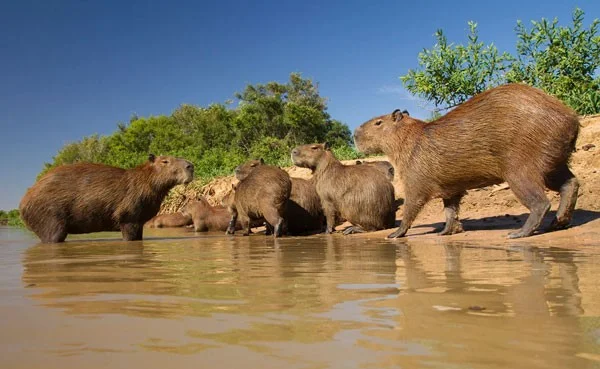
Capybaras live primarily in South America, especially Brazil, and tend to live in groups of up to dozens. Photo: Cool Green Science.
Capybara: Giant rat weighing up to 68kg, leisurely among crocodiles thanks to special abilities
Capybaras are giants, weighing up to 68kg when fully grown, about 60cm tall, and 1.2m long. Unlike other rodents that gnaw and destroy vegetables... causing harm, this species mainly eats grass. Capybaras consider their feces as a source of intestinal flora because bacteria help digest cellulose, which can extract the maximum amount of protein and vitamins in grass. This species of rodent can also regurgitate chewed food again, like cattle. Photo: Fodors.
Capybara: Giant rat weighing up to 68kg, leisurely among crocodiles thanks to special abilities
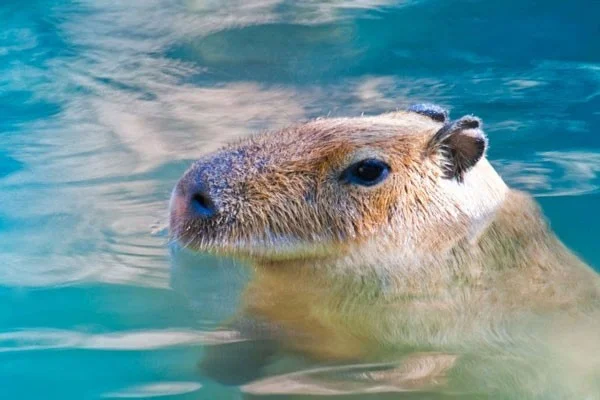
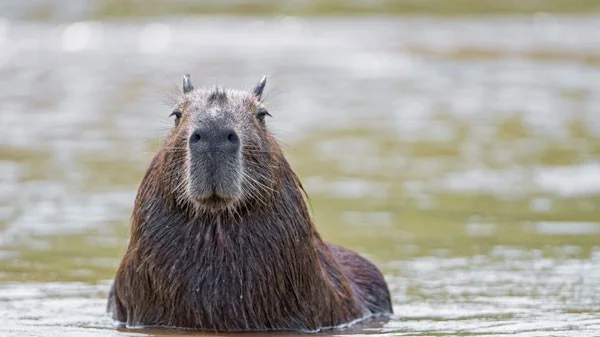
True to its name, these giant rats are particularly fond of water. They are "excellent swimmers", thanks to their webbed feet that help them move easily through water. Guinea pigs can dive and stay underwater for up to 5 minutes. These rodents can even mate or sleep while underwater, keeping only their noses out of the water. Photo: Dreamtime.
Capybara: Giant rat weighing up to 68kg, leisurely among crocodiles thanks to special abilities
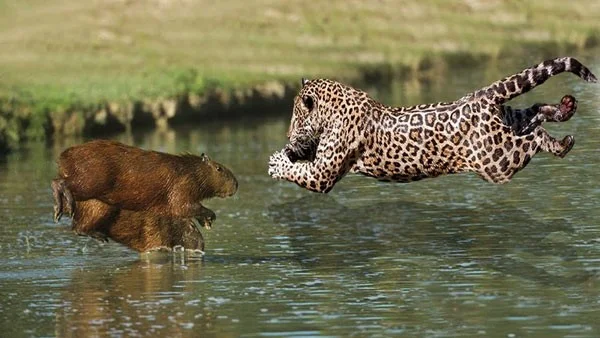
Being good at swimming helps them escape from wild cats, eagles and anacondas many times. Photo: Brian Lily.
Capybara: Giant rat weighing up to 68kg, leisurely among crocodiles thanks to special abilities
With the advantage of giant legs, despite its large size, this rodent can run very fast, up to 9.8 m/s, equivalent to the running speed of a soccer player. With this ability, capybaras will quickly 'escape' when they sense danger. Photo: Stocky.
Capybara: Giant rat weighing up to 68kg, leisurely among crocodiles thanks to special abilities
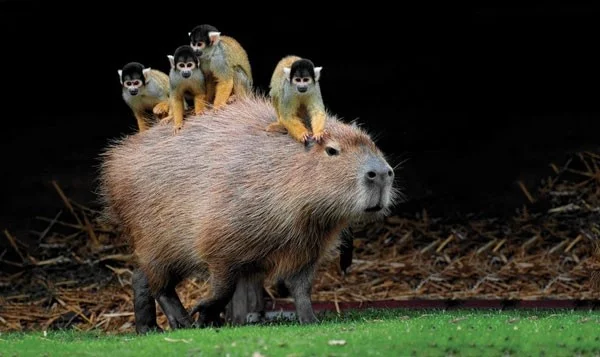
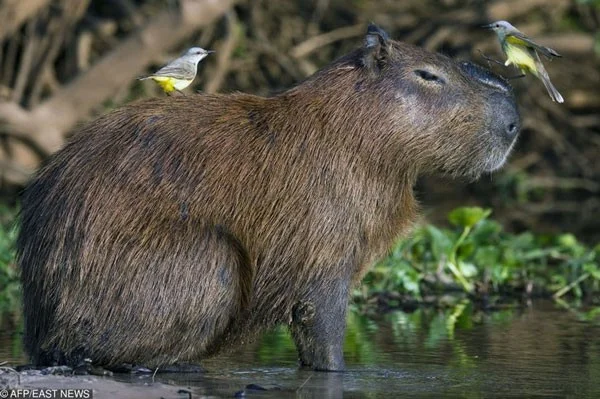
This species of capybara is very friendly, so it is known as the "peace messenger" of the animal world. They never actively attack and live in harmony with all species. They almost never refuse other animals to ride on them, so many people call them "walking chairs". Therefore, animals love to get close to capybaras. Images of birds and monkeys sitting on the backs of guinea pigs are not uncommon. Photo: Flickr.
Capybara: Giant rat weighing up to 68kg, leisurely among crocodiles thanks to special abilities
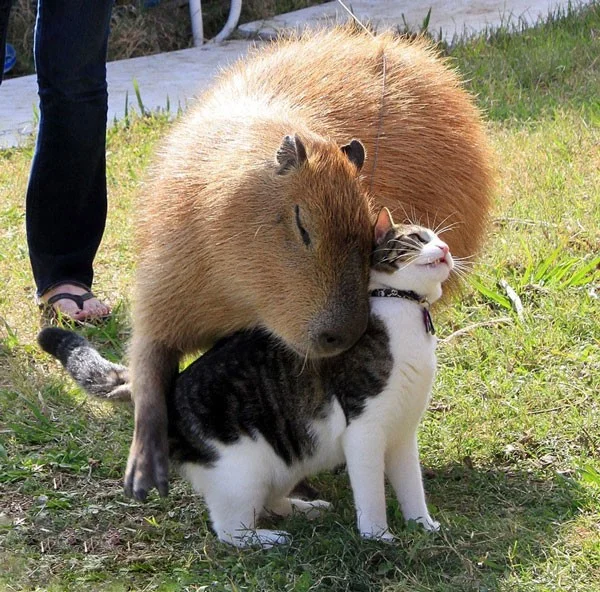
Extremely cute image of capybara playing with cat. Photo: Bored Panda.
Capybara: Giant rat weighing up to 68kg, leisurely among crocodiles thanks to special abilities
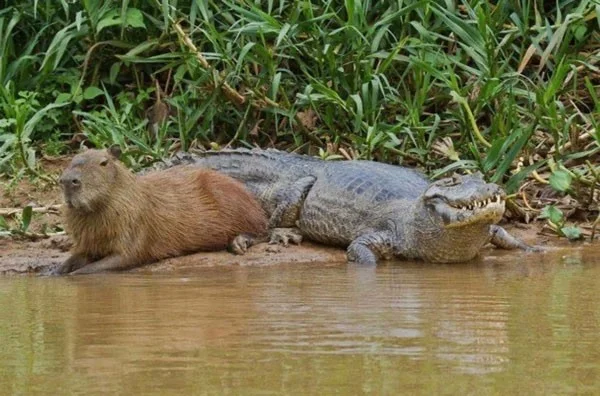
Even ferocious crocodiles do not scare the capybara. Sometimes, it calmly lies next to the crocodile without worrying about anything. Photo: Sina.


The video shows a capybara leisurely walking to the river bank to drink water amidst hundreds of crocodiles “resting”. In the video, the capybara does not appear to be panicking among these notoriously ferocious predators, but rather appears very relaxed.

Capybara: Giant rat weighing up to 68kg, leisurely among crocodiles thanks to special abilities
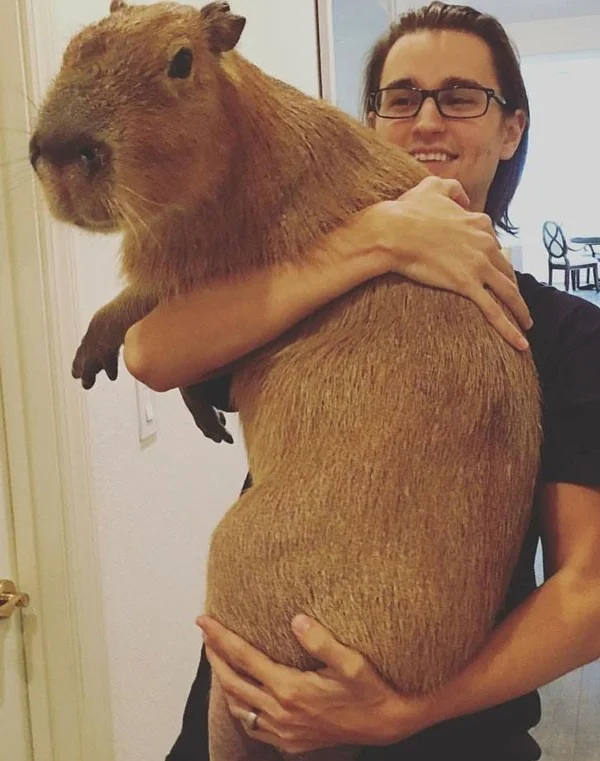
Because of their adorable appearance and friendly personality, capybaras are also kept as pets. In Japan, a zoo even bathes them in hot water to attract visitors. Capybaras have an average lifespan of 8-10 years. Photo: Shaboten.

Some more interesting pictures of this giant capybara.
Capybara: Giant rat weighing up to 68kg, leisurely among crocodiles thanks to special abilities

Leave a Comment

Side Hustles That Actually Pay in 2026: 7 Realistic Options and the Tradeoffs to Know

Side Hustles That Actually Pay in 2026: 7 Realistic Options and the Tradeoffs to Know

Compare realistic side hustles for 2026 by startup cost, fees, flexibility, and income control, with current tax and scam guidance from official sources.

Remote Work Ergonomics in 2026: Upgrade Your Home Office Without Overbuying

Remote Work Ergonomics in 2026: Upgrade Your Home Office Without Overbuying

Upgrade your home office ergonomics with current OSHA and NIOSH guidance on chair fit, monitor height, laptop setup, lighting, and movement.

Why Emotional Intelligence Matters in Leadership—and How to Build It

Why Emotional Intelligence Matters in Leadership—and How to Build It

Learn why emotional intelligence matters in leadership, where it helps most, how to strengthen it, and how to tell whether your approach is working.

How to Transition to a Tech Career Without a Degree: A Results-First Roadmap for 2026

How to Transition to a Tech Career Without a Degree: A Results-First Roadmap for 2026

A practical roadmap for moving into tech without a degree: choose an accessible role, build job-ready skills, prove them with projects, and use hiring feedback to improve.

Building a Personal Brand on LinkedIn in 2026: What Still Works, What Changed, and What to Ignore

Building a Personal Brand on LinkedIn in 2026: What Still Works, What Changed, and What to Ignore

Build a credible LinkedIn personal brand in 2026 with current profile, content, newsletter, analytics, verification, and visibility guidance from LinkedIn.

Quiet Quitting vs. Quiet Firing in 2026: What’s Really Changing at Work

Quiet Quitting vs. Quiet Firing in 2026: What’s Really Changing at Work

Quiet quitting and quiet firing are catchy labels, not diagnoses. Learn what is verified, what depends on context, and what employees and managers can do next.

The Rise of the Fractional Executive: When Part-Time C-Suite Leadership Makes Sense

The Rise of the Fractional Executive: When Part-Time C-Suite Leadership Makes Sense

Fractional executives offer senior leadership without a full-time hire. Learn when the model works, what to ask, and the risks to manage.

How to Negotiate a Raise During Q4 Performance Reviews: A Practical 2026 Decision Guide

How to Negotiate a Raise During Q4 Performance Reviews: A Practical 2026 Decision Guide

Prepare a stronger Q4 raise request with current wage data, timing options, compensation tradeoffs, and scripts for yes, partial, or no outcomes.

6 High-Income Skills You Can Start Learning Before 2026 Ends

6 High-Income Skills You Can Start Learning Before 2026 Ends

Choose a high-income skill you can realistically start before 2026 ends, with current pay data, learning priorities, and a practical self-check.

Mastering the Hybrid Work Schedule: A Practical Framework That Actually Holds Up

Mastering the Hybrid Work Schedule: A Practical Framework That Actually Holds Up

Build a hybrid work schedule around tasks, team overlap, and measurable outcomes. See sample patterns, warning signs, and when to adjust your plan.