Home
» Today
»
Duchy of Cornwall Farm Valuation Dispute: What Is the Issue?
Duchy of Cornwall Farm Valuation Dispute: What Is the Issue?
Updated November 2, 2026. This explainer separates the Duchy of Cornwall’s stated strategy, the Tenant Farmers Association’s account of the negotiations, and the general rules that may apply to agricultural tenancies in England and Wales.
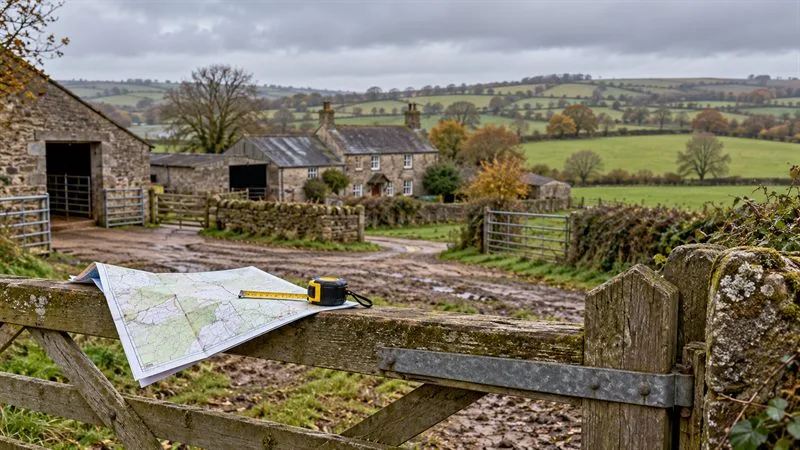
Neutral illustration of a farm property and valuation records, not a photograph of a specific holding.
The short answer
The “Duchy of Cornwall farm valuation dispute” is a disagreement over how the estate should price farms it plans to sell while they are occupied by tenant farmers. The central questions are whether the valuation reflects the tenancy that already exists, who paid for improvements to buildings or land, and whether tenants can realistically buy holdings they have operated for years. The public material reviewed for this article describes continuing discussions, not a published final valuation or court ruling.
The issue is not simply whether a farm is worth more or less than a headline asking price. A holding with a tenant, a particular tenancy agreement, tenant-funded improvements, and a family business operating on it can present a different valuation question from the same property assumed to be vacant. The precise answer depends on the property and the contract.
Why are farms being sold?
In its June 2026 Integrated Impact Report, the Duchy said it would invest £500 million over the next decade and rebalance its property portfolio so it could focus on five “heartlands”: Cornwall, the Isles of Scilly, Dartmoor, Bath and surrounding areas, and Kennington in London. It described housing, local economies, nature recovery, renewable energy, net zero, and long-term estate resilience as priorities. The report describes a portfolio strategy; it does not set out a fixed percentage of farmland to be sold.
The Tenant Farmers Association (TFA) says the sales program became public in March 2026 when Duchy representatives began conversations with tenants at Bradninch in Devon. In its October 28 account, the TFA said the process had expanded to other holdings and that it was pressing for clearer communication and fair treatment. The TFA also says its preferred outcome would be for the Duchy to remain a long-term landlord, while it is helping tenants assess purchase offers and other options.
What exactly is being disputed in the valuations?
The TFA says it challenged some early valuations because it was not clear whether improvements and fixtures paid for or delivered by tenants had been properly recognized. It has proposed a jointly instructed valuer when the parties genuinely disagree. Under the TFA’s suggested framework, a valuer would first consider the complete holding on an open-market, vacant-possession basis, then adjust for the tenant’s position. The TFA identifies three adjustments: the value of eligible tenant-funded improvements, the remaining term and value of the tenancy, and a negotiated discount that could make ownership achievable.
That is the TFA’s proposed negotiating framework, not a published statutory formula or a final Duchy-wide policy. The TFA says the Duchy may consider a joint valuation where there is a genuine dispute. The two sides’ public descriptions do not provide a final valuation for any individual farm, nor a single rule that resolves every case.
Improvements matter in a second, related way. GOV.UK guidance says compensation at the end of a Farm Business Tenancy can be available for certain physical improvements, subject to conditions such as landlord consent. For tenancies under the Agricultural Holdings Act 1986, the guidance lists different categories, including long-term and short-term improvements and “tenant right.” These compensation rules are not automatically the same thing as a negotiated purchase-price adjustment. A tenant should check the agreement, records of consent, invoices, and any written side agreements with a qualified adviser.
Does a planned sale mean a tenant must leave?
Not by itself as a general rule that can be applied to every farm. GOV.UK says agricultural agreements are unique and distinguishes Farm Business Tenancies (generally agreed after September 1, 1995) from 1986 Act tenancies (generally agreed before that date). The latter usually have lifetime security of tenure; a Farm Business Tenancy can be ended by notice to quit with a minimum notice period of 12 months. The agreement’s date, terms, history, and the tenant’s circumstances matter, so a headline about a sale is not enough to determine any tenant’s legal position.
There have also been different descriptions of notice in news coverage. In its October 28 account, the TFA said it was not aware of formal eviction notices of the kind described in some media reports; it understood tenants had been told a sale was being considered and that the Duchy wanted to discuss whether they might buy some or all of their holdings. That is the TFA’s account, not a finding about every individual tenancy. Farmers Guide reported that the Duchy said eight of nine Bradninch farming tenants were in active discussions about buying some or all of their farms, and that sitting tenants had been offered first refusal before wider sale. The Duchy also told the publication that tenants were receiving individual guidance and support.
The TFA says the Duchy assured it that nobody would be made homeless. It also cautions that retaining a home would not necessarily preserve the farm business or the tenant’s ability to keep operating the same land. Those are distinct outcomes.
What oversight or dispute routes are relevant?
The Duchy’s published memorandum with HM Treasury says the Treasury oversees specified transactions under the Duchy management legislation, including consent for certain property transactions. It may ask for independent evidence, such as a valuation, when it needs added assurance. That is oversight of the estate’s statutory and financial duties; it should not be confused with an automatic decision on the price offered to an individual tenant.
For disputes relating to agricultural tenancies, GOV.UK describes third-party expert determination and arbitration. It lists RICS, the Central Association for Agricultural Valuers, and the Agricultural Law Association as organizations that can help appoint an arbitrator when the parties cannot agree. Whether a particular sale-price disagreement falls within a contract’s dispute procedure is case-specific; tenants should get independent agricultural property and legal advice before relying on any route.
What should tenants look for next?
The valuation basis: ask whether the figure assumes vacant possession or a continuing tenancy, and request the assumptions, comparable evidence, and list of buildings or parcels included.
Tenant contributions: assemble permissions, invoices, dated photographs, maintenance records, and evidence for improvements or fixtures funded by the business.
The tenancy documents: check the original agreement, renewals, notices, maps, side letters, and any terms on improvements, compensation, assignment, or ending the tenancy.
The purchase terms: obtain the deadline and written details for first refusal, partial purchase, staged payments, any discount, and what happens if purchase is not affordable or desired.
Independent support: consult an agricultural valuer and a solicitor experienced in farm tenancies; the TFA and the Central Association for Agricultural Valuers are listed in government guidance as sources of specialist help.
As of November 2, 2026, the public facts point to an ongoing negotiation over valuation method, tenant investment, tenure, and feasible alternatives. The clearest test of progress will be whether the Duchy and tenants can document a consistent process and explain how it treats each holding. Until individual agreements and valuations are public, no single figure or summary headline can settle the position for every farm.